Condition for Release of Protest Detainees: Families Marching on February 11th
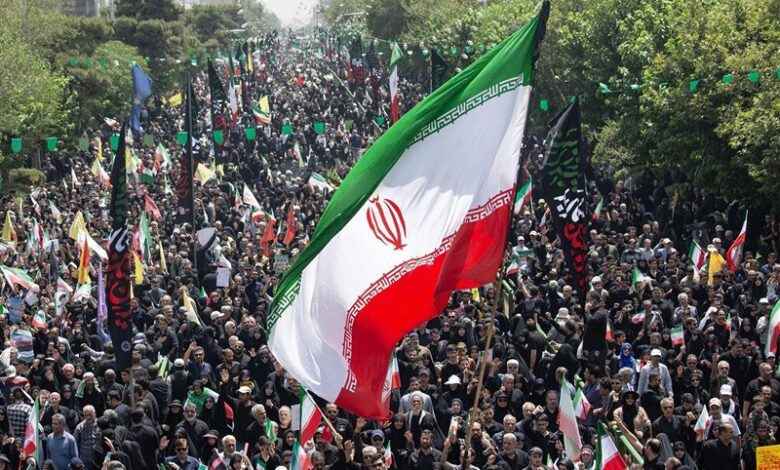
The Islamic Republic has forced the families of detainees to march on February 11th in order to secure their release, revealing empty displays of popular support that are the product of coercion and regime threats.
As February 11th approaches—a day whose grandeur has long served as a propaganda tool for the regime rather than an expression of popular will—reports from inside Iran reveal widespread pressure by Islamic Republic security agencies on families of detained protesters to forcibly participate in government rallies. These pressures represent a clear example of the collapse of popular legitimacy and the transformation of political rituals into instruments of suppression and spectacle.
According to multiple published reports, the Revolutionary Guards Intelligence Organization and the Ministry of Intelligence have told families of some detainees that their presence at the February 11th march must be verifiable. They have been asked to take photos and videos of their participation and send them to security agencies, with threats of severe consequences if they fail to comply.
This is not a popular appeal, but a form of security extortion. Government officials have stated that if the families of detainees participate in the February 11th march, the detained individuals may be released or spared from serious charges and even execution—a condition that essentially represents a horrific bargain between participation in a government spectacle and the lives and freedom of citizens.
Simultaneously with these pressures, a letter attributed to “Mohammad Ali Saeedi Nia,” owner of the famous “Saeedi Nia Sohan” brand and shop chain, has been circulated on social media, which many have described as a forced confession. In this text addressed to “the office of the Supreme Leader and the dear people of the Islamic nation,” Saeedi Nia wrote that closing his shops during the unrest in December 2025 was a mistake, apologized to the Islamic Republic government, and announced that he would participate in the February 11th march to make amends.
This letter is not only an example of social and security pressure to display loyalty, but demonstrates how the regime uses “confessions” and “expressions of remorse” to silence voices of protest and create a false image of public support.
For years, the popular foundation of February 11th ceremonies has eroded, and actual participation in these marches has severely declined. Analysis and reports show that ordinary people have widely boycotted this government event, forcing the government to resort to incentive and punitive measures, including job and security threats or even promises of releasing detainees, to fill the streets.
Indeed, there is no longer any trace of the millions of people who once gathered on February 11th due to social beliefs; today, the streets are merely gathering places for those who either have been forced to participate or whose participation is recorded in exchange for benefits—a reflection of the regime’s collapse in popular legitimacy.
Pressure on families and detainees is part of the broader strategy of the Islamic Republic to silence any voice of opposition. International reports and human rights organizations have shown that Iran’s security forces not only detain and suppress protesters but also attempt to create an atmosphere of terror by pressuring their families into silence and cooperation.
Moreover, in recent months, the internet—the primary means of internal communication—has been cut off repeatedly to suppress voices of protest and reaction, and to prevent families from being able to report to the international community.
When, on the eve of February 11th—a day that was supposed to be a symbol of national unity—the government is forced to resort to threats, security extortion, and staged confessions to create attendance, one must ask:
- Is this ceremony a display of genuine public support or a worthless spectacle of artificial support?
- Can forced and imposed participation replace the voluntary and free participation of the people?
- What do these pressures symbolize—the collapse of legitimacy or the regime’s fear of the people?
The answer is clear: “The February 11th march is no longer a celebration of the people, but rather an arena for the state to display itself before a society that has long separated itself from it.”