Consequences of Continued Power Cuts in Iran for People and Production Units
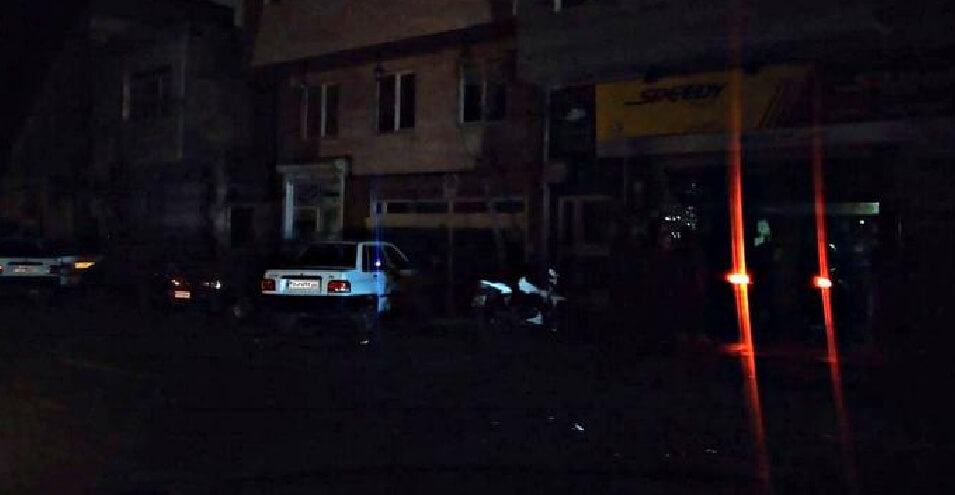
With the beginning of summer and rising temperatures, power outage hours are expected to increase and may continue until Shahrivar in some areas. Power cuts have also created serious problems for water supply pipelines and industrial activities.
Before summer had even begun, a power cut schedule was released for more than 22 Iranian provinces for the second week of Khordad. Previously, power cuts occurred mostly without prior notice.
The announcement of power cut programs and schedules continues, and as temperatures rise and consumption increases, the frequency and duration of blackouts have also increased in many cities.
Currently, blackout schedules in most provinces have been released for a period until the tenth of Tir, and as usual, the power cut schedule for subsequent days will be announced until that date.
Possibility of Blackouts Continuing Until End of Shahrivar
Abbas Azari, spokesman for Khorasan power industry, announced on the fourth of Tir that based on the Ministry of Energy’s forecast, there is a possibility of daily blackouts for residential subscribers until the 15th of Shahrivar, and this issue may continue until the end of Shahrivar.
The fundamental reason for power cuts relates to the imbalance between generation and consumption, but in practice, many variables can affect this process.
The deputy coordinator of distribution at Tavanir told the ISNA news agency that in the final week of Khordad, the amount of power consumption reached 60,000 megawatts, which exceeds the actual capacity of electricity generation.
According to Gholamali Rakhshani Mehr, approximately 24,000 megawatts of electricity consumption is allocated to cooling devices, which increases during peak heat hours as the weather gets warmer.
The Role of Reduced Rainfall in Power Cuts
Another problem leading to electricity shortage and blackouts is drought and reduced rainfall, which results in lower reservoir levels and decreased efficiency of hydroelectric power plants.
Rakhshani Mehr told ISNA: “Water reserves behind dams have decreased by at least 50 percent compared to last year, which means the power generation capacity of hydroelectric power plants has been cut in half.”
The spokesman for Khorasan power industry says that in the final week of Khordad, daily power outage duration reached two hours per day, and efforts are being made to keep this from exceeding 90 minutes.
In some cities like Ahvaz, where temperatures reached 50 degrees on the sixth of Tir, the possibility of conservation for residential subscribers is very limited.
Hasan Karimi, CEO of Ahvaz Power Distribution Company, says that in this city, which faces a shortage due to reduced hydroelectric power plant generation, efforts are being made to prevent residential power cuts as much as possible by reducing administrative working hours and minimizing electricity consumption in offices and organizations.
Water Cuts Due to Electricity Shortage
Electricity shortage in some areas has led to disruptions in the water supply network, and many citizens are experiencing low pressure and water cuts for extended hours.
For example, some Qazvin residents complain that water pressure drops and cuts sometimes last up to 10 hours per day without being announced.
Aziz Abbasi, public relations director of Qazvin province’s electricity office, says that sensitive centers such as hospitals and drinking water wells have been removed from the load management blackout list, but the water department has not announced a complete list of wells.
He cited cryptocurrency mining extraction as one of the reasons for the electricity shortage and added that in Qazvin province, we have an average increase in electricity consumption of four to five percent per year compared to previous years, but this figure has increased fivefold in the current year.
Abbasi also pointed to the reduction in reservoir reserves due to drought and reduced rainfall, and mentioned the decline in electricity generation at hydroelectric power plants as another reason for the current situation.
Risk of Industrial Unit Closures and Worker Unemployment
Electricity shortage has also endangered the situation of production workshops. On the fifth of Tir, managers of industrial units in Takestan city met with the chief justice of Qazvin province and a number of local officials to discuss and find solutions for “resolving the problem of continuous power fluctuations in these units.”
This judicial official said in this meeting: “We tolerate power cuts in homes and summer heat, but industrial units should not experience power fluctuations and cuts. If cooperation from managers in this matter is achieved, this problem will be resolved and more than twenty thousand workers in Takestan city and more than that number in other cities of the province will be prevented from unemployment.”
On the second of Tir, ISNA reported on the situation of some food production units and agricultural equipment manufacturers, reporting significant losses for most of these units due to power fluctuations and cuts.
According to this report, Amir Mahdi Moradi, secretary of the Khorasan Industrialists Association, had said about three weeks earlier that repeated power cuts have caused significant damage to industrial units, and the most important problem is that due to power cuts, the industrial sector cannot have any plan.
Such complaints are heard from various provinces of Iran. Many manufacturers criticize that despite the announcement of weekly blackout schedules in different provinces, blackouts have no clear start and end times and it is impossible to plan accordingly.
Source: DW