Coronavirus Strikes Five Key Economic Points in Iran
The discussion of coronavirus entering Iran may have been brought to the attention of the official media in recent days, but many weeks prior, there had been whispers of this disease entering the country.
This note aims to examine the general economic effects of this disease on five economic points in the country.
Sectors and trades in Iran’s economy that are subject to public use are the first point of impact and are classified as follows.
Restaurant Owners and Self-Service Establishments
The latest market status of this trade in Iran’s economy shows the volume of this sector at 24 thousand billion tomans in Iran’s economy.
Considering the cultural situation of Iranian society based on the use of these sector’s services inside and outside the home as a recreational matter, one can imagine the severity of damage to this sector more broadly.
Coffeehouses and Hookah Lounges
The field of providing tobacco products comprises three distinguishable trades:
First, traditional and old coffeehouses that have existed since before the revolution and are mostly located in working-class areas; second, hookah lounges that have been established in recent years and whose scope of activity is solely the provision of hookah and are places of gathering for young people; and third, establishments with other uses such as restaurants and cafes that, aiming to increase income, have begun offering hookah.
Although there are no official statistics about the trades that provide this service, there are more than three thousand coffeehouses in Tehran alone with 35,000 employees working in this trade, and the number of unlicensed and permit-less coffeehouses is several tens of times this figure across the country.
Daily spending on cigarettes and hookah in Iran exceeds 30 billion tomans and annually exceeds 10 thousand billion tomans. If we allocate five percent of this figure to people’s use of hookah in public places, we can imagine clearer dimensions of the reduction in people’s use due to this disease.
Domestic and Inner-City Travel
The average trips per household in the country is 119 trips, and approximately 250 million inter-city trips are conducted annually in the country. Annually, 55 percent of Iranian households travel, and these figures relate to families’ recreational trips within Iran.
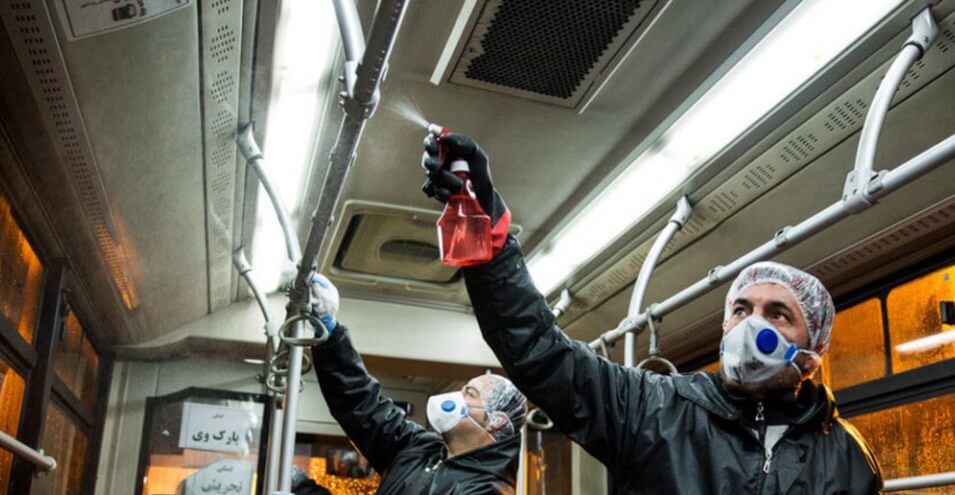
However, these numbers do not reveal all realities, and Tehran alone experiences 6.5 million daily trips and movements from its satellite towns and suburbs, which rely on public transportation services.
Of 20 million daily trips in Tehran, 12 million trips are conducted using public transportation.
Now, if we consider the numbers of daily urban trips using public transportation services across the entire country, we can imagine the volume of reduction in these trips and their effects on sectoral and overall national economy.
Foreign Travel
Of every 100 foreign trips by Iranians, approximately 85 trips are to neighboring countries and the region, and six trips are to Thailand.
Based on statistics announced recently, in the first six months of 2019, approximately four million and 260 thousand people traveled from Iran abroad. During this period, the number of Iranian travelers abroad showed growth of nearly 16 percent compared to the same period last year.
In another comparison of the total outbound tourists in 2017, more than two million and 870 thousand people went to Iraq.
After Iraq, Turkey, United Arab Emirates, Azerbaijan, Georgia, Germany, Qatar, Armenia, Saudi Arabia, and China are respectively the most popular countries among Iranians for foreign travel. Considering the restrictions and prohibitions recently announced for the entry of Iranian nationals and flights, one can calculate the volume of losses.
Also, in the first quarter of 2019, we witnessed the arrival of more than three million foreign tourists to the country, which showed 40 percent growth compared to the same period last year, and certainly this sector will also experience similar damages.
Cinema and Theater
The country has 596 active cinemas and 1,292 theaters that are utilized by nearly 28.5 million people annually. Now, with the spread of negative news regarding the coronavirus outbreak, the cinema and theater industry will also suffer losses.
Conclusion
Undoubtedly, the spread of coronavirus in Iran will affect other points of Iran’s economy such as foreign trade, health and related services, banking services, and the goods distribution system, but reducing the severity of these losses directly depends on government programs to control the coronavirus outbreak.
Because if the government’s coronavirus control programs are not taken seriously, people will resort to contractionary methods in the economy, and other countries will also use stricter regulations regarding all their dealings with Iran.
Source: Radio Farda