Documents Reveal Money Laundering Network in Pakistan; Khamenei’s Representative Receives $200,000 Monthly Income
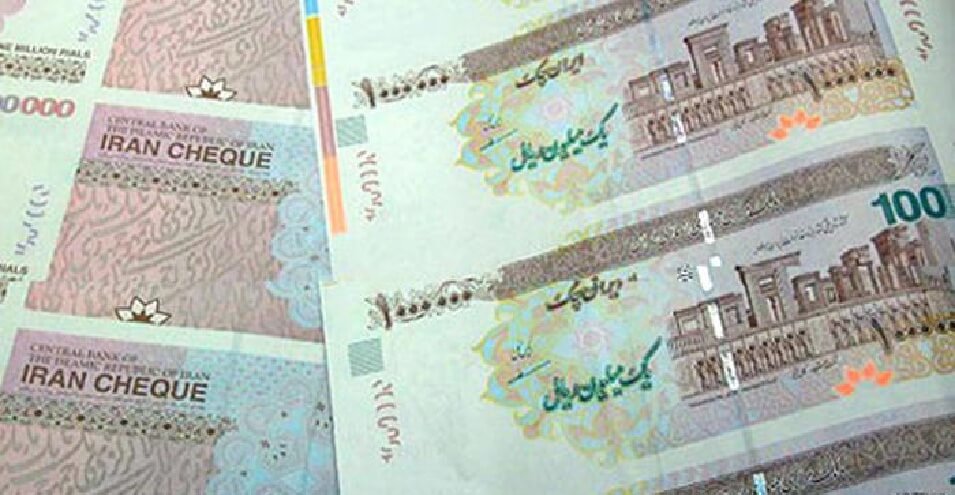
Arab News has obtained documents from a money laundering network operating in Pakistan that reveal the illegal transfer of substantial sums of money to Iran. The name of Khamenei’s representative in Pakistan appears in these records with a monthly income of 200,000 dollars.
The “Arab News” website reports on documents that expose the transactions of a large money laundering network in Pakistan and the monthly income of Khamenei’s representative from these transactions. The site reported on Sunday, April 21 (April 10), that investigations into this network began after several members of the Zainabiyoun group were arrested in Karachi, Pakistan in winter 2020. Zainabiyoun is the name of a group of paramilitary fighters affiliated with the Quds Force of the Islamic Revolutionary Guards Corps operating in Syria, mostly comprising Pakistani Shiites.
According to available documents, members of this network have been active in Pakistan, Iran, and Iraq over the past seven years.
Documents related to this network, submitted to court by Pakistani inspectors, are based on investigative reports and correspondence through WhatsApp messenger.
Arab News, referring to the various illegal methods used by this money laundering network to transfer funds, adds that the network used Pakistani pilgrims traveling to Qom and Najaf for smuggling money as one of its methods.
Khamenei’s Representative Among the Accused
Based on the documents, one of the recipients of these funds was Abolfattah Bahaee-Aldin, Khamenei’s representative in Pakistan. Bahaee-Aldin received money from someone named “Alireza,” who is the primary suspect in the case.
“Alireza” was one of 13 people arrested in January 2022 on charges of money laundering and “connection with a foreign intelligence organization” in Karachi, Pakistan. Based on his confession, another person named Sayed Vesal Haider Naqavi, who was Abolfattah Bahaee-Aldin’s assistant, was also arrested.
Based on documents in this case file, Alireza revealed that he paid “200,000 dollars monthly” in cash through Vesal Haider Naqavi to Bahaee-Aldin, Khamenei’s representative in Pakistan.
In this regard, an “informed source” in Iran told Arab News that Bahaee-Aldin had previously, likely between August 2021 and February 2022, left Pakistan.
Documents submitted to the court also show that Alireza, the primary suspect in this case, transferred approximately 31 million rupees (approximately equivalent to 16,400 dollars) to the account of a television network in Pakistan and one million rupees to the account of a religious school in Islamabad, Pakistan—belonging to a leader or religious political party.
Arab News writes that Alireza and Haider Naqavi remain in detention.
Iran’s Large Money Laundering Network in Various Countries
Previously, reports had been published about Iran’s money laundering network in various countries. Among these, the American newspaper Wall Street Journal reported in late March 2022 about the transfer of hundreds of millions of dollars between 61 bank accounts affiliated with Iran’s underground network in 28 foreign banks in Turkey, China, Hong Kong, the United Arab Emirates, and Singapore.
The report noted that this covert money laundering network within Iran has multiple financial institutions for foreign currency exchange, and outside Iran includes shell companies, subsidiary companies, and numerous accounts in commercial banks.
Based on the latest report from the Financial Action Task Force (FATF) in September 2021, the Iranian government remains on the blacklist.
The Financial Action Task Force is an international body that operates with the aim of combating money laundering globally. This group requires the approval of several bills related to money laundering for Iran to be removed from the blacklist.
Responsible officials in the Islamic Republic have repeatedly referred to Iran’s various methods for circumventing international sanctions.
For example, Mohammad Makhber, Deputy President of Iran, on December 15, 2021, referring to “problems in transferring money” for importing coronavirus vaccine equipment to Iran, acknowledged that one of the Islamic Republic’s ambassadors imported this equipment into Iran under the name “household goods.”
Source: DW