Court Date and Branch Set for Appeal Hearing of Three Christian Believers in Rasht
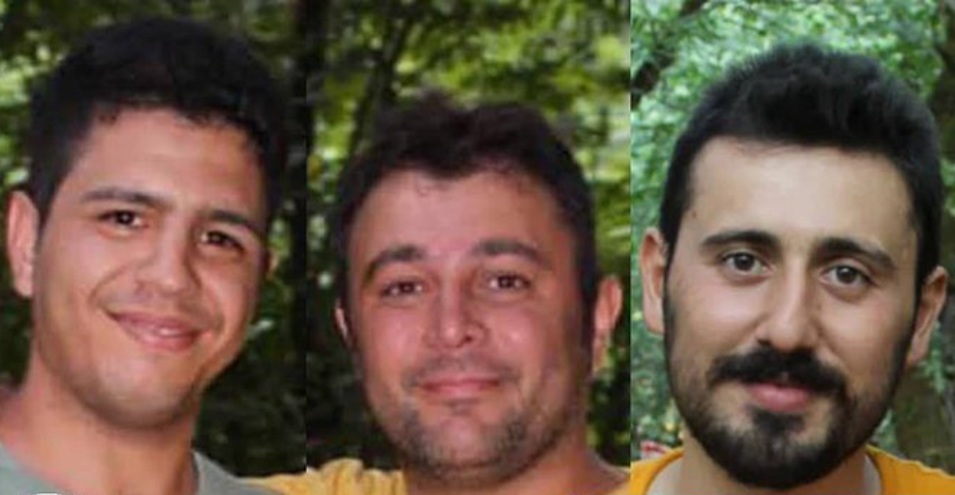
Hrana News Agency – The appeals court hearing for Ahmad (Yohanna) Sarparast, Ayoub (Farzin) Pourrazadeh, and Morteza Hajeb Mashhoud Kari, three Christian believers residing in Rasht, will be held on Monday, May 23rd at Branch 18 of the Gilan Province Appeals Court. These citizens were previously convicted at the initial trial stage to five years and one day of imprisonment and a monetary fine each.
According to Hrana News Agency, the news organ of the Iranian Human Rights Activists Network, the time and branch of the appeals court hearing for Ahmad (Yohanna) Sarparast, Ayoub (Farzin) Pourrazadeh, and Morteza Hajeb Mashhoud Kari have been determined.
Based on a recently issued notification that has been served to Iman Soleimani, the defense attorney for these individuals, the appeals court hearing for these three Christian believers will be held at 10:00 AM on Monday, May 23rd at Branch 18 of the Gilan Province Appeals Court.
Ahmad (Yohanna) Sarparast, Ayoub (Farzin) Pourrazadeh, and Morteza Hajeb Mashhoud Kari were convicted in March of this year by the Rasht Revolutionary Court on charges including “establishing a house church, propaganda against the system, contact with Zionist missionary agents, and affiliation with the Branhamist sect outside the country.” Each was sentenced to five years and one day of imprisonment and payment of 180 million rials in fines pursuant to Article 500-bis.
Previously, Iman Soleimani, the defense attorney for these citizens, told Hrana regarding the verdict issued by the Rasht Revolutionary Court: “The process of investigating this case followed an illegal path with pressure from security officials and influence on the presiding judge, creating disturbances and chaos to achieve their goal of convicting my clients. According to the case file contents, my clients not only did not commit any crimes that would warrant punishment under Article 500-bis, but based on the principle of freedom of thought and the prohibition of inquisition into beliefs and the principle of narrow interpretation of penal laws, they have been subjected to injustice. In a fair trial process, they would certainly not be convicted.”
In November 2021, the case of Ahmad (Yohanna) Sarparast, Ayoub (Farzin) Pourrazadeh, and Morteza Hajeb Mashhoud Kari was referred to the Revolutionary Court of the city.
Ahmad (Yohanna) Sarparast, Ayoub (Farzin) Pourrazadeh, and Morteza Hajeb Mashhoud Kari were arrested by security forces in Rasht on September 5th, 2021. Ahmad (Yohanna) Sarparast and Morteza Hajeb Mashhoud Kari informed their families on Saturday, September 18th of that year through a phone call about their transfer to Lakan Prison in Rasht, and were finally released on September 21st, 2021 upon posting bail of 4 billion rials temporarily until the completion of legal proceedings. Mr. Pourrazadeh was also released in early October 2021 upon posting bail of 4 billion rials.
It is reported that the relatives of these citizens were threatened by Revolutionary Guards intelligence officers regarding the disclosure of information about the status of their loved ones. Additionally, one of their relatives and other members of this house church were summoned to the Revolutionary Guards intelligence office in Rasht and interrogated.
Ahmad (Yohanna) Sarparast, 25 years old, Ayoub (Farzin) Pourrazadeh, 28 years old, and Morteza Hajeb Mashhoud Kari, 38 years old, are Christian believers and residents of Rasht.
It should be noted that although Christians are recognized by law as a religious minority, security agencies treat the issue of Muslims converting to Christianity with particular sensitivity and employ harsh treatment against activists in this field.
Treatment of Christian believers in Iran occurs despite the fact that under Article 18 of the Universal Declaration of Human Rights and Article 18 of the International Covenant on Civil and Political Rights, everyone has the right to freedom of thought, conscience, and religion, including the freedom to change religion and the freedom to express it alone or in community, both publicly and privately.
Source: Hrana