Iran’s Judicial System Ensnared in ‘Evangelism,’ Sentences of 7 to 9 Years for Christian Citizens in Varamin
The Varamin Revolutionary Court and the Tehran Court of Appeals sentenced Christian citizens in Varamin to 7 to 9 years of imprisonment.
The Varamin Revolutionary Court and subsequently Branch 36 of the Tehran Court of Appeals have sentenced at least five Christian citizens on charges such as “deviant educational and propagandistic activities contrary to and violating Islamic law” and “establishing home churches” to lengthy prison sentences.
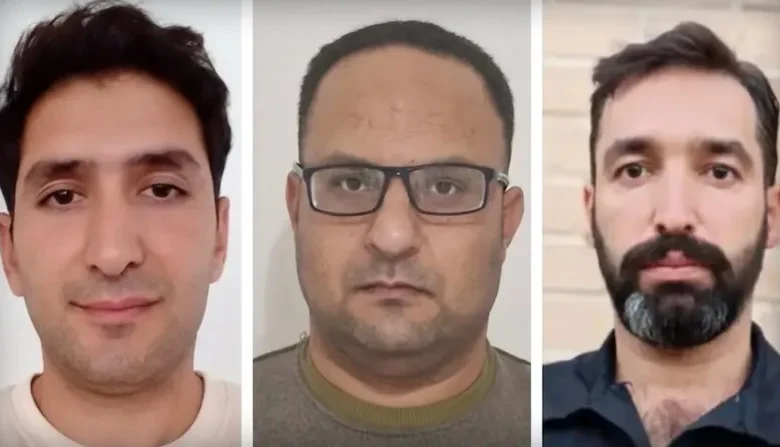
According to reports published on social media, five Christian citizens, three of whom have been identified as “Abolfazl Ahmadzadeh Khajani,” “Morteza Faqanpour,” and “Hossam-al-Din Mohammad Jenidi,” have been detained in Varamin. Based on these reports, the aforementioned citizens have been sentenced to long-term imprisonment ranging from 7.5 to 9 years on charges such as “deviant educational and propagandistic activities contrary to and violating Islamic law” and “establishing home churches.”
Furthermore, Branch 36 of the Tehran Court of Appeals has upheld these sentences in full. The charges include: “deviant educational and propagandistic activities contrary to and violating Islamic law,” “propaganda against the system through presentation of anti-system content for the benefit of Zionist evangelical organizations,” and “establishing home churches.”
The detainees were arrested between June and August 2024, and after arrest faced pressures that included “extraction of forced confessions under duress and torture.” According to statements by Abolfazl Ahmadzadeh Khajani, he was told that if he did not cooperate, his eight-year-old child would be in danger.
Additionally, Morteza Faqanpour received an additional 17 months of imprisonment on charges of “insulting Ali Khamenei” and was subjected to severe physical torture and beatings for hours, resulting in damage to his ribs, forcing him to sleep in a sitting position. It is worth noting that Morteza Faqanpour had tattoos of crosses on his body, and prison officials told him that either he must burn the cross tattoos on his body or they would open a new case against him.
According to Article 18 reports, Branch 36 of the Tehran Court of Appeals upheld the sentences issued against these five Christian citizens in full. In July 2025 (June-August 2024), each of them was sentenced to 7 years and 6 months for “propagandistic activities accompanied by contact with foreign entities” and 7 months for “propaganda against the system.”
International sources have also reported that during pre-trial detention, some of the defendants were subjected to pressure and torture. This correlation shows that the published reports align with what international bodies have documented, although the exact names of all defendants and their precise details have not been released due to security concerns.
According to “Musa Barzin,” a jurist and legal advisor, the legal conditions in Iran for changing religion or propagating another religion have not been explicitly criminalized. He explains: “In Islamic Penal Law, apostasy or change of religion is not specifically criminalized, but judges have discretion to interpret it under other laws and issue harsh punishments for these cases.”
In other words, although changing religion is not directly a crime, propagating a new religion or holding religious meetings may fall under titles such as “propaganda against the system,” “activities contrary to Islamic law,” or “contact with foreign evangelical organizations.” This structure allows judicial institutions to sentence Christian citizens or other minorities who have converted from Islam to another faith to very severe punishments, even without an independent law for changing religion.
The case of these citizens and cases related to other religious minority citizens highlight several points, particularly for Iran’s Christian community:
The Christian community, especially those converted from Islam, faces a high risk of judicial action, and this issue can prompt the international community concerned with human rights and religious freedoms to respond.
Activity within the framework of “home churches” or participation in religious educational courses outside formal channels can face security or propagandistic charges.
There is a possibility of pressure for forced confessions and torture during prolonged pre-trial detention.
The rejection of apostasy as an independent crime and its interpretation under security titles demonstrates a lack of transparency in the exercise of religious rights.