Denying the Right to Mourn: Imposing Double Suffering on Victims’ Families and Denying Truth by Rulers
One of the most obvious cases of human rights violations in Iran is the “denial of the right to mourn” from the families of victims of government crackdowns and executed political and ideological prisoners. What does the authorities’ insistence on preventing mourning ceremonies for victims of government repressions in past years and the silence of officials about these unlawful actions signify?
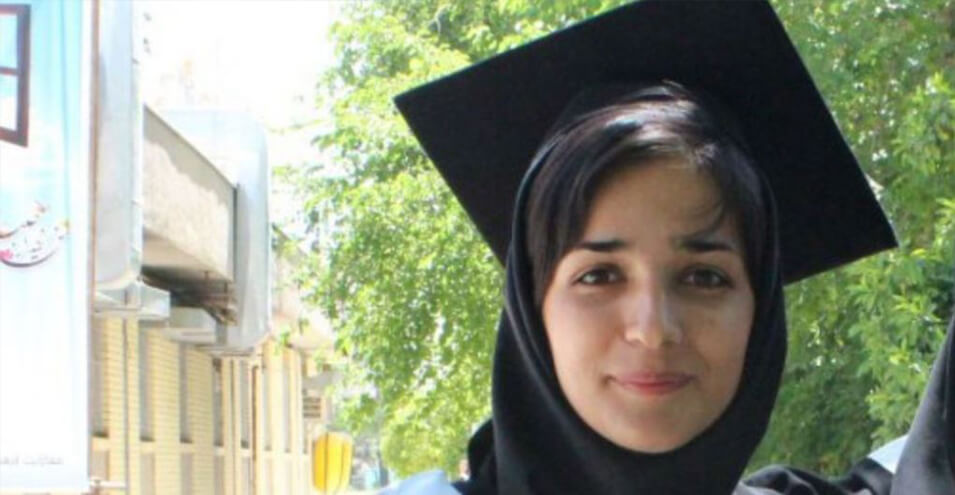
What are the methods used by the authorities in denying the “right to mourn”? Why does the authorities continue to insist on enforcing this open discrimination? What are the consequences of denying the right to mourn for the survivors of victims, and how has the effort of bereaved families to obtain the right to mourn been connected to the justice-seeking movement in Iran? The practice of discrimination against families of those killed and executed by the government has been repeated throughout different decades of the Islamic Republic’s rule, and on the second anniversary of the November 2019 protests, reports have been published about pressure being exerted on families to hold memorial ceremonies for their loved ones. These include the arrest of Setareh Beheshti’s mother and sister by security forces who wanted to participate in the memorial ceremony for Setareh Beheshti’s death and in commemoration of the victims of the November protests.
Unmarked Graves and Forced Secret Mourning
The right to mourn is undoubtedly one of the most obvious human rights, and the issue of denying the right to mourn to families and survivors of victims of government crackdowns, executions, and forced disappearances by authoritarian governments that violate human rights has a long history in contemporary history. The nearly forty-year history of the Islamic Republic’s rule in Iran is no exception to this rule. In fact, it can be said that the government’s treatment of survivors of crackdown victims and injustice through prohibiting mourning ceremonies for families in Iran is most reminiscent of the “Khavaran” cemetery; a place where mass graves of many of those executed in the 1980s (1360s in the Persian calendar) and also graves of a number of Baha’is are located.
The Khavaran cemetery has been demolished several times over the years by order of the authorities. The families of those executed in the 1980s, who never gave up their efforts and resistance to hold mourning ceremonies in this cemetery, were repeatedly arrested and tortured and have always faced countless security threats.
Apart from the prevention of mourning ceremonies and arrests and threats, the process of treating and exerting security and judicial pressure on the families of the killed and executed has continued throughout all past years in various ways.
Not handing over the bodies of victims of government crackdowns and executed political and ideological prisoners to their families and the futility of efforts to find the burial place of some of them are among the usual methods of the authorities in openly violating the meaning of the “right to mourn.” An issue whose roots go back to the judicial and governmental apparatus of the Islamic Republic of Iran to the years of the 1980s and has been repeated throughout all subsequent years. In recent years, different names of executed political prisoners were released, none of whose bodies were handed over to the families and there is no trace of their burial places. Farzad Kamangar, Shirin Alam-Hooli, Habib Golperi-Pour, Zanyar and Loqman Moradi are some of these names who were executed in recent years and the judicial system has not indicated any trace of their burial place to their families. A behavior that is a clear manifestation of torture and imposing double and heavy suffering on the families of victims of crackdowns and executions.
The issue of handing over bodies or informing families of their burial places in the Islamic Republic of Iran’s judicial system is intertwined with the problem of paying money to receive a body, or so-called “execution fee.” An issue that government officials always deny but existing evidence and documents show that this practice, particularly in the 1980s, was pursued by the authorities. Many reports about receiving money in exchange for handing over the bodies of victims of the 2009 protests and later in 2019 were published, though denied by government officials.
Night burial of bodies of victims of government crackdowns and some of the executed away from the eyes of their families is another method used by the authorities in dealing with the “right to mourn.” In past years, the authorities have used this discriminatory method in two ways; one is night burial of victims without informing their families and the second is forcing families to bury their loved ones at night and in silence. In fact, in both methods, the authorities impose torture of a double nature on families and survivors, which is not only a clear violation of the “right to mourn” but also an eloquent example of interference in the most private aspects of people’s lives.
After the November 2019 protests, many reports were published about handing over the bodies of some victims in exchange for obtaining commitments from families for night and silent burials of their loved ones. The families of Arsham Ebrahimi and Pouya Bakhtiari, victims of the November 2019 protests, were among the survivors who described how they received their loved ones’ bodies and the countless obstacles created by security forces. Arsham Ebrahimi’s father previously told Iran Human Rights Campaign that “their son was buried at night in the presence of security forces.”
Navid Afkari, a 27-year-old wrestler and one of those arrested during the August 2018 protests, after an unfair trial and execution of the death sentence, was buried at night under strict security measures, and his family has always faced many difficulties in holding mourning ceremonies over the years.
Cemetery Destruction and Tombstone Desecration; Authorities’ Attempt to Deny Truth
Over the years, the authorities have not only deprived many citizens of the “right to mourn” through security pressure and unlawful and inhumane treatment and imposed prolonged torture on them, but have also attempted to destroy any trace of their endless oppression against the people by demolishing cemeteries and tombstones of those killed by power and who are symbols of the injustice perpetrated by the rulers.
This inhumane and tyrannical method was repeatedly applied to the Khavaran cemetery. Khavaran has two sections; in one section, a limited number of bodies of those executed in the 1980s were buried individually. Although tombstones and any names or signs of these victims have been destroyed over the years. But the other part of Khavaran is actually the site of mass graves of political prisoners who were executed in August-September 1988. This section of Khavaran was actually discovered after sustained follow-up by the families of thousands of those executed in the summer of 1988 and the presentation and examination of substantial evidence and documents. After that, Khavaran became a symbol of mourning for families of victims of government crackdowns; a place with unnamed graves and a place for families to resist against the authorities’ continued repression and oblivion. But recently, the international Baha’i community issued a statement announcing that the security authorities of the Islamic Republic of Iran told them that the mass graves had been emptied and asked them to bury their deceased in this location. At Khavaran cemetery and next to the section where political prisoners are buried, there is a large section belonging to deceased Baha’is.
Apart from the systematic measures taken by the authorities to eliminate any trace of the 1988 massacre by destroying the cemetery and tombstones, this method has also been repeated regarding the tombstones of many victims and executed persons in recent years in Iran; the tombstones of Nada Aghasoltani, Kianosh Asa, and Mostafa Karim Bighi, victims of the 2009 protests, as well as the tombstone of Navid Afkari, one of those arrested during the August 2018 protests in Shiraz who was executed, and Pouya Bakhtiari, one of the victims of the November 2019 protests, are examples of these actions.
The scope of tombstone destruction and the authorities’ effort to “consign oppression to oblivion” can be well observed in a different example; recently, reports were published about the destruction of the tombstones of two victims of the Ukrainian plane crash caused by IRGC gunfire. An issue that shows how far the authorities will go in exerting pressure and violence against the families of victims and in every form of oppression against the people. However, the responsible officials have never clearly taken responsibility for the repeated destruction of tombstones and Khavaran cemetery.
The Connection Between “Right to Mourn” and “Justice-Seeking”
Despite all the severe security and unlawful obstacles facing justice-seekers in Iran, including families of victims of government crackdowns and executions, holding memorial and mourning ceremonies in recent years has always been one of the most important moments to make the voices of justice-seeking by many families and survivors of victims of government violence heard.
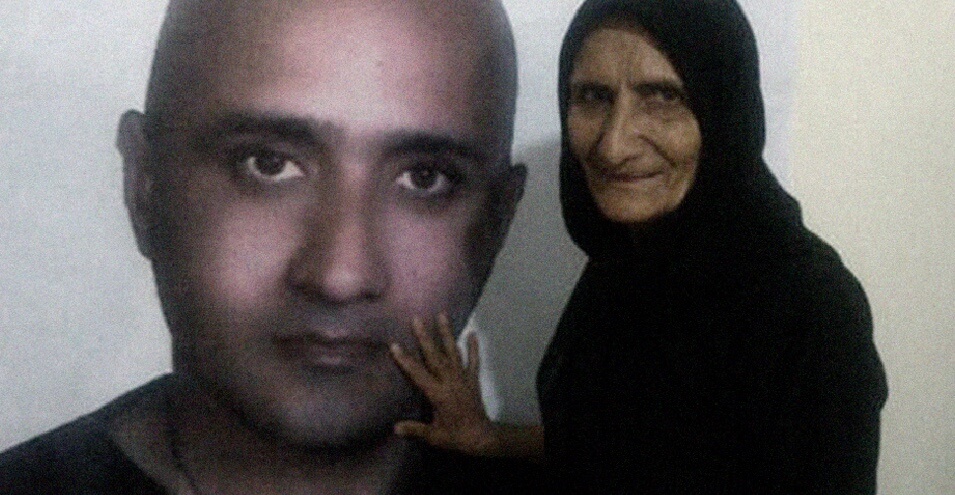
The two-day detention of Gohar Eshghi, the mother of Setareh Beheshti, when she was heading to participate in the memorial ceremony for her son’s death and commemoration of the victims of the November 2019 protests, carries a clear message and is a testament to the unity and consensus of victims’ families on the concept of “justice-seeking.” Gohar Eshghi, who lost her son nine years ago as a result of torture by detention center officials, now joins the ranks of justice-seekers of the November 2019 protests to “mourn” her son. The Setareh Beheshti Foundation, announcing the detention of Gohar Eshghi along with her daughter and son-in-law, stated that their detention occurred as they were scheduled to hold a memorial ceremony on Thursday, November 5 (Aban 13), at the invitation of the foundation, commemorating Setareh Beheshti’s death and honoring the victims of the November protests, with the presence of Gohar Eshghi and other political activists.
The continued activities of justice-seekers regarding the 1980s executions in keeping alive the memory of that unprecedented crime in the history of the Islamic Republic of Iran, which these days is being partially revealed in the Hamid Noori trial in Sweden, shows that power is always defeated by the continuation of justice-seeking and the efforts of justice-seekers to fight against the oblivion of oppression.
The solidarity of justice-seeking among families of victims of government crackdowns in past years, especially after the violent and widespread repression of people in November 2019, has become more evident.
Families accompanying each other at memorial ceremonies for their loved ones and supporting one another is another aspect of the connection between the concept of mourning and justice-seeking; in a sense, an effort to find an outlet from “shared grief and anger.”
The effort to obtain the right to mourn and the torturous suffering endured by survivors of victims is, in fact, an important part of the justice-seeking movement in recent years in Iran. This effort is in fact a historical record that the authorities are trying to destroy with violent tools.
Source: Iran Human Rights Campaign