Deportation of Iranian Refugees from Turkey Accelerates
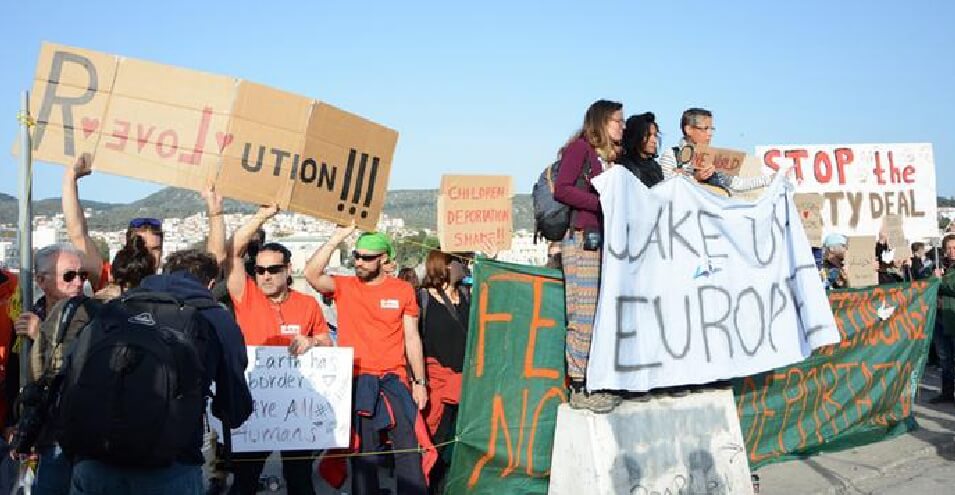
Many Iranians fleeing political persecution seek refuge in Turkey, but Turkey often ignores refugee rights and deports applicants in numerous cases. Burcu Karakas, correspondent for the Turkish section of Deutsche Welle, has prepared a report on this issue.
Hamed has been living in Turkey for six years. The 38-year-old journalist had come under the watchful eye of security authorities due to his critical reports. One day, his father called to tell him that officers had raided his house to arrest him, searched everywhere, and seized his computer. That phone call changed Hamed’s fate. He didn’t know what to do. He hid here and there for a week and eventually came to Turkey; the only way to escape the country.
Burcu Karakas, correspondent for the Turkish section of Deutsche Welle in Istanbul, writes citing Turkey’s Interior Ministry that in 2019, approximately 3,500 Iranians filed asylum requests, with political issues being the primary reason for applications. Most applicants are human rights activists, social media activists, women, and young Christians.
Mahmud Kachan, a member of the Van Bar Association, tells Deutsche Welle: “Afghans generally flee military conflicts, but Iranians flee their own regime.” The city of Van, located at the far eastern edge of Turkey, is the first gateway and transit point for Iranians under political persecution.
Many Iranians cross the border legally, while some enter Turkey through difficult and illegal routes. Hamed reached Turkey through the mountains, hoping there would be more freedom here and that he could live or work in safety. He says: “I have become subject to a contradictory self-censorship because Turkey has security cooperation with Iran and could hand people like us over to Tehran within a week.”
Hamed refers to a friend who is now in Evin prison; a friend who was arrested after being deported from Turkey and sentenced to 20 years. Hamed’s friend has sent him a message to be careful about the close security cooperation between Ankara and Tehran.
Mahmud Kachan, a lawyer, says that Iranians who have prominence and relative influence in public opinion are classified as special individuals and this group faces greater risk of deportation than others.
Farhad is another Iranian citizen who fled to Turkey for political reasons. In Iran, he faced a ten-year sentence, but managed to escape before his trial. He says: “I was active on social media with various people, all of whom were eventually identified and arrested.”
Mahmud Kachan, a lawyer, points to difficulties in obtaining asylum, including lack of transparency and lengthy delays in reviewing applications: “In many cases, applicants are told ‘come back in two years.'” He says this slowness and inefficiency pushes applicants into illegal residency, and the point is that deportation of applicants also occurs on these same grounds, despite all potential dangers.
Nasim Papayani, a member of the International Committee of Amnesty International and civil activist, says many complaints have been received that Turkish authorities do not review asylum applications in accordance with the relevant convention, and in many cases, asylum seekers have been forced to return to Iran due to prolonged uncertainty.
Papayani adds that returning to Iran is dangerous for many people and can lead to arbitrary arrests: “This is while according to Turkey’s own laws, deporting an asylum seeker to a country where there is risk of execution, threat to life, or deprivation of freedom is not permitted.”
Turkey’s Interior Ministry and the “Migration and Integration” commission of the Turkish Parliament have not responded to Deutsche Welle’s questions on this matter.
Many legal experts believe that this treatment of Iranian refugees in Turkey intensified two years ago; when the responsibility for registering applicants was taken from the UN High Commissioner’s office and transferred to Turkey’s immigration departments and the country’s police.
Mahmud Kachan shares this view and believes this change ignores many standards and is accompanied by excessive bureaucracy and arbitrary decisions. He cites one of his clients as an example, who was a member of the Democratic Party of Iranian Kurdistan and whose political asylum and that of his family had previously been officially recognized by the United Nations.
Kachan says Turkish immigration office staff mocked his client and said there was no such thing as an external Kurdistan. After his asylum was revoked, he was forced to leave illegally with his family to Greece.
The security cooperation between Tehran and Ankara is not a hidden issue. Reporters Without Borders, in a statement in spring 2020, called on Turkey’s immigration office and the United Nations to ensure the security of refugee journalists and help them obtain residence in a safe country.
Abduction or assassination of Iranian refugees in Turkey has precedent and is not uncommon. Arash Sharaee Shargh, editor-in-chief of the Guilan Now website, was one example of abduction in the city of Van in 2018 and transfer to Tehran. In November 2019, Masoud Molavi Vardanjani, administrator of the “Black Box” Telegram channel, was shot and killed on one of Istanbul’s streets.
Source: DW