Depriving Political and Ideological Prisoners of Medical Services is a Deliberate Government Act to Eliminate Opponents
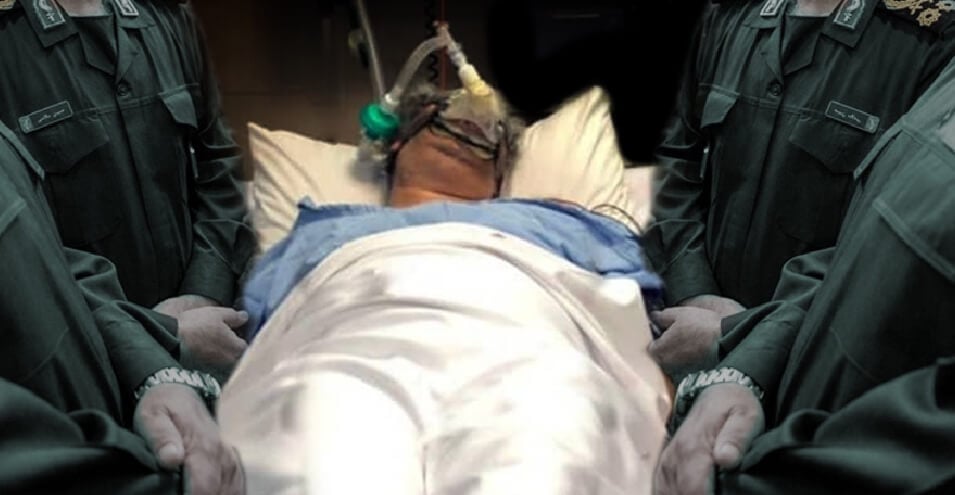
The deterioration of poet and filmmaker Baktash Abtinee’s physical health condition while imprisoned in Evin Prison is a direct and evident result of unlawful and discriminatory conduct by judicial authorities toward political and ideological prisoners in Iran, who employ the most inhumane methods in dealing with critics and opponents and show no regard for prisoners’ lives and health. Preventing prisoners’ access to medical facilities and treatment services and obstructing the treatment process of prisoners has become a routine matter, and instead of halting this inhumane and rights-violating process, the authorities utilize it to advance their goals in suppressing the voices of critics.
Hadi Ghami, director of the Human Rights Campaign in Iran, while expressing concern about Baktash Abtinee’s health condition, a member of the Iranian Writers’ Association, stated: “The indifference of responsible authorities toward prisoners’ physical health and the continuation of inhumane treatment represents the most brutal form of torture and violence against those imprisoned solely for expressing their opinions.”
According to Hadi Ghami, “Through such conduct, the authorities not only aim to eliminate critical and opposing figures, but also seek to create fear and terror among other activists and government critics, a matter that has intensified concerns about the authorities’ gambling with prisoners’ lives.”
The Human Rights Campaign in Iran views the continuation and repetition of unlawful and inhumane conduct by prison authorities toward political and ideological prisoners as part of the systematic and violent process by which the authorities suppress dissenting and critical thoughts and voices, which have been suppressed over the past years through various means that violate human rights. The dark track record of Iran’s judicial system authorities in protecting the lives and health of political and ideological prisoners, and the authorities’ lack of accountability for severe physical and psychological harm inflicted upon prisoners during detention, which in many cases has led to prisoners’ deaths, is clear evidence of the authorities’ discriminatory view toward ideological and political prisoners and civil activists. While calling for the immediate and unconditional release of all those imprisoned solely for expressing their opinions, the Human Rights Campaign in Iran considers the conduct of judicial and prison authorities in complicating treatment processes and medical examinations for prisoners as an explicit and public violation of human rights and an inhumane tactic in eliminating critics and opponents, which has become a routine procedure for the government. A procedure that begins with prosecuting critics and issuing severe sentences and continues with inhumane and unlawful conduct by prison authorities toward detainees.
Deaths of Political and Ideological Prisoners in the Shadow of Judicial and Prison Authorities’ Negligence
In recent years, many political and ideological prisoners have died in Iran’s prisons either due to lack of treatment conditions, hunger strikes, or under suspicious circumstances; Sasan Niknemat, Behnam Mahjoubi, Sattar Beheshti, Vahid Seyadi, Alireza Shirmohamadi, and Kavous Seyed Amami are among those who died in Iranian prisons in the 1990s (Persian calendar). Nevertheless, in none of these cases have judicial authorities and prisons been willing to accept responsibility, nor has anyone been prosecuted in this regard. The death of Adel Kianpour, a political prisoner detained in Sheiban Prison in Ahvaz following his hunger strike, is the latest example of the repeated tragedy of political prisoners’ deaths in Iran, with direct responsibility lying with Iran’s judiciary. Alongside these individuals, mention can be made of other prisoners who have been living in very severe physical conditions in prisons, and despite protests and hunger strikes, no one heeds their suffering; Khaled Pirzad, a political prisoner detained in Sheiban Prison in Ahvaz, who has repeatedly engaged in hunger strikes to protest neglect of his physical condition, or Kemal Jafari Yazdi, a chemical warfare veteran and signatory to the petition calling for the leader of Iran’s Islamic Republic to resign, who despite a legal medical order, has been deprived of access to medical services.
The United Nations has repeatedly expressed serious concerns about the continuation of deprivation measures against prisoners regarding access to health facilities and the lack of medical care for detainees.
Under Iranian criminal law, omission by individuals bearing responsibility toward others, if it results in death, can constitute the crime of “murder.” Article 295 of the Islamic Penal Code states in this regard: “If someone abandons an action they have undertaken or a specific duty imposed upon them by law, and as a result a crime occurs, and they had the capability to perform that action, the resulting crime is attributed to them and is classified as intentional, semi-intentional, or purely accidental; such as when a mother or wet nurse undertaking to breastfeed fails to feed the child, or a doctor or nurse abandons their legal duty.” Furthermore, Iran’s prison organization regulations explicitly refer to a prisoner’s right to access medical treatment. Article 118 of the Regulations of Iran’s Prison Organization and Protective and Educational Measures states “Examination and, if necessary, treatment of sick inmates is the responsibility of the prison administration or vocational training and employment centers.”‘
Given the exemplary nature of the cases mentioned in Article 295 of the Islamic Penal Code, it can be said that prison authorities and judges, including prison oversight judges and criminal sentence enforcement judges, if they abandon their legal duties regarding medical care for sick inmates and cause a prisoner’s death, can be prosecuted on murder charges.
Nevertheless, prisoners’ accounts and repeated conduct by judicial authorities completely violate this section of laws and regulations, and despite numerous physical and psychological harms to prisoners and sometimes their deaths in prisons, none of the responsible authorities in Iran’s Islamic Republic have been prosecuted or punished in this regard.
Concerns About Baktash Abtinee’s Physical Condition
On Sunday, December 2, the Iranian Writers’ Association announced that Baktash Abtinee, former secretary of the association, has fallen into a coma requiring artificial respiration. In the Iranian Writers’ Association’s statement, it stated “Four days of his wandering in Evin Prison between the ward and health unit without receiving treatment, his nighttime transfer to Taleghani Hospital and being chained to the hospital bed, keeping his family and cellmates uninformed of his condition, and the burning of vital days and moments for Abtinee and his family in attempting to obtain furlough are part of the conscious and deliberate conduct of the government and its jailers in endangering Abtinee’s life.”
Baktash Abtinee’s underlying medical history, as a member of the Iranian Writers’ Association, heightened health concerns among his family. Baktash Abtinee contracted COVID-19 twice during his detention and was hospitalized for a period this summer due to medical problems. The release of images of him in the hospital wearing prison clothes and chained to the bed generated significant reactions.
Baktash Abtinee, along with Reza Khandan (Mahbadi) and Keyvan Bazhgan, three members of the Iranian Writers’ Association, were sentenced in 2018 to six years in prison on charges of “publishing the association’s internal newsletter,” “preparing a research book on the fifty-year history of the Iranian Writers’ Association,” and “visiting the graves of victims of the serial political murders of Jafar Pouyandeh and Mohammad Mokhtari and participating in Ahmad Shamloo’s annual memorial ceremony.” In September 2020, these individuals’ sentences became enforceable. At that time, Naser Zarafshan, lawyer for the Iranian Writers’ Association, referring to the charges against the writers, told the Human Rights Campaign in Iran that none of these charges had legal or judicial basis, and there were many contradictions regarding the issuance of these sentences and announced punishments.
In October of this year, Arash Ganji, secretary of the Iranian Writers’ Association, was imprisoned to serve his five-year prison sentence. In recent years, many Iranian writers and poets in various cities of the country have faced security and judicial confrontations. Alireza Nouri, Nima Ghassemi, Khosrow Borujardi Sadeghi, Akbar Azad, Naser Hameti, Marjan Davari, and others are among the writers and poets who faced judicial confrontations solely for expressing their opinions.
Hadi Ghami, director of the Human Rights Campaign in Iran, referring to the government’s unstoppable process in dealing with opposing and critical thoughts, stated: “Hearing and publishing the voices of critics and opponents within Iran in conditions where comprehensive suppression casts a shadow over their lives and work is a fundamental and important duty of human rights organizations and the international community, perhaps thereby somewhat reducing the shadow of government suppression.”
Source: Human Rights Campaign in Iran