Destroying Historical Memory Instead of Accountability: A Critique of Alireza Dabir’s Remarks on Azadi Stadium
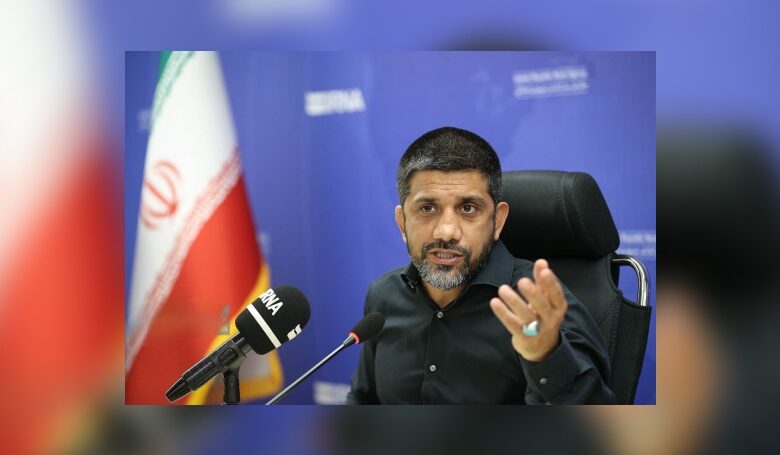
The destruction of historical memory and the denial of names raised serious questions about the moral responsibility of “Alireza Dabir” in his public position.
Recent remarks by “Alireza Dabir,” president of the Islamic Republic of Iran’s Wrestling Federation, regarding Azadi Stadium have sparked a wave of reactions in the public sphere and on social networks. Statements that not only fall short of expectations from a national-level sports administrator, but have once again brought the issue of erasing history, denying collective memory, and ideological hostility toward the past to the center of social discourse.
Azadi Stadium, regardless of naming and political narratives, is one of the most important sports, cultural, and social symbols of contemporary Iran; a place that for decades has hosted the joys, tears, national achievements, and shared memories of millions of Iranians. Dealing with such a symbol not from a technical perspective, but from an angle of historical animosity, raises serious questions about the approach governing the country’s cultural and sports management.
Alireza Dabir, in remarks that quickly gained widespread attention, said: “If it were up to me and I was given permission, I would completely demolish Azadi Stadium and destroy it so that no one would know that someone [Mohammad Reza Shah Pahlavi] built this stadium.”
This statement, instead of focusing on improving infrastructure, maintaining national assets, or solving the real crises in the country’s sports, is directly tied to the denial of a name in history; as if the physical destruction of a building could erase the past or remove historical facts from society’s memory.
In response to these remarks, a person whose name has been withheld published a critical text that reflects the anger, bewilderment, and protest of a section of public opinion. This response, which has been widely circulated, states: “Mr. Dabir, you used this stadium for 48 years and received its benefits and believed it was built from public funds and part of the country’s national resources. How does a single name bother you so much that you are willing to destroy a stadium of this grandeur and magnificence just not to hear it, yet hearing about government corruption and the privileges of the wealthy and officials doesn’t bother you?
If the plan is to demolish a building to avoid hearing the name of a dynasty leader or person who causes you distress, then you should demolish the country’s railways, the country’s airports, refineries, power plants, Bushehr nuclear power plant, Veresk Bridge, the country’s roads, Iran Khodro factory (Iran National), and dozens of other factories, parts of the arsenal and weapons, the remaining army assets including the strongest air, naval and ground forces, and even the air force that was ranked among the world’s best, banks that you brought to complete bankruptcy, not banks that were established for embezzlement, numerous hospitals and health centers, university and educational centers, membership in international organizations, urban and intercity transportation fleets, and many other buildings and facilities.
Destroy cultural centers that generate income for the country through tourism such as a site located in Fars province, the Hafiz mausoleum, the Saadi mausoleum, Naqsh-e Rostam, Naqsh-e Rajab, Persepolis, the Anahita temple and others, so that the name of one person (Mohammad Reza Shah Pahlavi) doesn’t reach your ears, since you are illiterate and carry a United States passport in your pocket. You are even afraid of hearing the names of Ali Daei and Rasoul Khadem, so how is it that out of mere vanity for the demolition of Azadi Stadium and for self-promotion, you are talking nonsense?
You who sits at the decision-making desk and recites optional prayers, have you forgotten the martyrs of the eight-year war with Iraq, how children aged 12 gave their lives for a mere piece of land? Of course, I emphasize that the martyred children at that time were raised by those very people whose names you don’t want to hear. This means their power and capability were greater than yours, so much so that you are even afraid of hearing their names, which further reveals your incompetence and weakness.”
Apart from the harsh tone of this response, its central question is worth contemplating: “Why have the erasure of names and historical symbols become more sensitive than corruption, inefficiency, and injustice?”
From a Christian and ethical perspective, a society that instead of repentance, reform, and accountability, seeks to demolish symbols is in fact not confronting the real issue. The Bible repeatedly warns that “a house built on ruins will not stand firm.” Destroying symbols is not a sign of strength, but often a sign of fear of the truth.
Alireza Dabir’s remarks, more than being a personal opinion, reflect a kind of official approach; an approach that sees history not as a teacher, but as an enemy. The fundamental question here is: Is it the duty of today’s managers to destroy the past, or to build a future that is honest, just, and accountable?