Establishing Justice: Global Demand for Seizure of Islamic Republic Affiliates’ Assets
A global call for confiscation of assets belonging to Islamic Republic government affiliates has been raised, as Christian activists urge practical Western action to counter the economic immunity of perpetrators of repression.
The organization “Christian Activists for Free Iran,” through a statement addressed to Western governments, has called for practical measures to identify and confiscate assets of Islamic Republic security institutions and individuals affiliated with the Islamic Revolutionary Guards Corps (IRGC) outside the country. This call has been made in support of victims whose assets have been seized within Iran by the government due to political, civil, or religious activities.
This statement, which was sent to the foreign ministries of several European countries including Germany, France, Denmark, and Austria, warned against the expanding process of asset confiscation from opponents and described the international community’s silence on this matter as “unjustifiable.”
Part of the statement reads: “The Islamic Republic has for years used the confiscation of assets from opponents, political activists, journalists, and families of critics as a tool for repression and intimidation.” These remarks indicate growing concerns about the systematic use of economic pressure as a tool to silence dissenting voices.
The organization, which consists of church leaders, clergy, and Christian activists from various countries, has called upon the governments of the United States, Britain, Canada, and other countries committed to human rights principles to meticulously identify financial networks, accounts, and companies related to Iran’s security institutions and place them under monitoring and restrictions.
According to the proposed recommendation, in cases where these assets’ connection to human rights violations or financing of violent activities is proven, legal procedures should be followed for their seizure, and the resulting funds should be placed at the disposal of individuals who have suffered asset confiscation within Iran.
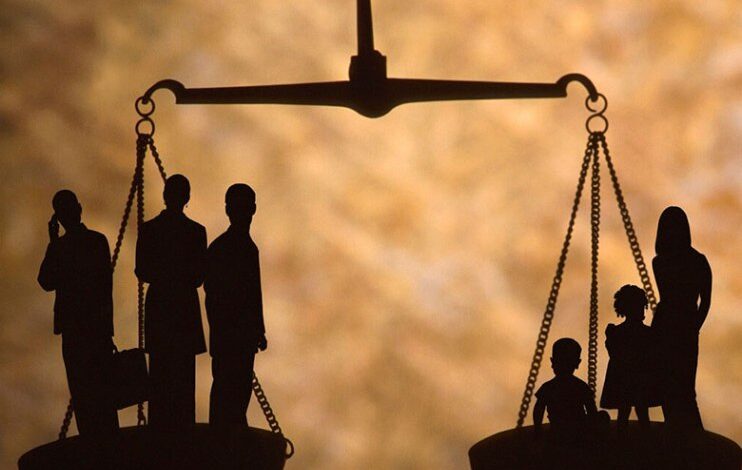
Further in the statement, attention is drawn to the obvious contradiction between the situation of victims and perpetrators of repression. This section emphasizes: “It is unacceptable that victims lose their homes and possessions, while beneficiaries of the repression structure maintain their capital with complete security in free countries.”
Christian activists believe that the continuation of this situation reinforces a form of structural injustice, whereby perpetrators of human rights violations benefit from free market economic systems, while victims are deprived of the most basic economic rights.
They have also emphasized that no government should be able to simultaneously restrict its citizens’ access to their assets while benefiting from free markets and legal systems of democratic countries to protect the property of its affiliates. The statement further reads: “If confiscation has become a tool of repression, the international community must demonstrate that oppressors and their financial backers will not enjoy economic immunity.”
The final section of this statement is devoted to the issue of placing the Islamic Revolutionary Guards Corps on terrorist organizations lists. The authors, citing measures taken by some European countries in this regard as well as ongoing discussions in Britain to make similar decisions, have called for transparency and acceleration in implementing these policies.
They have emphasized that merely issuing political statements is insufficient, and governments must take concrete measures in terms of asset freezing, legal proceedings, and holding perpetrators of human rights violations accountable.
The statement concludes with a thought-provoking sentence: “As long as only victims pay the price of repression, speaking of justice is meaningless.”
In recent years, numerous reports from international human rights organizations have also pointed to the widespread use of economic tools to pressure opponents in Iran. Based on multiple reports, it can be said that increased international coordination to counter this process could play a decisive role in reducing the costs of repression and supporting victims.