Execution of Two Kurdish Prisoners Carried Out in Complete Secrecy: No Notification Given to Lawyers and Families
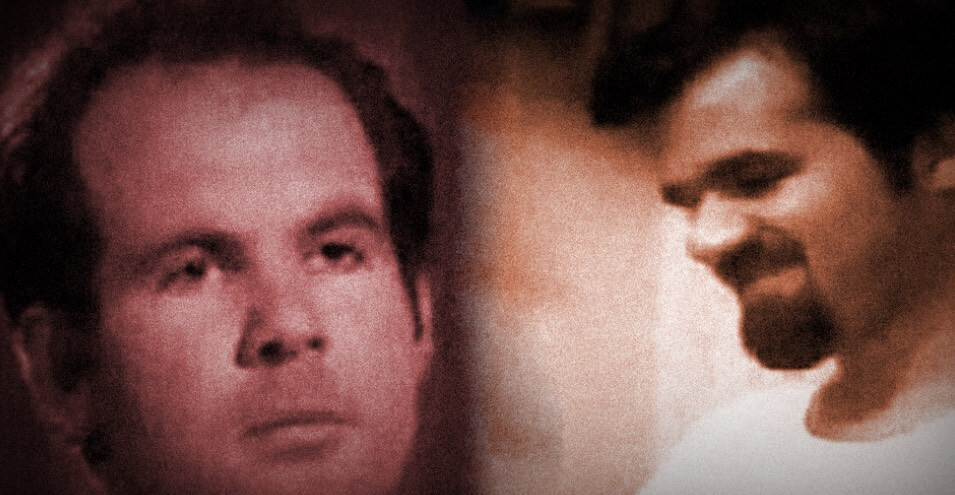
Mahdi Vakil Nezhad, the lawyer of Diako Rasoul Zadeh, a Kurdish political prisoner who was executed on Tuesday morning along with Saber Sheikh Abdollah, another Kurdish prisoner, told the Campaign for Human Rights in Iran that the execution order was not notified to him or the families of Mr. Vakil Nezhad, and the execution was carried out in complete ignorance of the lawyer and families.
Mr. Vakil Nezhad told the Campaign that he learned of the execution of his client through the media, and no response was given when the Rasoul Zadeh family inquired.
Diako Rasoul Zadeh and Saber Sheikh Abdollah were executed on the morning of Tuesday, July 15, 2015, in Urmia Central Prison. They were accused of bombing during a military forces parade in Mahabad on September 22, 2010, during which more than 11 women and one child were killed. Mahdi Vakil Nezhad, lawyer of Diako Rasoul Zadeh, told the Campaign that his client was a soldier at the time of the explosion and was stationed at the Piranshahr Border Guard military camp.
Mr. Vakil Nezhad told the Campaign: “An official letter from the Piranshahr Border Guard camp stated that Mr. Rasoul Zadeh was in that camp on September 22, 2010. After the death sentence was issued in the Mahabad court, when the case went to the Supreme Court, we raised doubts, stating that it is impossible for a person to be in a military camp and in Mahabad at the same time. The Supreme Court, based on this camp letter, overturned the sentence and announced that there are serious doubts. The case went to the Urmia branch court, and at the same time, another letter from the camp was brought stating that it is possible he left the camp and it was not recorded. Based on this second letter, they issued a death sentence again, and unfortunately our request for retrial was rejected.”
In April 2016, Islamic Republic media reported the suicide of Rahmatollah Sharifi, the commander of the Piranshahr Border Guard. He was the one who issued the letter confirming Diako Rasoul Zadeh’s presence in the camp at the time of the explosion. A source familiar with the matter told the Campaign: “After the Supreme Court overturned the sentence, the Ministry of Intelligence added a letter from the camp signed by the new commander to the case file, stating that perhaps Diako Rasoul Zadeh left the camp and his departure was not recorded. This is while the entry and exit of all individuals and soldiers to and from camps are officially recorded and registered, making it impossible for it not to be recorded.”
Hossein Osmani, another defendant in this case, was sentenced to more than 30 years in prison. Mahdi Vakil Nezhad, who also represents him, told the Campaign: “Mr. Rasoul Zadeh had confessed to carrying out the bombing. In court, both I and his family insisted that if he was tortured, he should say so. He said nothing, and unfortunately we could not help him. Mr. Osmani, however, did not confess from the beginning; he denied all charges and said he did not know these people at all. His initial sentence was also execution, but when we objected, it was eventually overturned, and then the first branch of the Mahabad Revolutionary Court sentenced him to 30 years in prison with exile.”
Hossein Osmani is currently imprisoned in Urmia Central Prison.
According to Mr. Vakil Nezhad, his clients were accused of “waging war through membership in the Kurdistan Democratic Party-Iraq (KDP-I) and participation in the bombing on September 22, 2010, during the military forces parade ceremony in Mahabad.”
This is while Diako Rasoul Zadeh, at the time he claimed in his confession to have been in a KDP-I camp, was stationed at the Piranshahr Border Guard military camp. A source familiar with the matter told the Campaign that “the Ministry of Intelligence promised Diako Rasoul Zadeh and Saber Sheikh Abdollah that if they confessed to having a hand in the Mahabad explosion, they would be released within 5 years.”
According to this source, “both confessions were made under pressure and torture, and they were coerced and threatened by the Ministry of Intelligence, saying that if they mentioned torture in court, they would be executed, but if they cooperated with the Ministry of Intelligence, they would be released after 5 years. For this reason, not only did they say nothing in court, but their families also remained silent under pressure and hoped that their children would be released, but even at the time of the execution of the sentence, the families were not notified and they were executed in complete secrecy.”
Source: Campaign for Human Rights in Iran