Fuel Smuggling: The Livelihood of Laid-off Workers in Sistan and Baluchestan
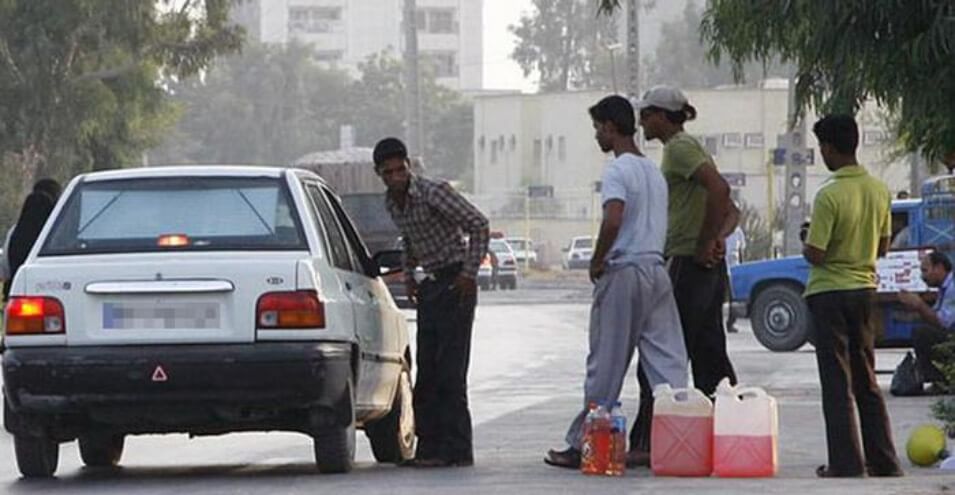
A labor official says that the lack of sustainable employment, project shutdowns, and unemployment in Sistan and Baluchestan have driven hundreds of jobless workers to fake jobs or fuel smuggling; a dangerous occupation with an average of one death per day on the roads.
Hoseinali Akbari, executive secretary of the Workers’ House of Sistan and Baluchestan, says that at the level of municipal administrations in the province, on average three to six months of wages are unpaid and one to three months of insurance is overdue. He pointed to the shutdown of water supply projects in Dasht-e Sistan and reported the unemployment of all workers employed in these projects with at least 5 years of work experience.
The ILNA news agency, quoting Akbari, writes: “Laid-off workers are living in difficult conditions. We face the same situation in the south of the province as well. Due to unemployment, people’s living conditions have become very difficult and to make ends meet, they are forced to resort to fuel smuggling and one to two people daily burn on the province’s roads due to fuel smuggling in a fire ignited by the incompetence of officials.”
The executive secretary of the Workers’ House of Sistan and Baluchestan announced that most victims of fuel smuggling road accidents have been workers who worked in a place for two to three years but lost their jobs. He called on government officials and parliamentary representatives to be accountable for the sufferings of the oppressed people of the province and to provide conditions for investment in the employment sector.
Akbari says that in the north and center of Sistan and Baluchestan, instead of sustainable employment, only temporary jobs have been created: “In Iranshahr, Saravan, and Khash, there are no favorable conditions for industrial jobs, and in the south and in Chabahar, some measures have been taken in petrochemistry and steel, but we are not optimistic about them.” In explaining this pessimism, he stated that the projects in Chabahar are at the national level and since they attract workforce from across Iran, they are not of much benefit to the people of the province.
This labor activist states that the death toll statistics from road accidents in Sistan and Baluchestan exceed the casualties of war: “Poor people are forced to sacrifice their lives for a piece of bread and get caught in accidents due to unjustified speed and reckless overtaking to reach their destination faster.”
Fuel Running and Burning Lives
Fuel smuggling in Baluchestan became widespread two decades ago with the onset of drought, the collapse of agriculture and fishing, and the intensification of unemployment among young people. The IRNA news agency recently reported a fuel smuggler named Ahmad as saying: “When I sit behind the wheel of a truck full of diesel, I feel like I’m carrying a big bomb, but to escape unemployment and secure my livelihood, I see no alternative… on the one hand, there is the possibility of any driving and road accident, and on the other hand, being caught by law enforcement and legal punishments.”
Every year, dozens of Baluch fuel smuggler citizens lose their lives when confronted by law enforcement. In mid-November, a young Baluch died while holding two empty fuel cans in the Lashar area when shot by law enforcement officers. In Shahrivar, the vehicles of two other fuel smugglers were also targeted by gunfire at the Kalgan border.
Fuel smugglers in the southeast of Iran are compared to coal carriers in the Kurdish regions of the western part of the country, who are forced to resort to such dangerous and arduous work to overcome poverty and hunger. ILNA news agency reported two years ago in a report about the casualties of fuel smuggling: “Coal carriers lose their lives to gunfire in the cold, and fuel smugglers, shot amid fire, dash their half-burned lives to the ground.”
The Friday prayer leader of Saravan in an open protest letter to the governor of Sistan wrote, among other things: “Fuel smuggling is not a job, but in the absence of work and out of necessity, instead of theft and other social disorders, they have chosen this work… organized fuel mafia has not been subjected to harassment so far, but rather the weak and poor segments of society have been targeted. For someone who is the breadwinner of the family and whose only capital is this low-model car, are such treatments just and fair?”
Source: DW