German Protestant Church Offers Free Internet to the Public
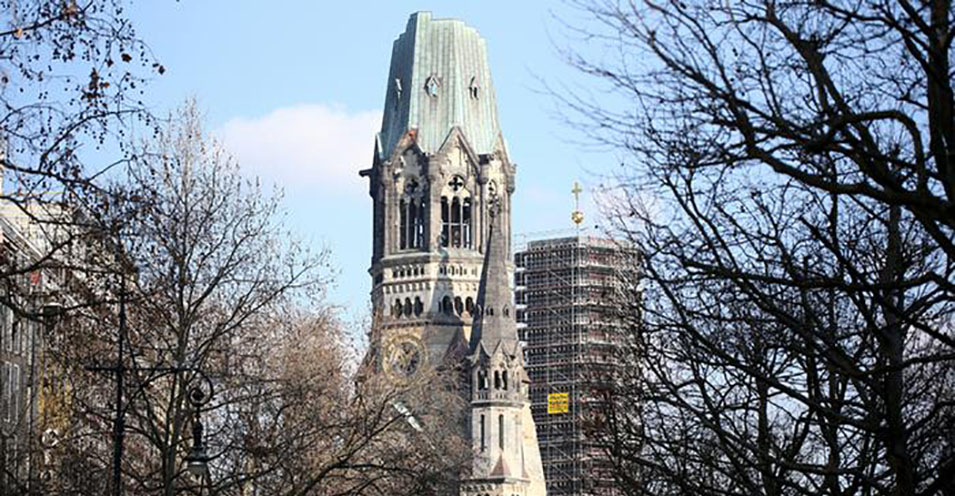
“Godaspots” is the name given to hotspots that the German Protestant Church plans to provide. This project launches at a time when Germany is one of the most backward developed countries in providing free internet in public places.
While it was once the sound of church bells that resonated through the air, a new project has now launched in Germany that will broadcast free church internet into public spaces. The German Protestant Church has demonstrated in an interesting initiative that it can address the modern needs of people, such as access to free internet.
In the first phase of the project launched to provide hotspots by the German Protestant Church, 220 churches in Berlin and Brandenburg will offer free internet to users. These hotspots have been named “Godaspots.”
The goal of the new project by the German Protestant Church is to provide free internet in three thousand churches across the country by May 2017. If successful, the project is expected to extend to Catholic churches as well.
This project, launched on the eve of the 500th anniversary of the Protestant Church, is not a commercial endeavor similar to what shopping centers or cafes do to attract customers, according to church officials.
Markus Beckdahl, an activist in the field of internet freedom, told Deutsche Welle: “Municipalities have even fallen behind in providing minimal internet as part of their public services, and in such circumstances, people have placed their hopes in civil society such as Catholic and Protestant churches.”
Germany is one of the few developed countries in the world that is not considered a suitable place for internet users when it comes to providing free internet in public environments. Statistics show that in Germany there are only two hotspots (WiFi) per 10,000 people.
The limited number of hotspots in Germany contradicts the growing number of internet users in this modern country. According to research by television networks ARD and ZDF, more than 80 percent of Germans were online in 2015, and the number of those using the internet while mobile (not at home or work) was 55 percent, showing a five percent growth compared to the previous year.
A hotspot is a physical location within which a user can access the internet through WiFi technology. Public hotspots are increasingly accessible in urban areas such as shopping centers.
However, limited access to hotspots not only affects the lives of German citizens and residents of the country, but also creates problems for those traveling to the country, a number that is increasing.
But the term “Störerhaftung” in German is a nightmare for internet providers. This term fully explains all issues related to public hotspots in Germany. This term refers to the legal responsibility of internet owners in connection with illegal downloads; an issue that has led to conservatism regarding the provision of public hotspots.
For example, if a café customer uses the internet to download a film or music, the café owner could be fined thousands of euros. This controversial law is expected to be reviewed and potentially amended this fall.
However, the church shows no willingness to wait for a change in law and has announced that it will rely on its lawyers to deal with potential legal challenges.
Fabian Kirchmer, head of the information technology department of the local Protestant Church, told Deutsche Welle: “This measure, especially if considered as an important issue regarding secure and reliable communications, is a correct and necessary action.”
Referring to the law of priest confidentiality in relation to the confessions of believers to the church, he said: “This (providing secure communications) is something we have been doing for centuries.”
According to Kirchmer, what the church has decided to do is related to “church principles as an institution.” He also says the church is seeking to “reach people with a message of joy.”
He said: “Churches have always been places where some people would pass by and others would enter to escape the heat, or to see church art, or to rest inside.”
According to statistics, of 23.6 million people registered as Protestants in Germany, fewer than one million regularly attend church.
This initiative by the Protestant Church has once again heated up criticisms that have continuously existed in recent years regarding the state of public internet in Germany.