God’s Wrath at the Pentagon; When Prayer Enters the Battlefield
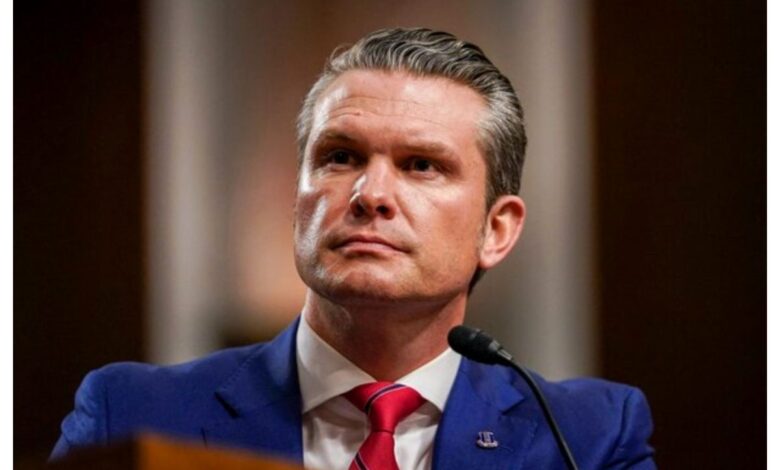
Statements by “Pete Hegseth,” the United States Secretary of Defense regarding prayer ceremonies, indicate the role of faith in the structure of major decision-making.
In a context where military tensions between the United States and the Islamic Republic of Iran have entered a sensitive phase, recent statements by Pete Hegseth, the American Defense Secretary, have drawn widespread attention to the role of religious beliefs in the structure of military decision-making. During the Pentagon’s monthly prayer ceremony, he delivered remarks that went beyond an ordinary prayer and quickly became a controversial topic in media and political circles.
This ceremony, which was attended by military personnel and broadcast live, was the first official prayer gathering since the recent military engagements began. Hegseth, referring to the widespread presence of American forces in conflict zones, emphasized the importance of prayer in critical conditions and called it “more fitting and necessary than ever before.”
During this ceremony, he read passages from the Psalms of David and also recited a prayer that had been read during a previous military operation. This prayer stated: “With your wrath, destroy the wicked. Pour your anger upon those who devise false schemes and scatter them like chaff before the wind.”
Continuing this prayer, petitions were also made that had a more militaristic tone: “Let every bullet find its target against the enemies of justice, and let the wicked be delivered to eternal damnation.”
The statements of the American Defense Secretary, particularly given his sensitive position, have sparked serious discussions about the boundary between personal beliefs and official military policies. While prayer and religious beliefs are common among many military personnel, the use of aggressive religious rhetoric at the leadership level has been considered concerning by some.
Experts in the field of religion and politics believe that such an approach could fuel a kind of ideological confrontation; a confrontation that is defined not solely on the basis of political interests, but on the basis of religious interpretations. This matter becomes even more sensitive in circumstances where the opposing party also uses religious and eschatological language in its official discourse.
Following the release of these statements, social media networks were quickly filled with reactions. Some users compared Hegseth’s tone to radical religious discourses in the Middle East and warned about the consequences of such language. According to critics, this type of expression can fuel the atmosphere of “holy war” and make the path of diplomacy more difficult.
Meanwhile, some analysts have also pointed out that the use of religious language in American foreign policy has a long history. From the era of George W. Bush’s presidency to today, we have sometimes witnessed connections between the personal faith of leaders and major political decisions. However, the intensity and clarity of the recent tone has made it a different matter.
Hegseth previously also referred to the ideological nature of this confrontation in a media interview, stating: “It is obvious that we are fighting religious zealots who are seeking nuclear capability in order to achieve a religious apocalypse.”
These statements, from the perspective of some observers, demonstrate an intellectual framework in which war is not only a geopolitical confrontation, but a clash of worldviews. Such an understanding could have profound implications for how crises are managed and the future of international relations.
While prayer is, for many people, a source of comfort and hope in difficult circumstances, raising it at the level of military policymaking has created serious questions about its function and limits. Can faith not only serve as a force for peace, but can it also become a tool to justify violence under certain circumstances?
The answer to this question may have become more important than ever; a time when the world is facing crises that have further challenged the boundary between belief, politics, and power.