Government Concerned About Declining Birth Rate, Youth Worried About Unemployment and Poverty
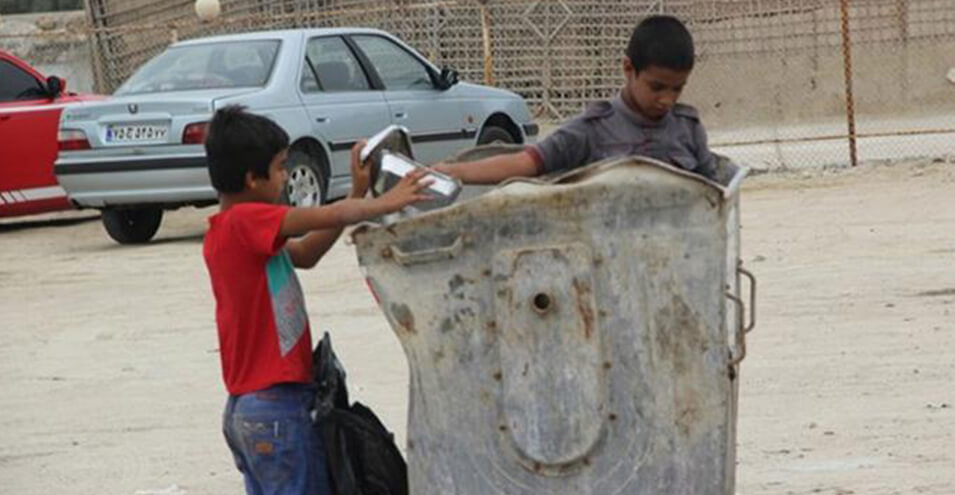
Official statistics in Iran indicate a decline in the young population. Despite pressure from officials and Supreme Leader Khamenei’s emphasis on increasing birth rates, these statistics show that neither his directives nor government propaganda have had any effect on young people. Why?
Tasnim News Agency has published reports from various news center officials about the decline of Iran’s young population and the growth of the elderly population rate in Iran, which shows that the Islamic Republic of Iran has failed in encouraging young people to form families and have children.
Despite all the banners placed on highways, state radio and television advertisements, Friday prayer sermons, and speeches by Supreme Leader Khamenei emphasizing the necessity of population growth, it appears that young people show neither enthusiasm nor urgency to have children, nor are they even willing to take on the burden of marriage.
What do the statistics say?
According to Akbar Mohazoun, director general of the Population, Labor Force and Census Office, the center’s estimates show that Iran’s population reached approximately 83 million in 1398 (2019), indicating a growth rate of 1.24 percent between the two census periods. The first census was conducted in 1395 (2016). Iran’s population at that time was 80 million.
According to him, Iran entered the middle-age phase after 1390 (2011). Current year population estimates show that 22 percent, approximately 18 million 269 thousand people in Iran are between 15 and 29 years old. Iran’s elderly population is close to 10 percent, slightly above 8 million people. A statistical comparison shows that Iran’s young population is declining at a negative growth rate of 3.24 percent.
Given these figures, one must also look at marriage statistics, which have also declined. Ali-Akbar Mohazoun says: “Marriage statistics have decreased from 891 thousand in 1390 (2011) to 550 thousand last year.” According to these same statistics, meanwhile, the marriage age, especially in large cities like Tehran, has increased.
Why don’t propaganda campaigns appeal?
The shift in the population and marriage growth curve may be explained by other statistics as well. These include the level of hope among people, especially young people, in the future, which itself depends on multiple factors, such as welfare facilities, personal and social freedoms, and most importantly, finding employment in the job market—in a word, confidence in the future. The Islamic Republic has not had a brilliant record in any of these areas.
In Ordibehesht (April-May) of this year, the assessment of the deputy chairman of Iran Chamber of Commerce was that the unemployment rate in 1398 would “break a record.”
Tasnim News Agency reported from Hossein Salahvarzeh: “Official estimates submitted by the Iranian government to international bodies predict that the unemployment rate in 1398 will reach approximately 15 percent, which is three percent higher than the unemployment rate in 1397.” He had predicted that unemployment would “break a record” this year for these reasons:
“The first reason goes back to the low rate of investment growth, which has now become Iran’s economy’s Achilles heel. The (real) rate of investment growth in Iran has been negative for years, and in the new year, no bright prospects are seen for increasing it. This negative rate, which in fact means the lack of growth and development of existing enterprises and the failure to create new enterprises, has deprived Iran’s labor market of the driving force needed for long-term and sustainable growth demand (particularly in productive and infrastructure sectors).”
Unemployment in Iran is a chronic disease. Iranian media have repeatedly written about a “tsunami of unemployment” in various regions. To the complicated tangle of economic corruption in the Islamic Republic, the factor of sanctions has been added, continuously increasing the dimensions of this tsunami. Many small and medium-sized businesses, service enterprises are unable to survive. Enterprises that, according to officials, play an important role in the body of Iran’s labor force.
The consequences of this situation, according to the deputy chairman of Iran’s Chamber of Commerce, are a decrease in citizens’ purchasing power and the closure of people’s hands to buy many goods: “Citizens in the current situation severely reduce expenses such as entertainment costs, buying new clothes, transportation, and eating out.”
Hossein Salahvarzeh predicts that “the crisis of Iran’s economy will reach a new level in which the rising unemployment rate, even ahead of accelerating inflation, will become the first chapter of a thick book of the country’s economic problems.”
Statistics that are hard to believe in the current situation
In contrast, Iran’s Statistics Center released statistics last month about Iran’s employment situation, according to which the unemployment rate in spring of this year had a decline of approximately 3.1 percent compared to last year. The statistics released by Iran’s Statistics Center speak of a declining unemployment rate while in recent years the process of factory and business closures has never stopped and has even increased following sanctions.
However, even accepting the accuracy of what was released by this center, when it comes to young people, these same statistics do not present a bright outlook. Based on data from the Statistics Center, the employment rate of university graduates in Iran increased compared to 1397 (2018), but the share of unemployed university graduates in the total unemployment in spring of this year was more than 43 percent. This means a negative growth of about four percent within a year. According to these same statistics, the share of unemployment among educated women out of the total unemployed population is 64.9 percent.
In such circumstances, it is not surprising that the efforts of government officials to encourage young people to have children are not working. The Iranian government does not limit itself to encouragement and propaganda and interfering with people’s private lives. A policy of pressure and suppression is also part of Iran’s population increase program. Last winter, Maimunah Hosseinzadeh Chaoushi, a demographer, was arrested for conducting research on population control because any research or education in this field does not align with Supreme Leader Khamenei’s vision; raising Iran’s population to above 150 million in a bankrupt, poor, and water-scarce country. A prospect that is probably a horrifying image for many of today’s young people and tomorrow’s elderly.
Source: DW