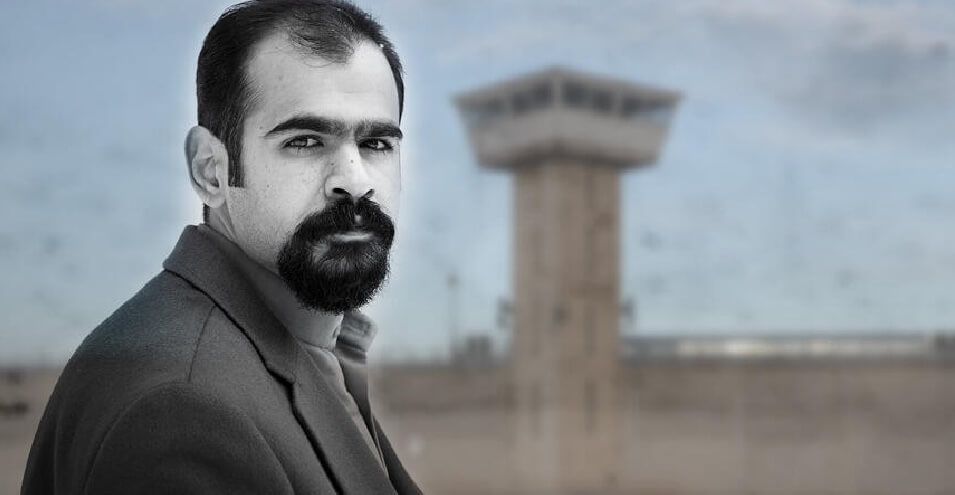
Heavy Sentences Issued for 23 Gonabadi Dervishes: Prison Terms Ranging from 6 to 26 Years, Flogging and Exile
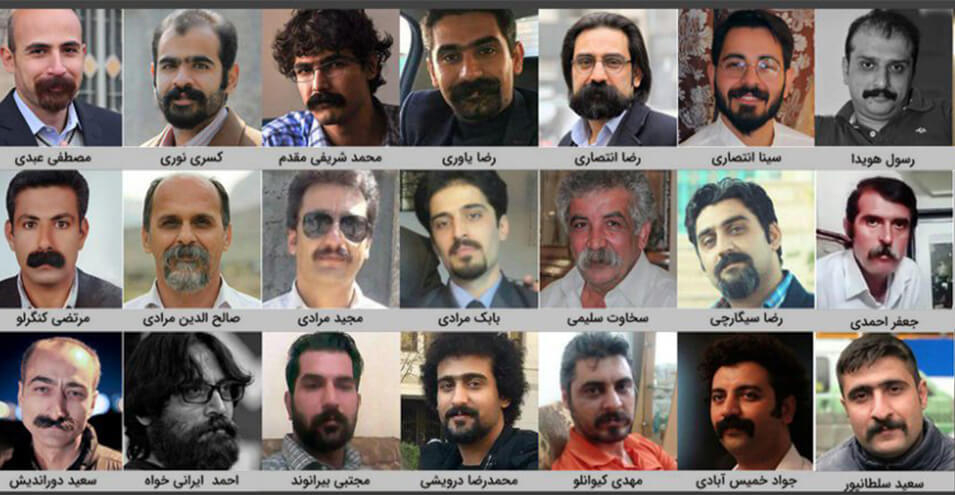
Final verdicts for 23 imprisoned Gonabadi dervishes were announced in the appeals court. These 23 dervishes, who in protest against the unjust proceedings of the revolutionary courts did not attend any of their initial or appeal court sessions, faced complete confirmation of the heavy sentences issued by the primary court.
According to a report from the Mojazoban Noor website affiliated with the Gonabadi dervishes, the 23 dervishes have been collectively sentenced to 190 years imprisonment, 46 years exile, 1776 lashes, 46 years travel ban, and 46 years prohibition from membership in political, social groups and parties, and media activities. The appeals court verdict was announced to them during March 9-12 at Tehran’s Great Prison.
The names of these 23 Gonabadi dervishes currently held in Tehran’s Great Prison (Fashafuyeh) are as follows: Kasra Nouri, Mohammad Sharifi-Moghaddam, Mostafa Abdi, Reza Yavari, Reza Entesari, Sina Entesari, Morteza Kangarlo, Salahdin Moradi, Majid Moradi, Babak Moradi, Sakhavat Salimi, Reza Cigarette, Saeid Durandiš, Ahmad Iranikhah, Mojtaba Biranvand, Mohammad Reza Derewshi, Mehdi Kiyvanloo, Javad Khomis-Abadi, Rasool Huyida, Ardeshir Eshayeri, Jafar Ahmadi, Saeid Soltanpur, Amin Soleimani.
Among these dervishes, Mostafa Abdi faces the heaviest sentence of 26 years and 3 months imprisonment. Additionally, Kasra Nouri and Mohammad Sharifi-Moghaddam are each sentenced to 12 years, and Reza Yavari to 9 years imprisonment. The remaining 17 are each sentenced to 7 years imprisonment, and 2 of them to 6 years imprisonment respectively. All 23 individuals have been uniformly sentenced to 74 lashes, 2 years exile, 2 years deprivation, and 2 years travel ban from the country.
Among these dervishes, Kasra Nouri and Mohammad Sharifi-Moghaddam were human rights activists and administrators of the Mojazoban Noor website who played an important role in reporting the conditions of Iran’s dervishes.
Previously, the Mojazoban Noor website affiliated with the Gonabadi dervishes published an open letter from imprisoned dervishes who had relinquished their request for appeal regarding their heavy sentences. In this letter, they wrote: “Requesting appeal from a government that is the source of injustice and harassment is not wise.”
These 25 dervishes even refrained from attending their initial court sessions due to them being “dictated and theatrical.” In a letter announcing they would not appeal their heavy sentences, they wrote: “The Islamic Republic government expects those who according to history and documents should be in the position of plaintiff to appear in the position of defendant and to accept the judge’s rulings that have been dictated by security officials.”
According to the Mojazoban Noor website report, currently approximately 110 dervishes are serving their sentences in Fashafuyeh and Qarchak prisons. Female dervishes are held in Qarchak prison while male dervishes are held in Fashafuyeh prison.
These dervishes are to serve their heavy sentences in inappropriate sanitary conditions in Tehran’s Great Prison.
Previously, various sources had reported the poor sanitary conditions and security situation at Tehran’s Great Prison. An informed source about the condition of Gonabadi dervishes in Hall One Tipe of this prison told Campaign in November 2018: “In Hall One Tipe of a prison with a capacity of 100 people, 400 people are held. Only three hours daily from 11 am to 1 pm there is opportunity for bathing with cold water. Even in this season, not everyone has access to hot water, of course only a very small number who are considered senior and experienced in the hall have the right to use hot water.”
According to this source, most prisoners are forced to pay money for the most basic facilities including having a bed “otherwise they must sleep in the hallway and only at night. Many prisoners cannot even remember when they last ate fruit because buying fruit in prison is very expensive and is not included in the daily meal plans, so many prisoners without means have no money to buy fruit.”
Source: Human Rights