How Did the Islamic Republic Lose the Battle for Free Information Circulation to Society?
A note by Saeed Piwandi: In Iran, a real media war is underway between a public hungry for free flow of information and a government that refuses to abide by the rules and norms of a twenty-first century open society. This war is neither new nor a phenomenon hidden from a society that has lived through the bitter experience of four decades of government censorship.
What appears new in this context is a gradual shift in the balance of power between the government and civil society. If in the more distant past the government succeeded in waging a one-sided media and information war in its favor, now the tables have turned, and a large portion of society has acquired the tools and skills that allow disenfranchised and disillusioned citizens to independently and creatively access information, data, and “unauthorized” and independent media, ending government dominance in this sphere.
All evidence suggests that this is a terrifying shift for those who considered comprehensive oversight of media and public opinion engineering to be the condition for the Islamization of society and the success of the Islamic government, and who still do.
Leader Khamenei’s remarks on the occasion of Nowruz 1400 regarding the management of cyberspace and his criticism of its “looseness” are a clear sign of this concern about the fading of government censorship and cultural engineering, and the empowerment of society in the realm of access to broad information and media, news, and “unauthorized” content and new virtual spaces for dialogue.
Comprehensive Oversight of Information Circulation
The issue of comprehensive oversight of media and cultural affairs as one of the most important tools of political domination and social control has been a major concern of officials since the beginning of the revolution. In the view of policymakers, engineering public opinion within the framework of the Shiite Islamic government’s value model, Islamizing society, and integrating large groups of people into the religious-revolutionary culture desired by the government was possible through controlling media and maintaining complete oversight of the country’s cultural sphere.
The meaning of this comprehensive oversight in the Islamic “mother of cities” is that the government plays the role of “guardian” and “protector” of the people regarding information circulation and access to media, and it is the government that should tell people, based on its own interests, what the truth is, what is good and bad, what society should read, know, see or hear, and what is inappropriate and forbidden for it. The government considers itself the bearer of a sacred mission, and to justify its official censorship policy, it appeals both to religious principles and to “public morality” and the interests of the political system.
This media approach and cultural engineering has meant placing a great cover over society and attempting to isolate Iran from the rest of the world. The way state radio and television are managed and operated is an example of this understanding of information circulation and comprehensive cultural oversight and surveillance policy. Television and radio deal with an abundance of red lines, forbidden areas, and individuals who are “forbidden to be filmed” or “forbidden to be heard,” and intervene in the country’s political affairs much like a government party.
The insistence on cultural and media engineering is to such an extent that, for example, the use of the word “dance” in a television program becomes controversial, or people with scissors of censorship monitor sports broadcasts from abroad, carefully ensuring that viewers’ eyes do not fall upon the “inappropriate” clothing of female spectators—concerns that perhaps cannot be found anywhere in a conventional government of our era with its diverse media.
A 40-Year Protracted Media War
The government’s war with unauthorized media, informal culture and art, and free information circulation has a 40-year history. Censorship policy in the 1980s primarily involved comprehensive oversight of media, cultural and artistic affairs, and book publishing. In the 1990s and 2000s (solar calendar), the policy of oversight and pressure on independent press and journalists was joined by the war against satellites and people’s efforts to climb walls to dismantle receivers. The goal was to prevent access to free information circulation and media that could inform people, open the doors of another world to them, and fuel religious and political “doubts.”
Authorized non-state media were also forced in practice to submit to this government censorship. Breaking out of the narrow circle imposed by the government and reporting “unauthorized” news and stories meant the end of their existence. The decades of the 1990s and 2000s (solar calendar) in Iran were a dark and bitter period of closing down a large number of media outlets and continuous harassment of journalists, writers, artists, and civil activists.
The first meaningful shift in the relationship of media power began with the gradual introduction of the internet and the emergence of social media. Iran’s dynamic and freedom-hungry society was then engaged in an indescribable eagerness to search for ways to reduce censorship pressure and government restrictions. The unprecedented prevalence of blogging in Iran and the emergence of a large number of citizens who each played the role of a media outlet transformed the media landscape of that period. The Green Movement took shape in such an atmosphere, and activists smartly exploited cyberspace to fight repression and censorship.
The New Media Power of Society
The 2010s (solar calendar) should be called the decade of the emergence of a new media power in a society where free information circulation has become a public challenge. Social media, cyberspace, the internet, and related software have brought about a great revolution in society’s relationship with mass communication and information circulation. Iran’s insatiable thirst for access to these new tools stems partly from the government’s restrictions, censorship, and closed and gloomy culture—something that can be found in few places in the world. Conditions have emerged in which it is no longer very difficult, and indeed nearly impossible, to keep reality, events, and news hidden from society.
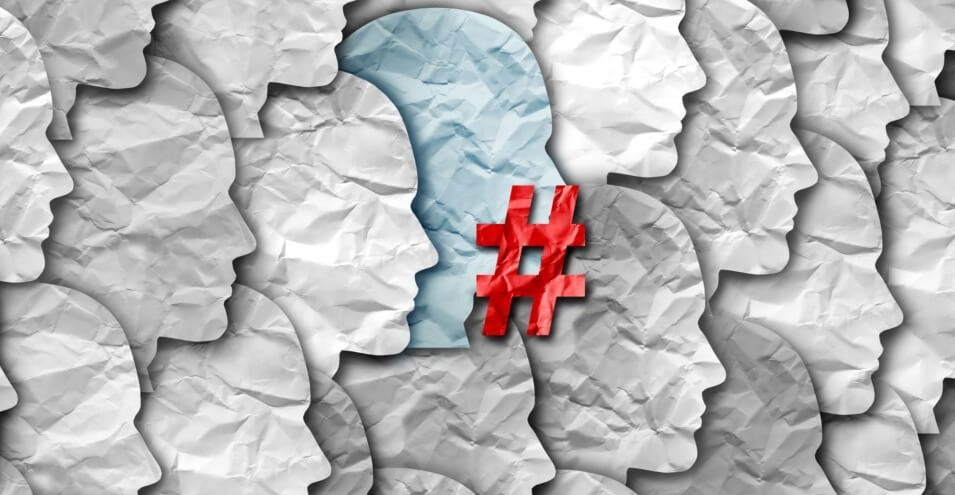
The proliferation of smartphones, the internet, and the connection of a large portion of the population to social networks despite filtering has gradually reduced the media power of the government. On social networks, news, films of past and present, messages, interpretations and articles, grievances and demands circulate hand to hand, moving from one phone to another, and free information circulation has become a horizontal process, transforming from bottom-up into a public and national phenomenon.
Virtual social networks have bridged the geographical distance between the millions-strong diaspora scattered around the world and inside the country, and access to cross-border media has become very easy.
A Painful Shift for the Government
There was a time when the government bullied and imposed whatever it wanted on the country’s media landscape. Today, society enjoys a kind of independence in the realm of information circulation and media access despite the continuation of restrictions. It seems that by sharing news, publishing uncensored news, republishing critical articles and content, challenging official reports, and taking a satirical approach to the superstitious world of religious and political officials, people are taking revenge for four decades of government monopoly and censorship.
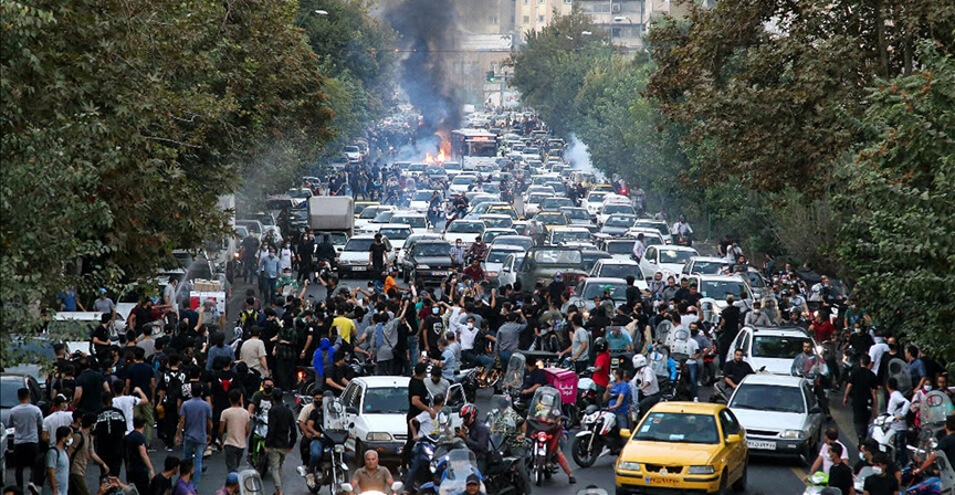
Major events of the past few years, such as the street protests of November 2019, the downing of the Ukrainian airliner, major corruption cases involving officials and their children, and campaigns regarding victims of security forces or the judicial system, have been scenes of this media battle between society and the government.
Another example of the shift in the balance of power in the realm of information circulation is the formation of a new type of indirect relationship between society and the government. Today, society fearlessly questions the government’s policies, beliefs, statements, and behavior and conduct in cyberspace and poses fundamental questions to them.
For example, the 25-year contract with China becomes a subject of public debate, critical writings and interpretations are passed hand to hand, and officials can no longer ignore public opinion as they did in the past and be content with propaganda and one-sided statements. Even in religious matters, when Tehran’s Friday prayer leader raises the issue of “opening eyes” and “a compassionate look” at the act of washing the lifeless body of Mesbah Yazdi in a television program, society’s reaction in cyberspace is so widespread that he is forced to admit the baselessness of this claim and retract his words.
For a government that has always proceeded with bullying and condescending, commanding behavior, this shift is unwelcome and painful. It is not without reason that someone like Allameh Tabatabai considers the “destructive” role of the internet worse than the U.S. Army. The government no longer holds the initiative in the realm of information circulation, and it is society that wages war against the system of government propaganda and monologue through media actions, widespread dissemination of information, and criticism of official reports. For the first time in the past four decades, the government, and especially the shadow government, has lost the media battle in practice to the public sphere.
One of the main consequences of the nationwide movement of news-sharing and confrontation with government media and propaganda is that the traditional ceiling of censorship has in fact lost its meaning. Radio, television, and other government and non-government domestic media know well that people have access to other sources as well, and are forced to change their methods of operation to attract audiences.
Government Reaction and New Forms of Media Battle
Despite the shift in the media landscape, the government has not abandoned its dream of comprehensive media oversight. Various forms of security forces’ presence and “the anonymous soldiers of the Imam of the Age” in cyberspace—from hackers’ activities and filtering policy to spreading false news and data—increase every day.
But the government is not satisfied with this level of pressure and censorship and wants to wrest the media power that people have taken for themselves. The Revolutionary Guards’ response to Leader Khamenei’s Nowruz remarks or Hamid Shahriari’s, a member of the Supreme Council of Cyberspace, statement that “the country’s information exchange space requires governmental oversight” shows the existence of a strong will to turn back the tide. Many policymakers are pursuing the implementation of the Chinese, Russian, and North Korean models for monitoring public opinion and censoring cyberspace.
The Political Meaning of the End of the Era of Government Comprehensive Oversight
The political meaning of this important transformation in the realm of information circulation and new spaces for dialogue in society is the disruption of the psychological balance of power to the government’s disadvantage. Today’s society has gained the ability to protest government policies and inefficiency in various ways, expose the hidden secrets of the Islamic system, escape government censorship to create new spaces for dialogue, criticize officials and policies, and demand answers from them.
In turn, government media and officials are now forced, unlike in the past, to respond to what people know and ask, and to move from a defensive position to justify their actions and policies.
In conditions of political crisis, this superiority and media openness for the public sphere is vital. In fact, the key to future transformations may partly depend on this media war itself.
In a country where civil society, political parties, unions, and non-governmental and professional associations are constantly pressured and suppressed by the government, a kind of nationwide virtual opposition emerges and challenges government authority in various spheres.
Source: Radio Farda