Imprisonment for Iman, ‘Hossein (Danial) Mohammadi’ and ‘Zahra (Hana) Golami’ Under Pressure of Heavy Sentences
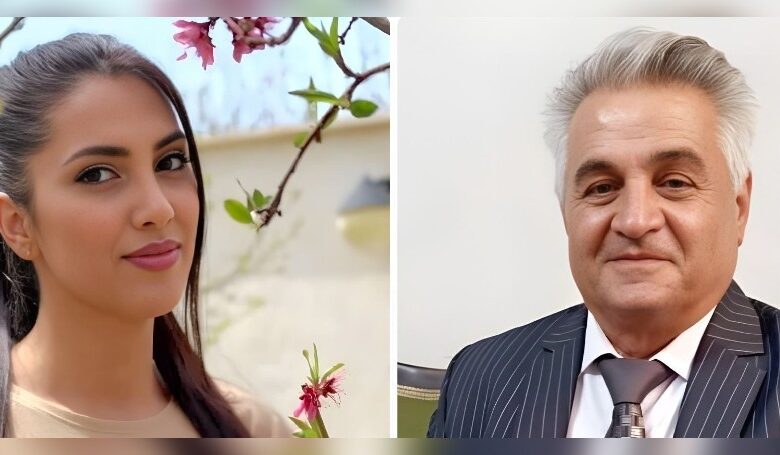
“Hossein Mohammadi” (Danial) and “Zahra Golami” (Hana), due to their Christian faith, face heavy prison sentences and have been summoned to the prosecutor’s office for execution of their sentences.
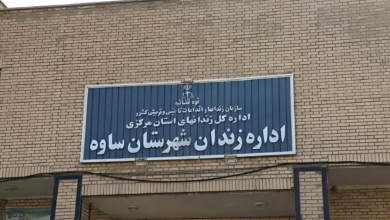
According to reliable information, two Iranian Christian citizens named Hossein (Danial) Mohammadi and Zahra (Hana) Golami, on Sunday, November 16, 2025, after receiving a summons for sentence execution, reported themselves to the Second Branch of Criminal Sentence Execution of the General and Revolutionary Prosecutor’s Office of Malard. This action took place while the legal status of Christian citizens in Iran has consistently been accompanied by security and judicial pressures.
These two Christian citizens were arrested on December 11, 2023, following a raid by security forces on a family gathering near Shahriar. The gathering, which Christians attended, was held to plan Christmas celebrations.
On that day, approximately 30 Ministry of Intelligence officers raided the location, confiscated mobile phones and communication devices of all attendees, and separately interrogated each person for around half an hour. Over the following weeks, all attendees were repeatedly summoned and re-interrogated. After searching the gathering location, officers arrested three attendees named Zahra (Hana) Golami, Hossein (Danial) Mohammadi, and Sirous Khosravi, and searched their homes.
Simultaneously, two other citizens, including Timour (Kourosh) Hosseini, an Afghan citizen residing in Karaj, were arrested at their homes and workplaces. The Ministry of Intelligence and the Revolutionary Court opened a joint case file for these individuals.
At that time, Hana and Danial were immediately arrested following the search of their homes, but Sirous Khosravi was immediately released. Khosravi was subsequently summoned for further interrogation days later and temporarily detained, then released without bail on January 2, 2024. Khosravi was the father of twin children who were awaiting kidney transplant surgery due to kidney disease at that time.
During the continuation of judicial interrogations, the case of four citizens was reviewed and Hana, Danial, and Kourosh were released on very high bail (two billion tomans) between February 19 and March 21, 2024, and the fourth citizen was released on a bail of 30 million tomans. It should be noted that these citizens spent 42 days in detention.
However, this was not the end. On March 12, 2024, the prosecutor of the First Branch of the General and Revolutionary Prosecutor’s Office of Malard filed an indictment against these four citizens with serious charges such as “membership in a group or association with the aim of disrupting national security” and “establishing a house church.”
In the Shahriar Revolutionary Court, “Judge Bahram Panahi” recognized them as “guilty” by referring to the criminal law and issued a sentence of two years imprisonment for Hana, Danial, and Kourosh. The fourth citizen was also sentenced to one year imprisonment on charges of complicity. This sentence was also confirmed in the appellate court and a request for retrial was rejected by the Supreme Court.
The case of these citizens represents only a small fraction of the dire situation of religious freedom for Christians in Iran. Reports indicate that Christians, particularly those who have converted from Islam to Christianity, have repeatedly been detained, interrogated, and subjected to security pressures.
Independent human rights sources, including reports published by international organizations, have confirmed that “distribution of Christian books,” “Christian home meetings,” and “contact with Christian institutions outside the country” are interpreted by the Islamic Republic with malicious security intent.
On the other hand, similar cases have been reported in other parts of Iran: for example, “Ismail Nariman Pour,” a Christian citizen in Khuzestan Province, was sentenced to five years in prison in 2024. According to reports, his charge was stated as “action against national security through contact with foreign Christian organizations.”
This wave of persecution of Christian citizens raises an important question: “Has change of faith become a national security crime in Iran?” Many human rights observers believe that the judicial and security apparatus, by using ambiguous laws, defines non-traditional Christian activities as a threat to national security. This situation is not only a violation of fundamental rights to religious freedom and belief, but also stems from the government’s concern about the increasing growth of Christianity, particularly house churches, among Iranians.
Finally, the presentation of Hana, Danial, and other citizens for criminal sentence execution and the issuance of prison sentences against them is a serious warning bell for the state of religious freedom in Iran, an event that cannot be easily overlooked.