Interrogation of Christian Deportees from America at Imam Khomeini Airport
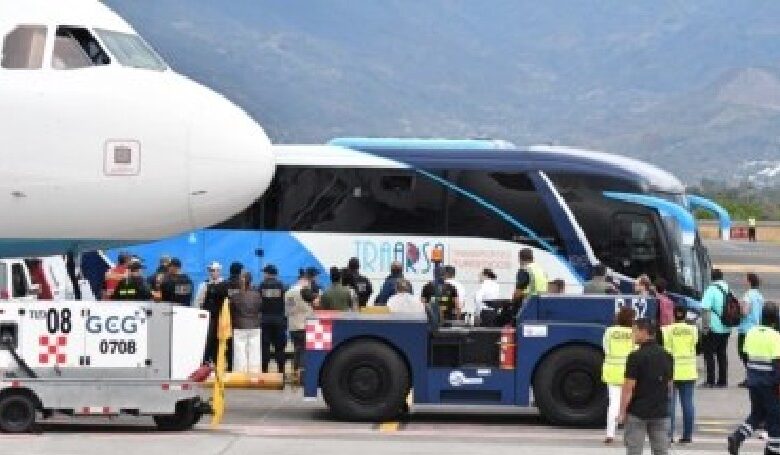
Christian citizens among migrants deported from America to Iran were interrogated by regime officials at Imam Khomeini Airport.
More than one hundred Iranian migrants, including Christian citizens, were returned to Tehran on a flight from the United States, an action that human rights activists have called “a return to the land of oppression” and “a betrayal of religious freedom.”
In an unprecedented and controversial move, more than one hundred Iranian migrants, including a group of Christian citizens and political refugees, were returned to Tehran on a flight from the United States. According to the “Word and Way” publication, this flight took place under an agreement between the U.S. government and the Islamic Republic of Iran, and among its passengers were at least 15 Iranian Christian citizens, several ethnic and political refugees, and four elderly individuals aged 72 who had lived in the United States for nearly five decades.
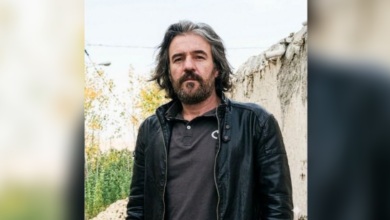
“Ara Torosyan,” an Iranian-born priest in America, expressed concern about the fate of these individuals, saying: “On this flight, there were approximately 15 Iranian Christian citizens and a number of political and ethnic refugees.” He warned that many of them face the risk of detention, torture, and even execution in Iran.
According to Torosyan, some of these individuals were in the final stages of their immigration proceedings, and some had even received preliminary approval for residency or refugee status; however, they were suddenly arrested without prior notice or opportunity to appeal, and transferred to a flight to Tehran.
American media outlets, including the Associated Press, also reported that this flight was part of “a rare agreement between the Trump administration and the Islamic Republic of Iran,” an agreement whose details have not yet been officially announced.
According to images published on social media, when the plane landed at Imam Khomeini Airport in Tehran, government media were present. Refugees were placed in separate lines, their belongings were confiscated, and according to Torosyan, “10 to 15 Christian citizens were forced to display their Bibles and crosses in front of cameras and answer questions under interrogation conditions.”
Reports indicate that these individuals were subsequently moved to separate rooms and forced to appear in videos renouncing their faith and accusing their priests of “deception.”
According to sources close to their families, these forced confessions are soon to be broadcast by Islamic Republic television, a familiar method used for years to humiliate Christians, Bahá’ís, journalists, and political opponents in Iran.
The return of this group to Iran has provoked strong reactions from Christian activists and human rights organizations. Priest Torosyan wrote in a statement: “The U.S. government handed elderly people, women, and approved refugees over to a government notorious for religious torture and imprisonment of opponents. This is not only inhumane, but a great betrayal of America’s long-standing tradition of supporting the oppressed.”
Open Doors also announced in its January 2025 global report that Iran ranks among the top ten countries in the world for persecution of Christians. The report states that Christian citizens in Iran face the risk of extrajudicial detention, violent interrogations, and deprivation of social rights.
Migration experts say the increase in Iranian entries across America’s southern border in recent years led the government to launch the CBP One application to register refugee requests; however, many Iranian refugee cases, particularly during the Trump administration, remained unresolved or were rejected.
Now, observers view the recent mass deportation as a concerning sign of America’s retreat from its historical tradition of providing asylum to religious and political minorities. This occurred only months after the U.S. Congress, with a Republican majority, passed a resolution condemning persecution of Christians in Islamic countries, including Iran.
Christians, particularly Protestant and evangelical citizens in Iran, face widespread restrictions. Holding religious services in Persian is prohibited, house churches are frequently attacked, and many priests and believers are sentenced to long prison terms for “actions against national security” or “insulting sacred values.”
From the perspective of international observers, returning refugees to such conditions is a clear violation of the 1951 UN Refugee Convention, which prohibits returning individuals to countries where they face the risk of torture or death.
The return of Iranian Christian citizens from American soil to the Islamic Republic is not merely a diplomatic error, but a moral and humanitarian tragedy. A government that claims to be a defender of religious freedom is now accused of handing believers over to an oppressive government.
For the global Christian community, this event is a warning that faith is still criminalized in parts of the world, and even in the land of freedom, its security is not guaranteed.