Interview with a Source Close to the Afkari Brothers: Entire Case Based on Forced Confessions Following Severe Torture
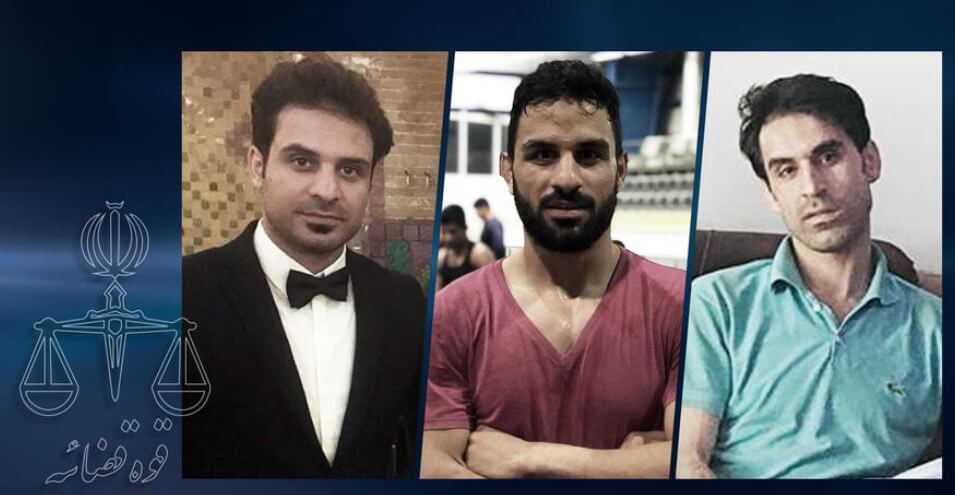
A source close to the Afkari brothers says the death sentences and lengthy prison terms for the three brothers are based on forced confessions following severe torture and threats.
This source, close to the Afkari family and unwilling to disclose his identity for security reasons, told Voice of America that the examination of their charges in three separate cases in the Shiraz Revolutionary Court, Branch One of the Criminal Court, and Branch Two of the Criminal Court of Fars Province was conducted “unjustly and without any regard for human rights principles.”
In recent days, reports have been circulated on social media about heavy sentences handed down to three brothers named Navid, Vahid, and Habib Afkari:
- Navid Afkari – Sentence: Death penalty and six and a half years in prison
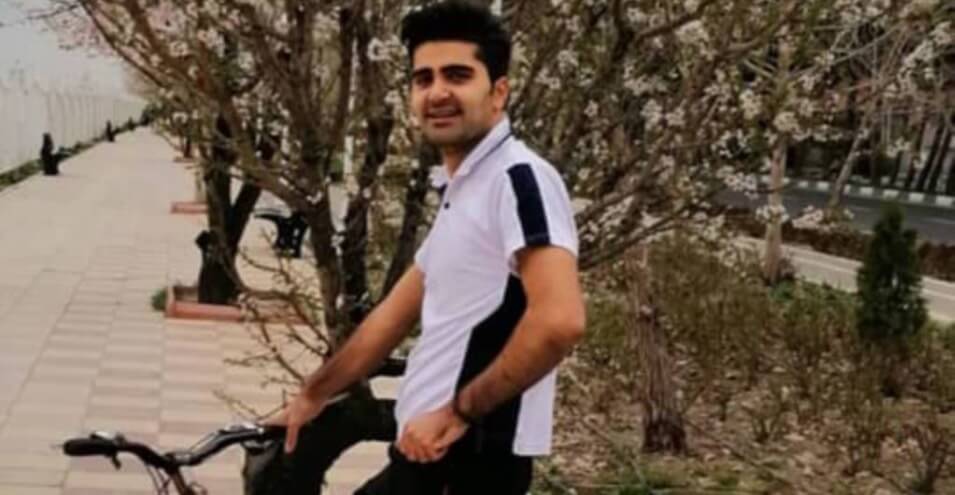
Navid Afkari Sangari, born in 1994, is a wrestler who has won several championships in Iran. He was arrested during the margins of the Mordad 1397 (August 2018) protests, which began in Isfahan in protest of the severe decline in the value of the Iranian currency against the dollar and spread to other parts of the country. His case was tried separately and he was sentenced to six years and six months in prison on charges such as inciting people to breach the nation’s security, anti-regime propaganda activity, insulting the leader, and conspiracy. However, his most severe punishment is for the charge of killing a security official during the protests in Shiraz. He has been sentenced to death twice on charges of murder and moharebeh (enmity against God).
- Vahid Afkari – Sentence: 54 years in prison
Vahid Afkari, born in 1985, Navid’s older brother, has not been sentenced to death, but two branches of the Criminal Court of Fars Province and the Shiraz Revolutionary Court have sentenced him to a total of more than 54 years in prison. In one case, the court charged him with “participation in moharebeh” and sentenced him to 27 years in prison. He has also been sentenced to an additional 27 years on charges of “complicity in premeditated murder” along with his brother.
- Habib Afkari – Sentence: 27 years and three months in prison
Habib Afkari, Navid Afkari’s younger brother, has also been sentenced to 27 years in prison. He was also tried by two courts on charges similar to those of his brothers as well as “two counts of intentional injury with a sharp object (knife),” “breaching the nation’s security,” “anti-regime propaganda activity,” and “insulting the leader,” receiving a combined sentence of this duration.
Unjust Trial
This source close to the Afkari family told Voice of America that these three brothers did not receive a fair trial. Navid and Vahid Afkari had a court-appointed lawyer in court one, assigned by the judiciary, who provided them with partially incorrect information. Habib Afkari was not represented by a lawyer during the legal proceedings. They also did not have access to the case files and evidence against them in court. Only after the sentence was issued could Navid and Vahid Afkari review their case file for only two hours in prison, in a controlled location.
This informed source told Voice of America that although most of the sentences issued in the lower court had opportunities for appeal, Navid Afkari’s death sentence is final. After being issued by Branch One of the Criminal Court of Fars Province on 25 Mordad 1399 (August 16, 2020), a request for retrial was rejected by Iran’s Supreme Court, and the case is awaiting the opinion of the head of the Iranian judiciary before being sent to the enforcement branch, and Navid Afkari’s execution could be ordered at any moment.
Torture to Assume Responsibility for the Murder
During the second week of Mordad, a man named “Hassan Turkman” was killed. Some news agencies close to security institutions said he was one of the security forces present at the Shiraz gatherings. However, the Iranian judiciary’s news agency described him as a simple employee.
Shortly after, the security and judicial apparatus identified Navid Afkari, one of those arrested during the Shiraz protests, as Hassan Turkman’s killer. They also arrested his other brothers.
Bahaie Namjoo, Navid Afkari’s mother, previously said in videos that the agents tortured her sons to testify against each other, and Vahid attempted suicide twice under these tortures.
This informed source close to the Afkari family told Voice of America that the court was essentially based on confessions from the Afkari brothers during interrogation.
Navid and Vahid Afkari retracted their confessions in court, stating that those confessions were obtained under threat and torture. They described being subjected to the most severe and brutal tortures such as “psychological torture, threats of killing and detaining other family members, placing plastic over the head and pouring alcohol drop by drop into the nose.”
Navid Afkari had previously written that plastic was placed over his face and he was tortured to the brink of suffocation and death, forced to confess to fabricated claims.
In an audio file, Navid Afkari said his right hand was broken in several places. He also confirmed that he did not know Hassan Turkman, the deceased, “but under torture, to save my family and for Vahid, I gave in to their demands.”
Forced confessions accompanied by violence by Iranian security forces have been raised before. The use of this confession method, which has been repeatedly criticized by human rights bodies, continues to be practiced by the Iranian judiciary. Some of these forced confessions by detainees, such as those of Maziar Bahari, Maziar Ebrahimi, Sepideh Ghanbarzadeh, Ibrahim Bakshi, Saeed Malekpour, and dozens of others, have been broadcast on Iran’s official television networks.
The Murder Story; Contradictions in Court Documents
This source close to the Afkari family, emphasizing that court documents on the murder and its attribution to Navid Afkari contain many contradictions, told Voice of America: “It is said that following these forced confessions, Navid claimed that the murder weapon was a knife found in their home. While this claim was rejected by the coroner’s office, the judge in the case did not include the coroner’s opinion in the indictment.”
He said: Another document through which the judge attributed the murder to Navid Afkari was a report titled “Mobile antenna signal of Navid and Vahid at the victim’s location of duty.” However, based on the submitted evidence, the mobile antenna signal shows a location two to three kilometers away from the murder scene.
The judicial authority’s Twitter account claimed this week that there is an image of the murder by Navid Afkari. However, Hassan Younesi, who represents Navid Afkari legally, considered this claim baseless and wrote that no image exists of the moment of the murder, “and the video in question is from one hour before the time of the murder.”
This source close to the Afkari brothers concluded by telling Voice of America: “It is clear what has happened in the court sessions. The tortures have been confirmed and although all evidence pointing to the innocence of these three brothers has been gathered, the case is not being reviewed and the Afkari family no longer has hope in the Iranian judicial system. However, they are requesting help from the international community to prove the innocence of these three brothers.”
Voice of America previously reported on the widespread protests by Iranian users against the issuance of death sentences for Navid Afkari and heavy sentences for his brothers on social networks.
Human rights organizations say the Islamic Republic does not fairly examine charges and sometimes innocent people have been tried and even executed. For example, the Islamic Republic executed thousands of people in the 1980s who had prison sentences.
America says the Islamic Republic spends the country’s wealth supporting terrorist groups and destabilizing the Middle East instead of serving the Iranian people. The United States has also repeatedly condemned systemic financial corruption and the plundering of Iran’s natural resources by regime affiliates, considering them among the main causes of Iran’s economic and financial problems.
Source: Voice of America