Iran in Afghanistan’s Mirror; Is the History of an Ideological Government Being Repeated?
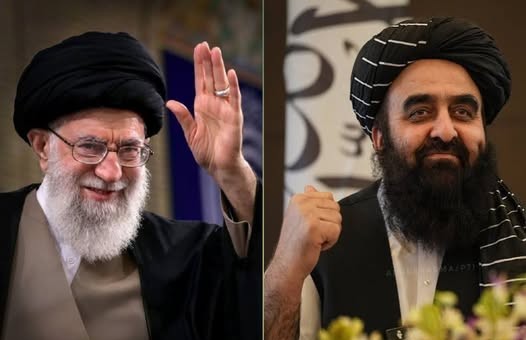
“Allen Jones” warned about Iran’s future, which under the ideological pressures of Iran’s government will transform into Afghanistan.
As Iran’s political developments increasingly become the focus of global attention, some analysts, looking at Afghanistan’s experience under Taliban rule, warn of a similar future for Iran; a future in which external pressures, internal stagnation, and ruling ideology could fundamentally change a country’s course.
“Allen Jones” is one of the analysts who has presented an analysis on Iran. He has worked for more than two decades within the structure of American diplomacy in Middle Eastern countries and the Islamic world. He has held various positions including managing political and economic departments in Saudi Arabia, addressing religious freedom issues in Egypt, and overseeing development programs in Lebanon. He has also worked in policy-making in Washington in positions related to counter-terrorism and supporting women’s initiatives in Afghanistan.
His long experience of living and working in Islamic societies has led him to focus particularly on examining the ideological and social dimensions of these societies; a topic that is now reflected in his analyses for audiences, especially in Christian circles.
Allen Jones, a former American diplomat and Middle East analyst, has undertaken an analytical examination of this scenario in a commentary, attempting to present a picture of the consequences of continued conditions in Iran. In part of his analysis, citing human rights reports about Afghanistan, he writes: “Last March, the Taliban publicly flogged 124 men and 17 women. With these statistics, the total number of victims of public punishments since the resumption of this practice in November 2022 has reached 2,470 people, of whom 380 were women.”
This picture is only part of a reality that, according to analysts, could be repeated in other countries if rigid ideological structures continue. Widespread educational restrictions in Afghanistan are another example of this process. Jones mentions this: “The new school year in Afghanistan began while girls above sixth grade remain deprived of the right to education. Furthermore, in 2024, the Taliban even banned women’s education in the field of midwifery. According to World Bank statistics, this decision will completely destroy the achievements of the past two decades in reducing maternal mortality (from 2,232 per 100,000 births in 2000 to 521 in 2023).”
Reports from international organizations, including human rights organizations, confirm this process and report the intensification of social restrictions, particularly against women, in Afghanistan; a situation that some consider an example of the consequences of establishing an ideological government without accountability.
In continuation of this analysis, Iran is examined as a country with different circumstances but similar challenges. Jones, referring to recent military and economic pressures, writes: “Now Donald Trump can easily declare victory in the Iran file and withdraw from the arena. The United States and Israel have heavily targeted Iran’s nuclear and military infrastructure, its naval fleet, and air force. However, Trump’s threats to bomb power plants and bridges have not prevented the continuation of the martyrdom-seeking slogans of Iran’s ruling clergy.”
He also refers to the potential consequences of economic blockade and warns: “With the implementation of a naval blockade, the regime’s ability to finance proxy groups, rebuild military structures, and prevent the collapse of the national currency’s value (a factor that drove citizens to the streets in January) will be severely undermined. The fundamental question is: if the Islamic Republic can maintain power despite these crises, how much will it resemble today’s Afghanistan five years from now?”
Meanwhile, the issue of domestic capacity for change is also raised. Jones, referring to developments after the 1979 revolution, says: “Shortly after the revolution’s victory in 1979, the regime implemented general disarmament. In these circumstances, do people have the ability to rise up and overthrow their rulers?”
He also refers to geopolitical complexities and considers the role of foreign actors important; including the possibility of regional powers entering or the influence of countries like China, which purchases a large portion of Iran’s oil.
Alongside these developments, the reaction of Iranians outside the country has also been noteworthy. According to media reports, gatherings have been held in dozens of countries worldwide in which protesters have called for increased international pressure on Iran’s government.
In this regard, Christian activist Ramin Parsa, in a message addressed to the President of the United States, said: “Please strike them. The only language these Islamic terrorists understand is the language of fire and power. They see tolerance as a sign of weakness.”
Jones concludes his analysis with a concerning picture of the future: “The people of Iran are suffering and there is fear that harder days lie ahead. If the regime survives this crisis, it will be like a wounded snake cornered in a corner. Let us pray for freedom and a bright future for the Iranian people.”
Jones’s analysis has been presented regarding Iran’s future at a time when, in recent months, Iran’s ambassador to Kabul announced: “Tehran sees no obstacle to recognizing Afghanistan’s government and this action may be implemented in the near future.”
This perspective, though analytical and based on possible scenarios, for many serves as a reminder of this fundamental question: Can the experience of countries like Afghanistan be seriously considered as a warning for Iran’s future?