Iranian Refugees in Sweden Go on Hunger Strike Due to Dire Conditions
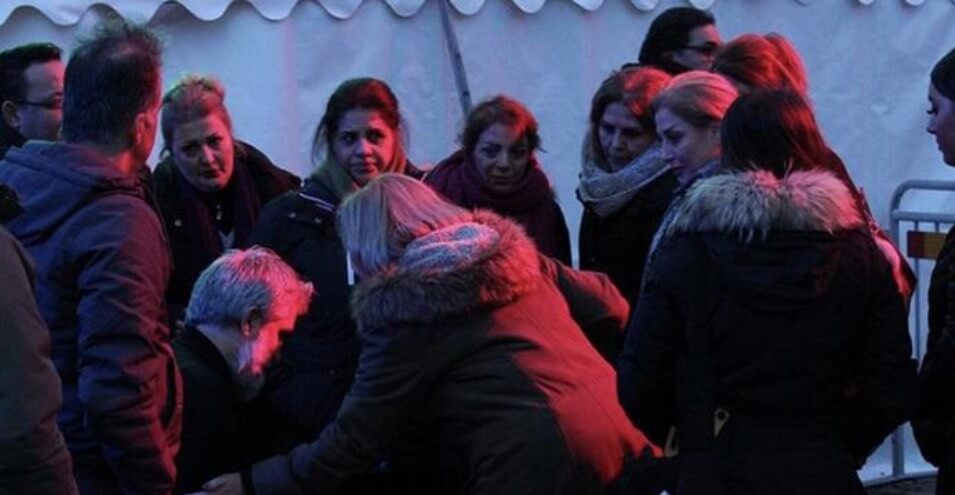
A group of Iranian refugees in the Swedish city of Umeå have launched a sit-in and hunger strike. Their protest is against the dire conditions facing refugees in the country. They are also demanding that the Swedish government abandon its “double-faced policy” toward the Islamic Republic.
“Many of us, even those with children, are forced to share a room with two or three other people to get by. The financial assistance from the immigration authority is not enough to cover expenses here. We are forced to work illegally. I am truly sorry for ourselves that even when we work for our fellow countrymen, we are exploited. We are made to work without pay for very low wages. I am forced to work illegally, and my employer, despite knowing my situation, pays me 40 to at most 60 kronor per hour (60 Swedish kronor is approximately five and a half euros).”
This is what Nargess Jalali tells Deutsche Welle Farsi. She is one of the Iranian refugees living in Umeå, Sweden, who has been waiting for more than four and a half years for a court decision to clarify her refugee status. She received one rejection, filed an appeal, and now one and a half years have passed, but even the date of the next court hearing is not clear.
Sometimes her employer asks her to work 12 or 13 hours a day. She says: “Well, for a woman who has a child and has left her child with a friend, this is very hard work. The situation is not much better for men either. When, after a long day of work, they see they are only paid 40 kronor per hour. While they are forced to pay at least five or six thousand kronor per month just for a room.”
The West’s Double-Faced Policy Toward the Islamic Republic
Nargess, along with a group of about 80 refugees living in the city of Umeå, launched a protest movement from February 15th. 63 people are on sit-in. 14 of them are on hunger strike. She is among the hunger strikers. She says that with this action they want to protest many things, “against the world’s overall policy toward refugees,” against the Swedish government’s appeasement of the Islamic Republic, and “the secret dealings” of the Swedish government and European governments with Iran’s government, especially “when the situation of refugees in the heart of Europe, in a place like Sweden, is dire, let alone in countries like Turkey and Greece.”
Nargess Jalali says our protest is against the double-faced policies of Western countries that “claim to be with protesters and stand with the Iranian people, but secretly cooperate with the Iranian government. We want the Swedish government to stop its dealings with the Islamic Republic.”
Deportation, a Danger Looming Over Many Refugees in Sweden
These refugees are also demanding that the Swedish government address the unfavorable conditions of refugees in the country. Among them are people who left Iran due to political activities or religious beliefs and now face the danger of deportation. Nargess Jalali says “our wish is for our refugee cases to be reviewed quickly and fairly.”
She also criticizes Iranian organizations in Sweden: “Syrian refugees receive support from their fellow countrymen, but this is not true for us Iranians. It is not just us. All Persian speakers, Afghans, have the same problem. Some of our fellow Iranian countrymen have lived here for 40 years, have organizations, receive government assistance, and can support refugees, but prefer to only work for themselves.”
Nevertheless, they are not alone in their protest movement. There are Iranians and Swedes who have come to help the protesting refugees in organizing and financing this movement. Reza Talabi, a political activist and supporter of this protest movement, tells Deutsche Welle Farsi:
“We are a group where each of us personally decided to support this movement. People from the city of Umeå and other Swedish cities have also held rallies to support this movement to cover the costs of the protest, including tent costs, transportation fares, electricity, and lawyers who want to advance the cause of the protesters.”
The main goal of this group is to prevent the Swedish immigration authority from deporting Iranian refugees under any circumstances. He says: “We want to make it clear to the Swedish immigration authority that we will not let them carry out their decision to deport them. Because these people’s problem was not that they came here seeking a so-called luxurious life, but they left their homes and livelihoods for political, religious, or social reasons and applied for asylum here.”
“Hear Our Voice”
Reza Talabi speaks about the history of a group that has been following refugee demands and is now on sit-in and hunger strike: “Refugees here formed a group a long time ago called ‘Hear Our Voice.’ This group tried through various means to convey its rightful demands to the Swedish government. As someone who has lived here for years and has worked and have experience in these matters, I decided to help them organize this protest movement, and now we are moving forward with this action together.”
The 14 people who are on hunger strike have decided to “go all the way.” Their hope is that such action will draw the attention of Swedish public opinion to the dire situation of refugees and the conduct of this country’s government. Reza Talabi says: “This issue in Sweden, which is a democratic society, cannot be covered up.”
Sweden is one of the countries that has accepted the most refugees in the world relative to its population and has provided them the opportunity to live. But with the start of the Syrian war and the influx of migrants toward European countries, the Swedish government’s treatment of migrants also changed. Not just Sweden, but the doors of many European countries remained closed to those who had fled war and extremism.
Reza Talabi says: “Unfortunately, some countries did not live up to their responsibility, and the burden of humanitarian aid was shared only by a few countries, including Germany, Sweden, Belgium, and to some extent the Netherlands. The rest of the EU countries almost did not accept refugees. This caused Sweden’s human resources for accepting refugees to decrease. On the other hand, right-wing forces in Sweden have gained power. For this reason, not only have financial, housing, and other resources such as educational and housing resources decreased, but politically an atmosphere was created that was not in the interest of migrants.”
He also criticizes the Swedish government’s policy toward the Islamic Republic and what is reflected in this country’s media regarding Iran, saying: “The image that European media and especially Swedish media present of the situation in Iran is actually consistent with what the Islamic Republic presents about Iran. Images that have nothing to do with reality.”
According to this political activist, this is one of the reasons that has made accepting Iranian refugees more difficult than ever. Some of the refugees participating in this protest movement have been waiting for more than five years for their situation in Sweden to be clarified. Reza Talabi says: “It is clear that someone willing to live in these difficult conditions for this long is facing a situation in Iran from which they cannot return.”
Source: DW