Iranians Set Record in Home Purchases in Turkey
Turkey’s Statistical Institute said in its latest report that Iranians purchased approximately 7,189 homes in Turkey during 2020, which represents about a 25 percent increase compared to 2019 and is 10 times higher than the period before sanctions.
Despite the fact that Iran-Turkey borders were closed throughout last year, Iranian citizens significantly increased their home purchases from the country.
Citizens from more than 100 countries purchased a total of 41,298 homes in Turkey last year, of which approximately one-fifth were Iranians.
The latest report from Turkey’s Statistical Institute, released on Thursday, December 25 (January 14), shows that for the first time, Iranians have become the leading home buyers among foreigners in the country.
The surge in Iranian home purchases in Turkey has many factors. The most important reason is obtaining Turkish citizenship, as Turkey’s government announced in mid-last year that since 2017, nearly seven thousand foreigners from more than a hundred countries have obtained Turkish citizenship rights by purchasing homes in Turkey, with Iranians leading the way. During this period, 1,475 Iranians, 842 Iraqis, and 812 Afghans obtained Turkish citizenship rights due to home purchases.
Another reason for the surge in home purchases by Iranians in Turkey could be attributed to the depreciation of the lira and controlled housing inflation. One US dollar was worth less than four liras at the beginning of 2018, but reached 5.3 liras at the beginning of 2020 and is now trading at 7.4 liras.
The acceleration of inflation in the housing sector over the past two years in Turkey was much lower compared to currency exchange rate growth.
On the other hand, despite the depreciation of the lira and lower inflation in the housing sector, real estate transactions in Turkey have not slowed down, even despite the spread of coronavirus.
For example, Turkey’s Statistical Institute report shows that 1.5 million homes were bought and sold in Turkey last year, which not only did not decrease compared to previous years, but increased by more than 15 percent.
Thus, Turkey’s housing market has not been in recession despite the depreciation of the lira and the spread of coronavirus.
This is while housing transactions in Iran during the 9 months of the current solar year have shown significant fluctuations compared to the same period last year and in 2018.
Iran’s Central Bank statistics show that the number of housing transactions in the 9 months of 2020 in Tehran was approximately 70,000 units, which showed a 43 percent increase compared to the same period last year, but was almost half compared to the same period in 2018.
Also, the average price of housing per square meter in Tehran during December 2019 was approximately 13.5 million tomans, but in December of this year it reached 27 million tomans, doubling.
Such growth in housing prices coupled with severe fluctuations in the number of transactions makes Iran’s housing market an unattractive area for investment.
Turkey’s Housing Market for Foreigners
Since September 2018, Turkey has made the conditions for granting citizenship upon investment in the country’s real estate market easier, setting 250,000 dollars as the investment required to obtain citizenship rights, which was four times less than before.
Details of annual statistics also show that from that date onwards, the growth rate of home purchases by foreigners, especially Iranians who were also affected by the US withdrawal from the JCPOA, showed significant growth.
Of course, only granting Turkish citizenship is not the main reason for the surge in home sales to foreigners. Among the major foreign buyers of homes in Turkey are citizens of Germany, Russia, and Saudi Arabia, and the main customers of Turkey’s housing market are not only Iran, Iraq, and Afghanistan.
Turkey’s statistics show that in 2017, slightly more than 22,000 homes were sold to foreigners, but in 2018 this figure increased to 40,000 and in 2019 to 46,000 units.
However, last year due to the spread of coronavirus, total home sales to foreigners decreased to 41,000 units, of which approximately 17 percent were purchased by Iranians, 16 percent by Iraqis, and 7.4 percent by Russians.
Citizens of Germany, Kuwait, Yemen, Britain, Jordan, and Kazakhstan have each purchased more than a thousand units of homes in Turkey.
Most Home Sales Among Cities
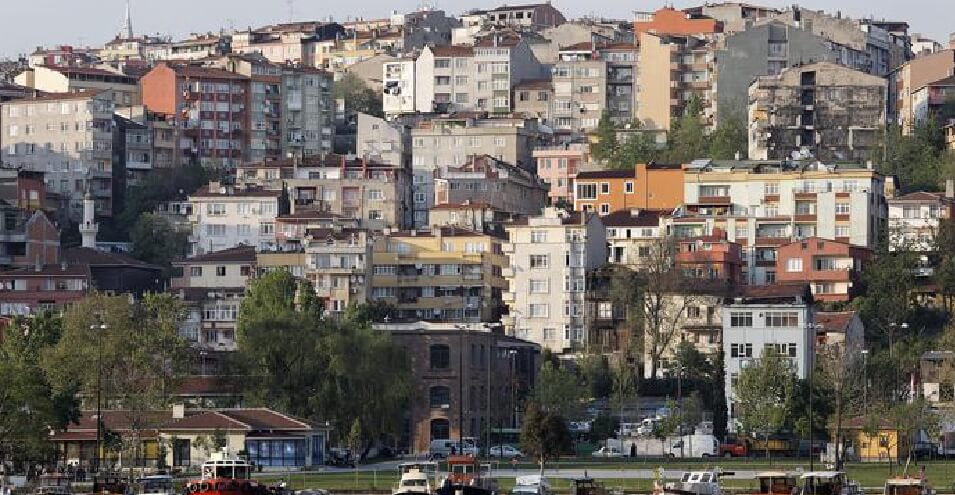
Turkey’s Statistical Institute report shows that nearly half of the homes sold to foreigners were in the city of Istanbul. Istanbul is the economic heart of Turkey and almost one-third of Turkey’s gross domestic product depends on this city.
Also, approximately one-fifth of homes sold to foreigners were in the tourist and coastal city of Antalya, which annually hosts more than 15 million foreign tourists.
Ankara, the capital of the country, has also had a share of less than 7 percent in attracting foreign capital for home purchases.
Before 2017, Iranians purchased an average of approximately 600 to 700 homes from Turkey annually, but in 2018 this figure increased to 3,652 units and in 2019 to 5,423 units and last year to 7,189 units.
Iranians are the only foreign citizens whose home purchases in Turkey increased last year compared to 2019; this is despite the fact that throughout the past year, due to the spread of coronavirus, the borders of the two countries have been closed.
Turkey’s official statistics have not precisely specified how many homes Iranian citizens have purchased in which cities and what the value of these homes has been.
Turkey intends to increase home sales to foreigners in the current year to 50 to 60 thousand units and accordingly attract 10 billion dollars in foreign investment in this market.
Source: DW