Iran’s Naval Blockade and Escalating Attacks; Reports Indicate Formation of New Regional Alignment
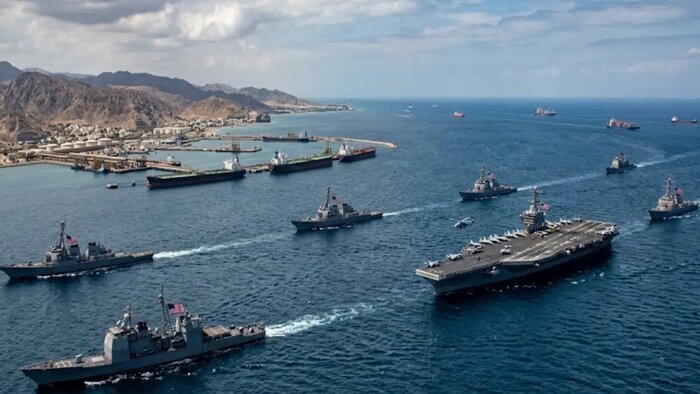
Concurrent with the escalation of U.S. military attacks on targets in Iran, reports published by international media outlets indicate the resumption of a naval blockade of Iranian ports, increased military movements in the Persian Gulf, and the formation of a new diplomatic alignment in the region. Meanwhile, analysts have warned about the complexity of decision-making structures in the Islamic Republic and the risk of escalating confrontations in the Strait of Hormuz.
As tensions between the Islamic Republic and the United States intensify, international media outlets have reported that Donald Trump announced the return of a naval blockade of Iranian ports and the expansion of military operations against targets of the Islamic Republic. According to these reports, U.S. attacks on Tuesday, July 14, corresponding to July 23 in the Persian calendar, have taken on a wider scope, and simultaneously, diplomatic movements in the region have entered a new phase.
The Israeli newspaper “Israel Hayom” has claimed that several Arab states bordering the Persian Gulf, in a joint message to Washington, have announced their support for the launch of military operations against the Islamic Republic. The report did not provide further details about the content of this message or the names of participating countries, and this claim has not been independently confirmed by official sources to date.
Meanwhile, “Gulf News” has also published an analysis examining the decision-making structure in the Islamic Republic, raising the question of whether Tehran’s recent reactions are guided by a unified command or whether different government institutions are pursuing divergent paths. The report points to the simultaneity of the Islamic Republic’s diplomatic efforts in Oman with the continuation of military operations, viewing it as a sign of contradictory messages in Iran’s foreign and security policy.
According to published reports, “Abbas Araghchi,” the Foreign Minister of the Islamic Republic, traveled to Muscat to discuss the preservation of regional stability and the security of the Strait of Hormuz with Omani officials; however, just one day later, reports emerged about attacks attributed to the Islamic Republic in the region, raising questions about coordination between Iran’s political and military institutions.
Gulf News also refers to the structure of the Islamic Revolutionary Guard Corps and notes that since 2008, this force has been divided into 31 provincial commands; a change that, according to analysts, was implemented to preserve operational capability even in the event of the loss of senior commanders. The newspaper believes this very structure could enable certain operations to continue without the need for direct orders from the center.
In other published reports, the Strait of Hormuz remains the primary focus of the crisis. Approximately one-fifth of the world’s oil passes through this waterway, and any disruption to it could have widespread economic and security implications for global markets. Despite repeated threats by the Islamic Republic about closing this passage, to date no international authority has confirmed the complete closure of the Strait of Hormuz, although reports of disruptions to the passage of commercial vessels have been published.
The report also references the incident involving the commercial vessel JFS Galaxy; a ship that social media has claimed was targeted after passing through a route that Iranian sources have called “unauthorized.” This claim has not yet been independently confirmed by international maritime authorities. Following this incident, the Indian government, referring to the presence of 11 Indian citizens on the vessel, called for an end to attacks on commercial ships and civilian infrastructure in the region.
CBS News also reported that Iranian officials, in private talks with advisors to Donald Trump, have described recent attacks on the aforementioned commercial vessels as “mistakes.” According to this report, American officials believe these attacks may have been carried out by elements within the power structure of the Islamic Republic who oppose the process of negotiations between Tehran and Washington. This claim has also not been formally confirmed or denied by officials of the Islamic Republic to date.
In sum, published reports indicate that concurrent with the continuation of military confrontations, diplomatic efforts have not ceased; however, the simultaneity of these two processes, combined with contradictory messages from Tehran, has increased the risk of escalating crisis and the emergence of miscalculations in one of the world’s most sensitive energy corridors.