Iran’s Parliament Approves Accession to Terrorist Financing Convention
Iran’s Parliament approved the bill on accession to the Convention on the Suppression of the Financing of Terrorism. This bill could open the way for Iran to exit the FATF “blacklist.” Khamenei announced his consent to review this bill in Parliament.
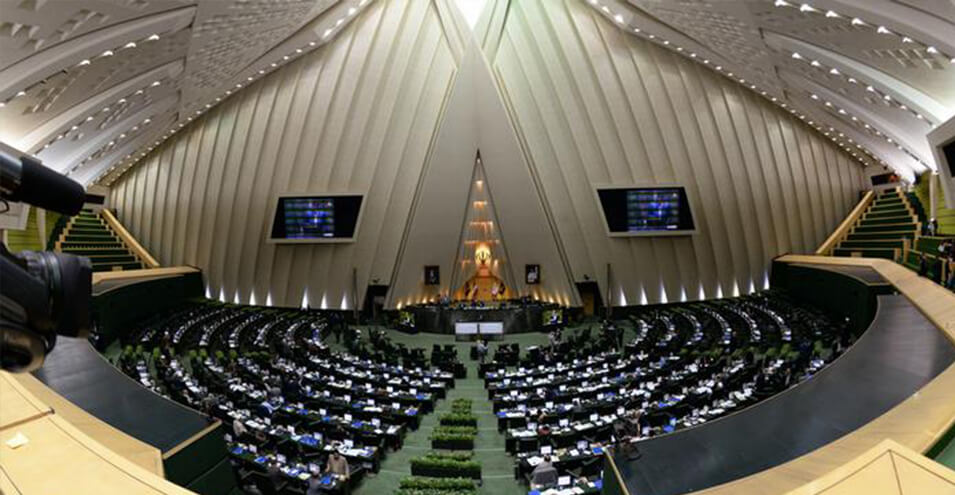
The Islamic Consultative Assembly on Sunday, October 7, approved Iran’s accession to the Convention on the Suppression of the Financing of Terrorism (CFT).
The bill passed with 143 votes in favor, against 120 votes against and 5 abstentions out of 271 deputies present in Parliament.
However, voting in Parliament was not public, contrary to the wishes of some deputies. Deputies with 117 votes in favor, 111 votes against, and 13 abstentions opposed a public vote. The method of public and open voting works as follows: deputies declare their votes on ballot papers with their names. It was previously announced that deputies had received “threatening text messages” regarding the bill.
On June 11, Iran’s Parliament had decided to postpone the “CFT” bill. Parliament members had deferred decision-making on this bill until the outcome of negotiations with the European Union to preserve the JCPOA became clear. However, the results of Europe’s efforts to save the JCPOA and provide the “guarantees” sought by the Islamic Republic remain unclear.
Opponents of Iran’s accession to the Convention on the Suppression of the Financing of Terrorism and other bills related to the Financial Action Task Force (FATF), citing the “opposition” of Ayatollah Ali Khamenei, the Supreme Leader of the Islamic Republic, to these bills, called for their removal from Parliament’s agenda.
Supporters of these bills, while emphasizing the necessity of their approval, had repeatedly either reported the Supreme Leader’s approval of these bills or stated that Khamenei had authorized Parliament and the government to proceed with four bills related to “FATF.”
Khamenei’s Statement on Consent to Review the Bill
On Sunday as well, before voting on Iran’s accession to the Convention on the Suppression of the Financing of Terrorism began, a letter from the office of the Islamic Republic’s Supreme Leader expressing consent to review bills related to “FATF,” including “CFT,” was read by Ali Larijani, Speaker of Parliament.
The office of the Supreme Leader, quoting Ayatollah Ali Khamenei, wrote: “What I said in my meeting with representatives regarding the four bills and conventions pertained to the principle of conventions in general, not to any specific convention. Therefore, I have no objection to the review of these bills in Parliament so that they may proceed through their legal course.”
Ayatollah Ali Khamenei, the Supreme Leader of the Islamic Republic, on June 21 explicitly expressed his opposition to the bill on Iran’s accession to the Convention on the Suppression of the Financing of Terrorism and asked Parliament members to approve other laws in this field.
Parliament’s “Conditions”
Parliament members also added certain conditions to the bill on Iran’s accession to the Convention on the Suppression of the Financing of Terrorism. One of these conditions emphasizes that Iran’s accession to the “CFT” convention does not mean recognizing Israel.
Parliament’s resolution also obligated the “government” to “deposit the accession document with the depositary only after the Islamic Republic of Iran’s removal from the FATF blacklist.”
Ali Najafi Khoshrodi, spokesperson for the National Security and Foreign Policy Commission of Parliament, said regarding Iran’s conditions for joining “CFT,” among other things: “We can impose a condition clause on this convention. No commitment contrary to Iran’s national interests and security will be undertaken; no information will be given to foreigners. In economic warfare, we must use all opportunities, capabilities, and international measures in this war. Some critics linked this bill to the issue of America’s withdrawal from the JCPOA, whereas there is no connection between them. Failure to join this convention will bring new international restrictions on Iran.”
A significant part of opposition in Iran to the four bills concerns the use of the term “terrorist groups” in them. Opponents warn that the United States considers organizations such as Lebanon’s Hezbollah as terrorist groups and also involved in drug trafficking, and accepting conventions such as Palermo and “CFT” could affect the conviction of Hezbollah in relation to transnational organized crime.
Hezbollah of Lebanon, which enjoys extensive Iranian support, is on the United States’ list of terrorist groups. Furthermore, the U.S. Department of Justice has formed a task force to bring charges against Hezbollah related to money laundering and drug-related crimes. Hassan Nasrallah, Secretary-General of Hezbollah of Lebanon, however, called these charges “baseless” and rejected them.
Opposition to FATF from “State Radio and Television” to “Street Level”
Lineups in Iran, which had formed long ago regarding the four bills, intensified as the “CFT” bill was about to be reviewed in Parliament. Mohammad Yazdi, former head of the Assembly of Experts and current head of the Supreme Council of the Seminary Teachers Association in Qom, in a letter yesterday to Ali Larijani, referring to “the guidelines and reminders of the Supreme Leader and other grand sources of emulation in Qom and the concerns of members of the Seminary Teachers Association,” asked the Speaker of Iran’s Parliament that regarding the review of the bill on Iran’s accession to the Convention on the Suppression of the Financing of Terrorism “nothing be done that, while contradicting the mentioned authorities, would harm the country and the Islamic Republic’s system of governance and be considered a weak point of Parliament in the country’s history.”
The deputy head of the Independents-Principlist faction in Parliament also accused Islamic Republic Radio and Television of “harmonizing” with a “minimal group” against FATF. Gholamali Jafarzadeh Imenshanazari, referring to the broadcast of “anti-FATF documentary reports” from Iran’s state television, said: “State Radio and Television should be a place for competing viewpoints and truly ‘national’; but unfortunately, we sometimes witness that due to some political maneuvering, the direction of State Radio and Television is such that it seems to want to forcibly push public opinion in a certain direction.”
The Rasht representative in Iran’s Parliament added: “People are satisfied with FATF, except for one specific minimal group that intends to create fear and intimidation among representatives through threatening text messages.”
On Sunday, Ali Larijani confirmed the sending of “threatening text messages” to representatives during the review of Iran’s accession to the Convention on the Suppression of the Financing of Terrorism and said: “Parliament is too mature to change its opinion over a few text messages.”
Alireza Rahimi, a member of Parliament’s board of directors, yesterday in a conversation with the “Asr-e Iran” website, referring to text messages sent to representatives, mentioned the source of most of them as Khorasan and Isfahan provinces. This member of the National Security and Foreign Policy Commission of Parliament had said: “In fact, opponents, including those in funeral shrouds and some students, at various occasions brought profound technical discussions to the streets, and in this regard, a platform was also provided in State Radio and Television.”
Today, simultaneously with the beginning of the review of the “CFT” bill in Parliament, a group of opponents of its approval gathered in front of Iran’s Parliament building and called for deputies’ negative vote on this bill. According to Iranian media reports, the protesters, holding placards with slogans such as “We don’t want the JCPOA,” “FATF is betrayal of the nation,” “FATF approval = JCPOA 2” and “Baharestan: House of the nation or house of government?” protested the possible approval of the bill on the Convention on the Suppression of the Financing of Terrorism.
Zarif’s Defense in Parliament for Joining “CFT”
Mohammad Javad Zarif, Iran’s Foreign Minister, who was present in Parliament’s open session to review the “CFT” bill, in defending the approval of this bill, said among other things: “We cannot guarantee that joining the CFT bill will solve problems, but we do guarantee that if we do not join this bill, America will find important excuses to increase our problems.”
Zarif continued: “We have managed to isolate America to such an extent that the European Union, as America’s strategic partner, has created regulations and mechanisms to bypass American sanctions. This mechanism is considered the starting point for the end of the dollar’s dominance over the global economy. We must know what the Islamic Republic and the JCPOA have been able to do?” Iran’s Foreign Minister added: “These very Europeans say that to implement this mechanism, we need Iran to be a member of these conventions.”
The Importance of Bills Related to “FATF” for Iran
The Islamic Consultative Assembly, to avoid the risk of complete blockade of banking transfers with the arrival of American sanctions, put four bills on its agenda: the bill on Iran’s accession to the Convention Against Transnational Organized Crime known as the “Palermo Convention”; the bill on Iran’s accession to the Convention on the Suppression of the Financing of Terrorism (CFT); the bill amending the law on combating money laundering; and the bill amending the law on combating the financing of terrorism.
Parliament, in addition to the bill on Iran’s accession to “CFT,” also approved three other bills. However, these bills, except for the bill amending the law on combating the financing of terrorism, faced objections from the Guardian Council. They encountered objections from this council and also the Expediency Discernment Council.
Less than a month ago, the Expediency Discernment Council also rejected one of the bills related to “FATF,” namely the bill amending the law on combating money laundering, calling it contrary to “the general policies of resistance economy, encouraging investment, food security, and economic security” and, referring to the “risks” arising from the approval of such a bill, rejected it.
Nevertheless, many supporters of approving the four bills considered the Expediency Discernment Council’s views as “advisory” and considered the authority to handle bills as “vital” as these not to be this council, but rather the Supreme National Security Council. Iran’s negotiating team, which is engaged in talks with the European Union to “preserve the JCPOA,” had previously conveyed its message based on the necessity of approving the four bills related to combating money laundering and the financing of terrorism to Parliament. According to Abolfazl Mousavi, a member of the Hope faction in Parliament, they “announced in a report to Parliament that if you want us to succeed in negotiations, at least the four bills must be approved by Parliament.”
Hashmatollah Falahatpisheh, head of the National Security and Foreign Policy Commission of Iran’s Parliament, also on August 26 regarding the importance of bills related to the Financial Action Task Force, said: “These four bills are system bills that are not related to Parliament, nor the government, nor the assembly, but to the entire system, and in this regard we have no formality with anyone and we speak our minds.”
Approving the four bills, including accession to the Convention on the Suppression of the Financing of Terrorism, is necessary for breaking Iran’s international banking restrictions. The smoothing of this path is also impossible without the Islamic Republic’s cooperation with “FATF,” under which the convention operates. Among the recommendations of the international organization Financial Action Task Force, is the establishment of “international standards” to combat money laundering and the financing of terrorism. This group, which monitors Iran’s activities and the extent of this country’s progress in combating money laundering and terrorism financing, in early July gave the Islamic Republic an additional three months to implement this organization’s conditions and provide the grounds for its complete removal from the “blacklist.”
Source: DW