Iran’s Yarsan Minority: Centuries of Hidden Life and Discrimination
Behnam Hosseini, a researcher of migration and religious minorities, wrote a note for the Nazarain page correcting misconceptions about Iran’s Yarsan minority and introducing this community in Iran. He discussed the reasons why this minority has remained unknown in Iran.
The murder case of Mitra Ostad and the trial of Mohammad Ali Najafi, the former mayor of Tehran, along with claims about the victim being “Yarsan” and “mahour al-dam” (having their blood shed legally), have raised questions about this minority. Who are the Yarsans? And what do they believe?
Followers of the Yarsan religion have long attempted to hide their beliefs due to what is called “sar mago” (keeping silent). As a result, there is little accurate and measured awareness and information in the public sphere and cyberspace about the Yarsan religion and its followers. On the other hand, contradictory and confused information and news about this faith, presented biasedly or out of ignorance by some authorities, activists, and government media inside and outside Iran, has made the situation more obscure and complicated.
In Iranian society, many people make grave errors when expressing opinions about the Yarsan minority, including the incorrect belief that Yarsans are Muslims.
Furthermore, discrimination in Iran’s laws against non-Muslim minorities, particularly Yarsans, has made living conditions very difficult for them within Iran. For this reason, many of them, including some of their leaders, resort to concealment to reduce pressures and continue their existence and preserve their community. In formal circles, they do not openly declare the fundamental differences of their religion from Iran’s official faith, Shia Islam, and they submit to the existing official frameworks and in some cases even change their customs. This issue itself has created fundamental ambiguities and problems for this non-Muslim minority.
In recent years, with the prevalence of social media, Yarsan followers have gradually broken their silence and openly spoken about their beliefs, customs, and traditions.
What is Yari and Who is a Yarsan?
Yari is the religion of the Yarsan people, resulting from the evolution and development of the culture and beliefs of the Zagros inhabitants over thousands of years. Yarsan is one of the names of God, and each Yarsan follower is also called a “yar” (helper/friend). The sacred book of Yarsans is called “Divan Gureh.” The Yari religion has roots in ancient Iranian religions and has similarities to Manichaeism and Zoroastrianism.
There are no official and precise statistics on the population of Iran’s Yarsan community, but sources within the Yarsan minority themselves estimate their population at up to 3 million people.
They mainly live in Kurdish regions of western Iran, particularly in Kermanshah, but have significant populations in many other areas of the country such as Tehran, Kalardasht, Shahriar, Karaj, Hamadan, Qazvin, and Azerbaijan. Outside Iran, they are also settled in Iraq, Turkey, and some European countries including Germany and Sweden.
The Yari religion in its current form was perfected and established from the seventh century of the Islamic calendar through the teachings of “Sultan Sahak” and his companions. The shrine of Sultan Sahak or Sultan Haqiqat is located in Pardiur on the banks of the Sirvan River in Paveh city. Yarsans do not have a person called a Prophet who conveys God’s word to people through revelation. Rather, based on their religious philosophy, they believe in the concept of “human-divine” and recognize Sultan Sahak as the manifestation of God on earth. The specific orders and decrees of followers of this religion, which were issued by Sultan Sahak, were recorded and compiled by his scribe “Pir Mousa” in a register called “Divan Gureh Pardiuri.”
The worldview and philosophy of the Yarsan religion is based on “donadon” (the transmigration of the soul through different bodies), which, despite general similarity to the concept of transmigration, has fundamental differences from it. As a result of believing in the philosophy of donadon, Yarsans should respect other religions and faiths and maintain friendly and respectful relationships with all people, and always maintain good morals and commendable conduct. According to the beliefs of this religion, a Yarsan individual, after passing through one thousand and one “don” cycles, reaches eternal life and the house of well-being, which is the “yar.” Although the Yari religion has fundamental differences from Islam and is completely independent from it, its followers respect the Shia Imams.
The Yarsan religion is based on morality, such that if someone does not observe morality and courtesy, the performance of religious duties is meaningless, which is referred to as “adab” and “arkaan.” The four fundamental principles of the Yari religion are truthfulness, purity, humility, and chivalry, which respectively mean being pure, honesty, modesty and lack of arrogance, and gallantry. Another commandment of this religion is allegiance to one of the eleven Yarsan families, meaning that the “pir” (spiritual guide) and “murid” (disciple) of each person is determined from among their family. The pir in the Yari religion has the meaning of a religious teacher and person responsible for performing religious ceremonies. The lineage of “pirs” goes back to seven close relatives of Sultan Sahak called “haftvaneh and hafttan” (the seven), but due to the inability to register the word pir in official documents, the word “Seyyed” is used, which has no connection to the concept of Seyyed in Islam.
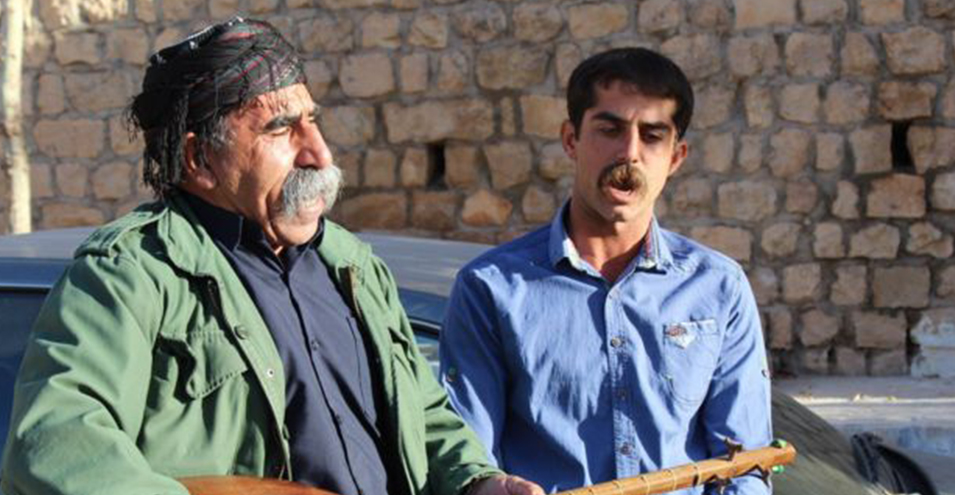
Other important commandments of the Yari religion include establishing collective worship ceremonies called “jam” along with vows and offerings and singing religious hymns to the tune of the tanbur, especially in a place called jamkhane, observing the “Roza Khavandigar” fast for three days, Eid Padshahi (Royal Eid), maintaining the “sebil-e mehr” (mustache of commitment) for men, and maintaining chastity and raising virtuous and pure children for Yarsan women and mothers.
In addition to the sacred book, theological texts and liturgical registers are considered religious sources of the Yari religion. These texts are mostly written in Gorani, Sorani Kurdish, and Turkish.
This non-Muslim religious minority has been called by various incorrect titles by some Muslim clerics and figures, from infidel and devil-worshipper to Ali-Illahi and a branch of Islam. While the Yari religion considers worship to be exclusively for the One God and does not consider any being worthy of worship except His unique existence.
Why Are Yarsans Called Muslims?
In the view of Yarsans, people such as “Shakhushin” and Sultan Sahak are manifestations of God and possess divine status. Khavankar or Khavandigar is God or the Lord. Yarsans believe that when God began creation, He became known as Khavankar (khavan means owner, and khavankar means owner of affairs). The Almighty also had manifestations in human form, such as Ali, Shakhushin, and Sultan Sahak. The seven angels close to God, called “heftan,” also had human manifestations that, according to Yarsans, are Christ, Ali, Joseph, Abraham, Abel, Moses, and Joseph from the human manifestations of the archangels.
Since Yarsan people believe that their religion is the truth, in Iranian society they have been called “Ahl-e Haq” (people of truth). The Yari religion is completely separate from esoteric sects such as Hurufiyya or Ali-Illahi, but because Yarsans respect Ali, the first Shia Imam, some incorrectly call them Ali-Illahi. Respect for the first Shia Imam does not mean being Muslim, just as respect for Jesus Christ does not make one Christian.
Legal Laws; The Term Mahour al-Dam
“Mahour al-dam” is a jurisprudential term that entered Iran’s criminal laws after the 1979 revolution and refers to someone whose blood is considered worthless according to religious law, and if even intentionally killed, the murderer or murderers are not punished.
Legal Vacuum and Violation of Yarsans’ Rights in Iran
The Islamic Penal Code provides for retribution in the case of a Muslim who commits murder when the victim is Muslim, but in the same law, if the victim is from officially recognized non-Muslim minorities such as Zoroastrians and Christians, the punishment for the murderer is compensation (diyeh). Meanwhile, the situation of non-Muslim minorities such as Yarsans, Mandaeans, and Bahais, whose law does not officially recognize, is much more complicated. For example, if someone kills a Yarsan minority member, the law regarding his punishment is unclear, and this issue has left it up to Iranian judges to consider these minorities as mahour al-dam and exempt their murderers from just punishment.
In recent years, human rights violations regarding the Yarsan minority and insults to the beliefs and customs of this religion have been repeatedly accompanied by protests from its followers; in some cases, they have even resorted to self-immolation to voice their protests. This includes the self-immolations of several Yarsans six years ago in front of the Islamic Consultative Assembly to pursue their rights and self-immolations approximately seven years ago in front of the Hamadan governorate office following the shaving of a Yarsan prisoner’s mustache.
Although followers of the Yari religion have always avoided political activities, pressures and legal and social discrimination within Iran have made life increasingly difficult for them day by day.