Joseph Hovsepian; That Dismembered Body Was My Father’s Body/Interview by Marie Mohammadi

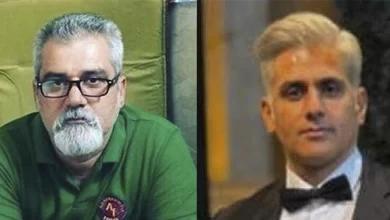
Haik Hovsepian Mehr, born January 6, 1945, was an Iranian Armenian Protestant clergyman, bishop of the evangelical churches in Iran, and human rights activist in the field of religious freedom who made tireless efforts to overturn the death sentence and secure the release of Pastor Mehdi Dibaj. Ultimately, his name appeared on the list of serial killings. On January 19, 1994, at age 49, he was abducted by the Ministry of Intelligence and murdered with 26 stab wounds. His wife, Takouche Hovsepian, his three sons named Joseph, Gilbert, and Andre, and his daughter named Rebecca spent eleven days in complete uncertainty and conducted extensive investigations. After eleven days, his bloodied body was identified at the coroner’s office by one of his children, named Joseph. Peace Line Monthly has sat down for an interview with Joseph Hovsepian, his eldest son, on the occasion of the twenty-eighth anniversary of Haik Hovsepian Mehr’s martyrdom.
Joseph Hovsepian was born in 1973 in Iran. Following his father’s martyrdom, he was encouraged to produce films centered on spiritual messages. In 1996, he went to England to study at Guildford College of Art. Later, in 2000, he migrated to the United States. He says in one place: “It was with my father’s encouragement that I was able to achieve my goal of sharing a message of hope through the media.” Among his initiatives is the founding of the Hovsepian Organization, which continues his father’s work by sharing the Gospel with hundreds of thousands of Iranians through the media. Joseph Hovsepian, who has produced and directed various programs, has made a documentary titled “A Cry from Iran” in which he depicts the story of his father’s martyrdom. This award-winning documentary has been widely broadcast in America and its complete version is currently available free of charge on the website www.hovsepian.com and the YouTube application.
When your father was killed, you were just a twenty-year-old young man, and you went to the coroner’s office to identify him after he had been missing for 11 days. Tell me about that moment of confronting your father’s body, which had been mutilated with twenty-six stab wounds, and the heavy responsibility of informing your waiting and anxious family.
The truth is that when I went to the coroner’s office, I was almost unaware of what was about to happen. If we go back a few hours from that event, I must say that the condition and circumstances of me and my family were such that we expected my father to still be alive and only perhaps being interrogated or imprisoned somewhere, like in the office of the Ministry of Intelligence. The thought of his martyrdom or being killed had never crossed our minds at all. This may have been related to the way of thinking of the Iranian church at that time and the faith as a result of which we believed that God takes care of his servants and children and does not let a hair on their heads fall. In fact, I can say this belief was mine as well, and I never even thought that the government could make a joke out of the head of the Protestant churches of Iran! Therefore, with such a mindset, I decided to go to the coroner’s office alone and reassured my family that this was just a formality; just an invitation for us to go and see some pictures and identify them and know that there is nothing wrong here either. Finally, I got on my motorcycle alone and went to the coroner’s office. When I entered, it seemed that the two intelligence officers who were there wanted to prepare me for something I was about to face. But it is interesting to note that even at that moment I answered them very defiantly with pride and said that my father served God with all his faithfulness, and I know that God also protects and guards him. A few minutes later we saw the pictures one after another, but none of them was my father. But finally, I was faced with a scene in which my father’s blood-stained face, especially in the chest, abdomen, shoulders, and even his hands which were completely stabbed and wounded and even some parts had been torn off. Of course, when a person with the mentality I described earlier encounters such a scene, he experiences severe shock. These scenes and events that I am talking about, although twenty-eight years have passed since they occurred, are still very fresh for me. I remember that in those moments I did not cry at all because I was so shocked that I was not even thinking about crying or mourning. Like a bewildered person, I came out to the street. I couldn’t even walk, let alone get on my motorcycle and go home. Those two intelligence officers offered to help and asked where I wanted to go if they took me. I got in their car. My world seemed to be completely over. Everything had turned black for me. I was thinking about how I could tell this news to my family. This was so difficult that I felt I could not do it and I should go to my uncle Edward’s house and inform him. When I reached my uncle’s house and rang the doorbell, he understood from the sound of my sobs and the hoarseness of my voice what the situation was. Then, they called my brothers Leon and Vartan. Some priests also came. But I myself was so in shock that gradually doubts crept into my mind that perhaps the picture and face I saw was not my father and they intentionally changed the picture to introduce someone else who looked like my father to us as my father. These thoughts gradually entered my mind, and when my uncle Edward asked me, are you sure the images belonged to your father? I gradually began to doubt and said I don’t know, maybe I made a mistake. We got in the car with our loved ones. I remember that my brother Vartan had entered a special lane and was moving quickly in the bus lane. We were going to another office where my father’s file had been kept so that we could at least see some pictures in the file there. When we went there, we saw pictures in that file. Now everyone was sure that this dismembered body was my father’s body. After my uncle was also able to identify my father’s face, that is, his only brother, it was time for all of us to go together and bring this shocking news to my family. When we entered the alley, I rang the house doorbell. There my mother understood from my voice that the news was not so pleasing. When we climbed the stairs, all family members understood from our faces what the situation was. Therefore, there was not much need for explanation.
The suffering that activists endure due to their activities because of direct pressure from the government is a prevalent subject of writing and media productions, and less attention is paid to the hardships and suffering imposed on family members. How did the first days and years after your father’s killing and seeing his bloodied body without prior preparation pass?
That is an interesting question. I think this question has been asked of us less often, and perhaps even we have asked ourselves this question less often. Because usually when we lose something, unconsciously all of us try in some way to remedy that lack and void so that life can move forward. All of us, alongside the responsibilities that we ourselves have, now in the new circumstances must also take on new responsibilities. So perhaps there is less time for each person to look deeply at his own life and see how such an event can have a severe effect on his life.
I think there is a common aspect between our family and many other families of martyrs and people who have been wronged in some way or have experienced such dramatic experiences in their lives, and that is that these incidents, events, and experiences cannot be forgotten. Perhaps that is why even after twenty-eight years, whenever I talk about some of these memories, it is as if I am talking about yesterday. I think we automatically try to keep many of the things we lose close enough to ourselves so they are not forgotten, so that at least we do not lose the memories. Such a shocking event is no exception.
The impact that this shock had on me in the first days was very severe. Sometimes in my dreams I would even scream and see the murderers… It was like an explosion whose waves gradually reach you and you feel them. In the following days, my physical condition became very dire. To be honest, there came a time when this matter bothered me so much that I wanted to forget it at any cost, and even if someone talked about it, I preferred to change my path. I didn’t want it to be reviewed for me.
But on the other hand, I remember that from the very first day, servants, friends, and church members who came to our house were all helping in some way. So I think perhaps in our case this part is a bit different in that there were always people with us, supporting us, and comforting us in every way. This played a very large role in the healing of our body and soul. I know that some people today have such an experience, but there is no one around them, and they must continue this path alone and without the presence of a person by their side, and only with God’s help.
I think what perhaps helped a lot in accepting this matter and to some extent gave me peace was the fact that the path my father took was a path that he had chosen of his own decision. He had been told that his life was in danger. Some others had said that this game you are playing with the government is a dangerous game. Or why are you not leaving the country. Many such recommendations were made to him. But my father’s mission was very clear to him. So, the belief and acceptance of the fact that my father’s path and activities were conscious and chosen, not imposed, and that the price he paid was not something that surprised him and was beyond his expectations, meant that despite the existence of disturbing issues such as scenes of his bloodied body that are very difficult for me, I not only accepted the events but they became part of the story of my own life. It is very difficult, but it is an experience that helps me better understand and communicate with other people as they are and with the pain they have, and them with me. Certainly after this incident, I was no longer that Joseph who only chased a football and life was always good and sweet to him. I came to the conclusion that the more realistically I look at this matter, the stronger I myself can be. It is better for people in any case to accept the truth and be able to stand up to it rather than resorting to mechanisms of escaping reality even with watching any movie or any scene that is somehow a reminder of a bitter truth. Thank God; I think that after twenty-eight years I am almost on a path where, no matter how difficult it is, I can accept it as part of the story and experience of my life.
Given that you are the eldest son of the family, after your father’s killing, certain responsibilities fell upon your shoulders; at least the emotional support of two younger brothers. How difficult was this situation for you?
That’s right. Of course, from those first days along with my father’s martyrdom and separation from him, perhaps one of my biggest concerns was how my younger brother, who was ten years old, would grow up or how we could financially continue our lives. All of these were real issues facing us that whether I wanted it or not I had to face them, take action, change myself to some extent, and be willing to take on greater responsibilities. That is what happened. Today people see me and say we never thought that Joseph we knew in our youth would become the Joseph we see today. The thing that helped a lot so that this burden on our shoulders would not be so heavy as to push us to the ground was that many other people helped in this path and were with us. Many brothers played the role of an older brother or father for me; and likewise for my brothers, my sister, and my mother. In the family of the body of Christ, we had many brothers and sisters. This help and peace of mind was a great comfort; especially for me who a year after my father’s martyrdom was still going to military service. It was not easy enough for me to be at home because unfortunately the experience of military service was made even more bitter for me and they sent me from Karaj to the Chalus road. So, my situation was not such that I could always be with my family. At that time there was no mobile phone at all to have the possibility of constant contact. But with all those circumstances, the church never left us alone. My hope is that people who read this story and interview know how much words, friendships, gatherings, encouragement, asking about each other’s well-being, people who are in difficult situations, has a deep role and long-term impact.
Apart from the difficulty of coping with emotional and spiritual blows resulting from your father’s killing, were there other issues related to losing him that intensified your grief and upset?
There was nothing specific that made our grief worse, but certainly there were new experiences as a result of my father’s martyrdom that we had to face, the biggest of which was the issue of resentment and forgiveness; resentment of the murderers and the system that had brutally killed my father and wanted to blame others. Whereas all the evidence proved that the agent of my father’s killing was the government. The resentment of the enemy had so taken over our hearts that it could gradually make us sick, and we knew this was not what God wanted from us. In the years before my father’s martyrdom, in sermons and God’s word we had read and knew that God gives us the power of forgiveness. So at that time we would have needed to implement these sermons a bit more in our own lives. Talking about forgiving people, passing over and forgetting is difficult, but during those few months after my father’s martyrdom we brought this matter on our knees with tears to God’s presence, and God through the Holy Spirit helped us to forgive our enemies. Of course I must note that forgiveness does not necessarily mean forgetting and or justifying the fault and mistakes and wrongdoings of others. In any case, forgiveness was able to open our hearts so that we use this heart for love, not for resentment; for love, not for evil thoughts and sending curses. As I said, during this period, even at my military service location, I was treated badly, and although the Ministry of Intelligence officials knew that as the eldest son of the family it was important for me to be closer to home, unfortunately they deliberately changed my service area and sent me from home to a farther area where I would spend several hours guarding on the Chalus roads. I, who was a brigadier general’s driver and was home every afternoon, suddenly had my driving taken away, and for long-term posts, day and night in the mountains of the Chalus road with a rifle, I was stationed.
Looking back today, I see that it is true that it was a very difficult period, but if I look at this period as a classroom and a course of instruction in which I was present to learn lessons, I think I have been able to learn lessons from it and use them in my life.
It may be a common impression that with the passage of many years from similar experiences, the pains to a large extent have healed and even forgotten. You, twenty-eight years after the cruel killing of your father, what is your view on this matter? What goes through your mind and heart and in your solitude?
Well, the passage of time helps heal the pains, and at the same time the person finds more solutions to deal with new circumstances and becomes accustomed to them. But I think all of us humans, unconsciously, usually show a reaction that is about the person himself who has experienced something. For example, if a person is sick and in a hospital, all attention is focused on that person; even if they are unconscious for hours or days and are in a coma. Most often, unfortunately, we forget about the people who are next to that patient and care for them day and night, endure many sleepless nights, wait for that person to wake up, still have to take care of him in different parts of life and keep life going. But these people receive less attention.
Wronged people and martyrs of the Iranian church in any case are heroes. These people have given the highest price, which is their lives, in the way of God and have earned the title of martyrdom; an honor that in God’s eyes is incomparable. When these people go to heaven, members of their families still continue to live on earth, still must face that person’s absence every day, and must move life forward. Personally, I have always preferred to look at matters realistically rather than in slogans. The truth is that God in all these years has given us double blessings and strength so that we can move forward in my father’s absence. But at the same time, this does not mean that I do not feel my father’s absence; at the birth of my children, on my wedding day, at times when it is necessary to be with my mother for the doctor, shopping, or her personal matters that need help to complete, and even sometimes perhaps while doing very small things such as putting up Christmas decorations, going on the roof, fixing things that break in the house, home repairs, and many other small and large tasks. Of course, bringing these up is by no means meant as boasting or complaining about this matter, because as I said, I am proud to have a father who had the courage to go all the way; for his beliefs, for religious freedom, and also for supporting wronged people like Pastor Mehdi Dibaj whom he specifically stood and strived for his release from prison and the non-execution of his death sentence. So the matter is in no way a complaint or bitterness, but saying these things helps us see matters as they are and try to improve them and heal them. Today it is a source of pride for me that in my father’s absence I can play a more prominent role in the life of my mother, my brothers, and my sister.
On the one hand, a person like my father was martyred, and one day we will see him in the kingdom and be united with each other again. On the other hand, a person like my mother who still lives and has lived twenty-eight years without my father, has always maintained a good spirit in the home, has always been grateful, and has never transferred any complaint, bitterness, violence, or evil to us. Given such a personality, I see her as a very valuable person too. I tell my mother, you are a living martyr. My father achieved the honor of martyrdom, but you have the honor of being a living witness. They paid the highest price. People who read this interview may never be able to understand as they should how difficult it is to be away from a person. Perhaps many believers today are happy with my father’s hymns and sermons and say an encouraging phrase. Then they move on from this matter. But the truth is that the matter is not solved with one phrase. My mother had a life in front of her. For me it is a source of pride that both my mother and the wives of other martyrs stood up. They experienced martyrdom in a different way and left us examples of themselves. I emphasized this point a bit because I think it is a point that sometimes may be in our blind spot, and it is possible that even I, if I did not have such an experience, could never understand other people, and I would very easily pass over these matters.
In the end, I must say that in all of our lives, whether we want it or not, there are ups and downs and unique experiences. Perhaps many of us have no control over the occurrence of events, but we have the ability to control how we deal with circumstances. This is a gift that each of us possesses. Of course, the bigger and more important question is what we do with this gift; do we, like some people who, when they lose someone, break themselves so much that they either commit suicide or suffer very serious and severe psychological problems, or become so bitter that no one wants to be with them, confront the problem, or like others who turn the circumstances around and deliver a beautiful model to society. My father and other priests in the Iranian church who were brutally killed or executed, such as Pastor Sudemand, Pastor Mikaelyans, Pastor Rowan Bakhsh, servant Qurban Turani, Pastor Dibaj; are models that we can look at. They are also strength for us that, God forbid, if we too go through difficult circumstances, we do not lose ourselves and know that God gives us his double strength; if we are in a Christian family [meaning the gathering of Christian believers] and are in contact with friends and community and the church of Christ, God gives us his strength through the body of Christ so that we can move forward.
These questions put a finger on very sensitive points in my life; sensitive questions that perhaps I still think about every day in regard to the answer to some of them and try to look at them from different angles; even today, after twenty-eight years of separation from my father, after all this longing and feelings that I cannot and should not deny.
Source: Hrana