Khamenei’s Order to Eliminate ‘Unpleasant Odor’ in South Tehran
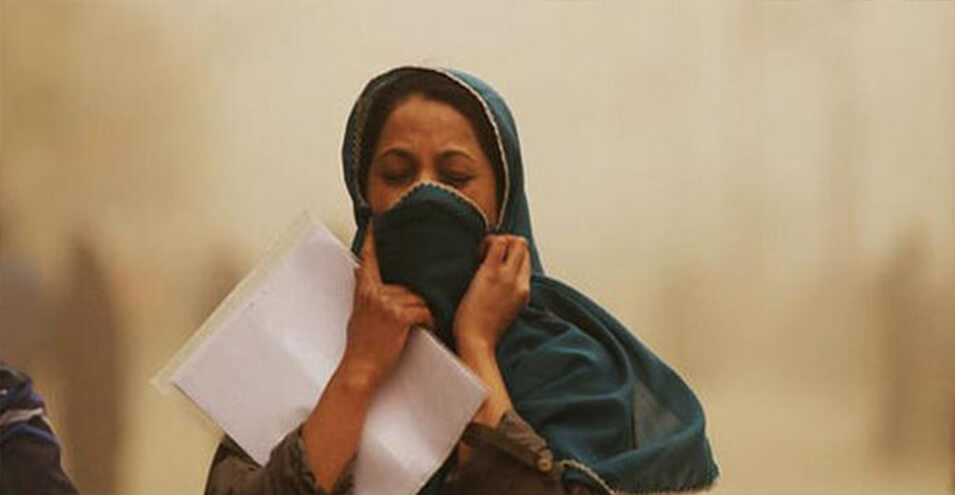
The head of Iran’s Environmental Protection Organization announced “serious complaints” from the Islamic Republic’s leader about an “unpleasant odor” in Tehran and his order to eliminate it “by the end of the twelfth administration.” The spread of foul odors across much of Tehran began last December.
Essa Kalantari, head of Iran’s Environmental Protection Organization, announced on Tuesday, March 21 (Esfand 21) that the Supreme Leader is “seriously displeased” with the bad odor along “the Imam Khomeini Airport route” and has ordered that this “unpleasant odor” be eliminated by the end of the twelfth administration’s term, approximately two and a half years from now.
According to ISNA, the head of the Environmental Protection Organization said at the opening ceremony of “the Panda Mihan factory wastewater treatment plant:” “The Leader and the President are seriously displeased with the unpleasant odor along the route of Imam Khomeini Airport. The President has even stated that when I’m on the airport route, the odor of the area wakes me up from sleep.”
Kalantari added: “The Leader has ordered that the unpleasant odor along the airport route must be eliminated by the end of the twelfth administration.”
Tehran’s governor also said last Wednesday: “From Imam Khomeini Airport to his mausoleum, 28 points and sources have been identified where after 30 years bad odors are being detected. We must understand where the source of this bad odor is coming from.”
Solving the Bad Odor Problem “Two Years Behind Schedule”
According to Mehr News Agency, the head of Iran’s Environmental Protection Organization, who previously stated that “the bad odor in south Tehran would be eliminated by summer 2018,” announced today that “if all agencies perform their duties, we hope the bad odor in south Tehran will be eradicated within the next two years.” Accordingly, as this news agency has reported, it appears that solving the bad odor problem in south Tehran has “fallen two years behind schedule.”
Essa Kalantari, in another part of his remarks today, stated that “various agencies including the Ministry of Energy and regional water companies are obligated to eliminate the unpleasant odor,” saying: “Tehran Municipality has no right to dump municipal waste at the cheapest possible location.”
The Vice President of Iran also, referring to the fact that “the unpleasant odor along Imam Khomeini Airport route is an injustice we have done to the people and we must restore their rights,” emphasized: “All units that pollute water are obligated to pay the cost of any water they contaminate. Dumping wastewater disrupts people’s comfort and is a serious crime.”
Kalantari, stating that “we did not have the audacity to distribute the country’s resources and have concentrated all of them within a 50-kilometer radius of Tehran,” pointed out: “We must make the city an environment that is tolerable and livable for people. If we do not do this, we should apologize to them, and I for my part apologize for the bad odor along Imam Airport route that carried environmental pollution with it.”
Rouhani’s Order to Relocate Aradkuh Landfill Center
The head of the Environmental Protection Organization continued by expressing hope for the elimination of the “unpleasant odor along Imam Airport route” within the next two years, considering waste in the Aradkuh area (waste processing and recycling complex in Kahrizak) as a “larger issue,” and announced the order of Hassan Rouhani, President of Iran, to Tehran Municipality to relocate “Tehran’s waste disposal center to another location, approximately 100 kilometers lower than the current site.”
Beyond the “unpleasant odor” along Imam Airport route, in recent months some areas of Tehran also faced this issue. Iranian media reported on December 12 of last year about the spread of “bad odor” in various parts of Tehran and speculated about its source. From around 4 p.m. on that day, a foul odor engulfed districts 6, 2, 8, 11, and 19 of Tehran.
After that, however, various officials immediately took positions on the matter, and one after another denied the connection of this odor to their area of responsibility. Even the formation of a special task force by the Crisis Management Organization could not help identify the source of this odor. From “the opening of the sewage storage” of the burned-down Plasco building to “the rupture of the sewage network” and from “the leak of one of the refinery or gas centers” to the activation of “the Damavand earthquake and volcano fault,” various speculations were made about the origin of this “mysterious odor.”
On December 22 of last year, Anoushirvan Bandpay, Tehran’s governor, denying all these speculations, announced the “identification of the bad odor in Tehran” and stated that the odor was due to pollution from sewage. According to Bandpay, “the sewage leachate from Aradkuh waste, fermentation and decomposition of perishable food materials from dairy industries and slaughterhouses” caused severe pollution, and the odor resulting from this pollution spreads across Tehran due to wind.