Letter from 200 Female Prisoners at Qarchak Prison in Varamin; Deplorable Conditions and Continued Official Neglect
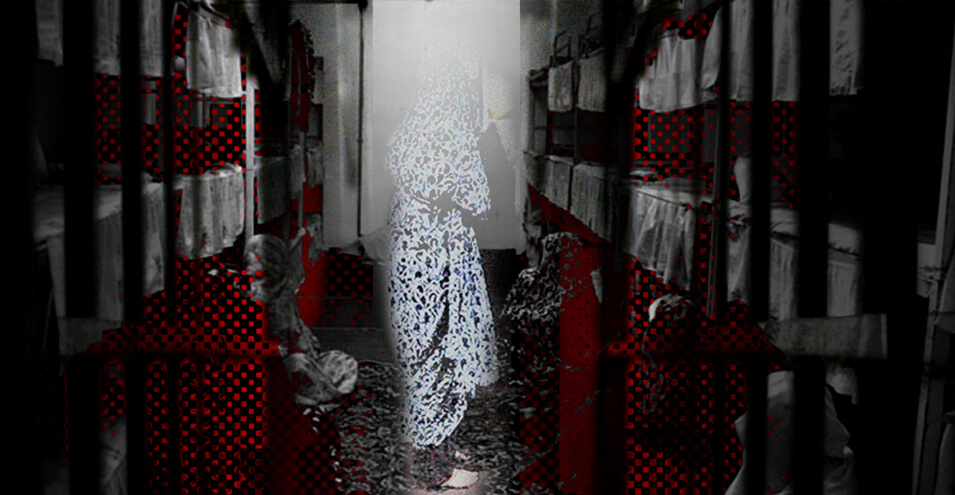
Two hundred female prisoners in Ward 5 of Qarchak Prison in Varamin issued an open letter addressed to Hayat al-Ghayb, the General Director of Tehran’s Prison Organization, announcing that starting from August 17, 2019, they will “refrain from receiving their food ration during lunch” in protest of “extremely unsuitable conditions” at the prison. Low-quality food products, lack of access to drinking water, extremely high prices for items needed by prisoners in the prison shop, lack of access to medicine and fresh air, as well as unhygienic conditions in the prison are among the issues these prisoners have protested against.
In their letter, these prisoners noted that while prison officials had taken temporary measures one month before the letter was written due to a visit by the General Director of Tehran’s Prison Organizations, they were not given the opportunity to speak with him. They wrote: “Stage-setting such as taking down the clotheslines where prisoners hang laundry—which for years has been their only means of earning money by washing other prisoners’ clothes, cleaning the entire prison by prisoners, bringing flower pots to the corridor for that brief visit, and so on. But we prisoners in Ward 5 of Qarchak Women’s Prison tried to tell you and your accompanying delegation about the prison’s problems during that visit, but our efforts were in vain.”
In their letter, they stated that “they are unable to meet their own living needs in prison” and have resorted to working for other prisoners to meet their needs, while some others have turned to “self-harm” under these pressures. They wrote: “Given that most of us prisoners have been brought here because of difficult economic circumstances or solidarity with the crisis in economic conditions in society, we no longer have the ability to meet our own living needs in prison—needs such as food, beverages, clothing, and hygiene products. But are we prisoners not entitled to basic rights and protection of our lives and mental health by those in charge? Some of us have resorted to self-harm, taking handfuls of pills for mental peace, borrowing money, or being forced to perform others’ work due to these unseen pressures. What is painful is that if we had experienced good economic circumstances outside prison, we would not be here now, and there would be no letter. But the question we repeat every day is: how do we meet our expenses to stay alive?”
The Campaign for Human Rights in Iran has conducted investigations over recent months into the living conditions of female prisoners at Qarchak Prison in Varamin, showing that not only access to basic food and hygiene items faces multiple limitations in this prison, but in other matters such as medical and healthcare services, prisoner labor, conditions of mothers and children living in prison, access to communication tools and family visits, lack of prisoner segregation by offense type, violence by prison officials, and ignoring cases of abuse among prisoners, lack of investigation into violence and discrimination, especially against transgender and non-binary women, the prison conditions are extremely harsh and unsuitable to the point that prison officials overlook all these matters and suppress any complaints.
All the quotes mentioned from female prisoners at Qarchak Prison in this report are from individuals who spent time in this prison over the past three years. Although some conditions varied at different times for prisoners (and prisoners therefore had different experiences in different sections), the multiple experiences of prisoners regarding prison conditions demonstrate shortcomings and inefficiencies in the conditions of women in this prison and in the prison’s management. Conditions, some of which are mentioned in the letter from 200 female prisoners at Qarchak in Varamin.
Ward Conditions
The conditions mentioned in the letter from 200 female prisoners at Qarchak in Varamin have continued over months and years, and prison officials have taken no action to change them.
In June 2019, Marzieh (a pseudonym to protect the identity of a former Qarchak prisoner) told the Campaign for Human Rights in Iran that due to lack of sleeping space, some prisoners sleep on the floor without beds: “Actually, the wards of Qarchak Prison are warehouses with about 12 cabins, each approximately 9 square meters, inside each warehouse. Each cabin has 3 bunk beds with 3 tiers, with 9 people plus usually two floor sleepers living in that cabin.” She added about the number of people without beds: “The number of floor sleepers next to each cabin is usually 3 to 4 people.”
Lack of prisoner segregation is another major problem in accommodations at this prison. Although in August 2015, Mizan News Agency, affiliated with Iran’s judiciary, reported the implementation of a plan to segregate offenders of light crimes from offenders of serious crimes, according to those who were or are imprisoned at Qarchak Prison, the principle of classification is still not observed in this prison. Lawyer Mohammad Mogimi confirmed in an interview in late 2018 that not only is “the principle of separating convicts from accused persons not implemented at Qarchak Prison,” but segregation within its wards based on age and offense type in accordance with prison regulations is also not observed, which sometimes leads to threats to prisoners’ security or physical health. In this regard, in February 2018, five imprisoned Dervishes issued a letter to the prison’s head requesting the implementation of ward segregation and asked the prison head to separate them from wards with inmates with contagious diseases or histories of risky behavior.
The large warehouses of this prison also lack heating or cooling systems, which exacerbates air pollution due to the prevalence of smoking and a defective sewage system. According to Zhila Bani-Yaqoub, an active women’s rights journalist, prison officials respond to prisoners’ complaints about the ventilation system only by saying: “We won’t repair it because we have no budget. So don’t follow up.” In May 2018, one of the prisoners in a conversation with Ghanche Ghavami, a former Qarchak prisoner, spoke about temperature conditions at Qarchak Prison on the website of the Association of Iranian Women: “In winters we suffer from cold and in summers we suffer from headaches, dizziness, and severe heat stroke.”
Food and Beverage Conditions
Regarding access to clean drinking water, Shahre Ebrahimi, a former Qarchak prisoner, said in an interview with the Majzoob Noor website: “The water at Qarchak is so salty that prisoners are forced to buy bottled water from the prison shop at several times the normal price,” which itself has caused many differences and economic discrimination among prisoners.
Based on statements from former Qarchak Prison prisoners who answered the Campaign’s questions about conditions at Qarchak Prison in Varamin, from the time Qarchak Prison was built until today, the quality of food provided to prisoners has been unsuitable, to the extent that this prison falls below minimum hygiene standards and does not provide the necessary proteins and vitamins for prisoners. Maryam, a former Qarchak prisoner, told the Campaign: “They brought whatever leftover and garbage they had. You wouldn’t believe it; it was disgusting. They made stew with soy instead of meat or without sauce. It’s ridiculous—there were foods whose smell alone would upset your stomach.” When asked by the Campaign what made up the main portion of prisoners’ food, she said: “We either ate bread and cheese or tuna fish.” Marzieh, who spent about a month in this prison, also described the food situation as “appalling and disastrous.”
She told the Campaign: “If I say the nutritional situation was appalling and disastrous, I’m not exaggerating. Breakfast was usually either porridge or semolina that was given to each person along with bread the night before.” She added about access to hot water for making tea: “Hot water is given once in the morning, once at noon, and once at night. Sugar, tea, and other hygiene supplies are given to each cabin’s supervisor at the beginning of each month, and they distribute it among the cabin occupants.”
She continued about other meals: “Lunch was lentil rice, soy, and herb rice, pasta, and herb stew without red meat and sometimes with a little chicken. These foods were constantly repeated. Sometimes they could give lentil rice or soy rice for three days. Dinner was soup, bean stew, and lentil dishes.”
Conditions of Access to Sanitation and Hygiene Products
In June 2019, Maryam (a pseudonym to protect the identity of this former prisoner) who was imprisoned for seven years at Qarchak told the Campaign about the very small number of sanitation facilities compared to the number of prisoners in each hall: “There were a lot of us, so there were about 100 to 150 people on average in each hall. At least 100 people in each hall. It was supposed that for this many people there would be 10 sanitation facilities, but only 3 or 4 of the 10 were actually working.” She added about the shower: “The shower was the same way and in rotation. During a period when we didn’t even have hot water, they had scheduled all the halls, and you’d find out at 5 AM it’s your turn. A period that was quite appalling. Imagine 100 people trying to shower in one hour, and it’s supposed to be your turn only once a week or every two days. There was a period when three or four of us would go to shower together. Like the old Women’s Prison movie? The situation was like that.”
Marzieh also confirmed that on average there are about three sanitation and shower facilities for every 100 people and added: “Each ward has one sanitation facility with 3 toilets and 3 showers and 3 taps for washing dishes.” According to her statements in interviews with the Campaign, as a result of these shortages and the need to purchase basic hygiene items such as sanitary pads, female prisoners with low financial resources are unable to access the hygiene products they need: “Sanitary pads are given once a month as a set ration for each prisoner, but recently it was changed to one set every two months. This puts pressure on prisoners who have no financial support, because even when they gave one set of sanitary pads a month, due to the poor quality of the product, they were forced to buy from the shop.” She added: “Throughout my entire imprisonment at Qarchak Prison, I never saw my own soap.”
Medical Services
Health deficiencies at Qarchak Prison are not limited to the prohibition of disinfectants. According to prisoners at this prison, access to a doctor is possible once a month and on a scheduled basis, and only in very acute situations, which prisoners described as “being on the verge of death,” is access to a doctor outside the schedule possible. Marzieh described access to the clinic as “bitter irony.”
Maryam, who was released from Qarchak in the early months of 2019, told the Campaign: “At first it was a bit better, but then they made it once a month and scheduled it. Unless you were on the verge of death, in which case the guards would let you see a doctor, and it wasn’t even that easy.” She added about medical attention to patients: “Going to the doctor didn’t help anyway, because if you had cancer they’d give you ibuprofen, and if you had a headache they’d also give you ibuprofen. That was the only thing they gave you; there was nothing else.”
According to this eyewitness, sending patients to hospitals outside the prison was almost impossible. She added: “Hospital referral was very difficult. There was someone with cancer. They said we don’t have guards available and canceled that person’s referral. From every perspective, medical care was zero.”
In another example of untimely medical care, Fatimeh, a prisoner at Qarchak Prison in Varamin, told the Campaign that prison officials discriminate in medical care between political and non-political prisoners. According to her, if a prisoner is accused of murder and has a death sentence, the situation would be worse. Fatimeh told the Campaign: “I had a cellmate who was bleeding, and although a female gynecologist at the prison confirmed that she needed to be transferred to a hospital outside the prison for testing and sampling, prison authorities refused to do so.” She added: “After about two years of correspondence with various authorities including the judicial officer and prosecutor’s office, she was transferred to a hospital outside the prison. Doctors at the hospital told her that if she had come later, she could have developed cancer, and ultimately they had to remove her uterus from her body for treatment.” According to Fatimeh, this prisoner was accused of complicity in murder.
Marzieh told the Campaign about the complete lack of care for prisoners who have urgent medical needs: “One night one of the prisoners fainted, and when we asked staff to come and take her to the clinic, they said okay, tomorrow. Later, when they realized the situation was serious, they said a nurse needs to come and confirm she’s not well, and then she can go to the clinic. Finally, when they agreed to take her to the clinic, they said she can’t leave without wearing a headscarf. This was while she was unconscious.”
Prisoner Labor
Given that Qarchak prisoners are forced to independently purchase most of their basic needs such as food and even water through the prison’s expensive shop due to extremely poor quality, and at the same time a large segment of them come from low-income classes in society, earning income in prison has become a serious problem for these individuals.
Maryam, who was imprisoned for an extended period at this prison, told the Campaign that the situation for prisoners was such that if families did not provide financial support, continuing life would be very difficult for them. According to her, prisoners were forced to obtain the simplest basic needs themselves and purchase items such as “sanitary pads, bread, and even water”: “We bought everything… There was nothing they wanted to give.” She added: “If your family didn’t support you, you had to work there, you had to do manual labor. Now thank God my situation was such that I was teaching there like an instructor. I taught about jewelry. I had a salary and my situation was better, but for the first year or two maybe families would support well, and after that maybe it would become normal for them, and maybe they really didn’t have the ability to continue supporting.”
Source: Campaign for Human Rights in Iran