Likelihood of Gasoline Price Hike; A Tense Path and a Costly Decision
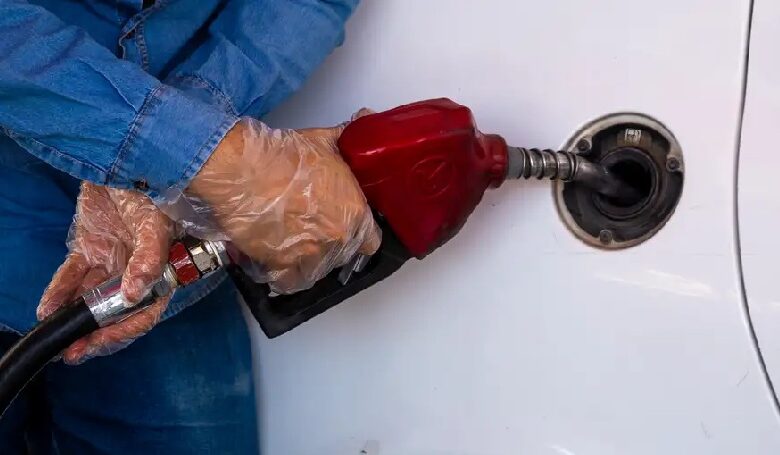
The possibility of a gasoline price increase in Iran has become a hot topic these days; an economically-oriented decision that could transform political and social equations in Iran. Is the Pezeshkian government ready to navigate this dangerous curve? A conversation with an expert.
The issue of gasoline prices in Iran has once again become a hot topic of discussion. Increasing gasoline prices has always been one of the most sensitive economic decisions of any government in Iran, capable of bringing widespread political and social consequences. The most concrete recent example was the nationwide protests in November 2019, which were sparked by a threefold increase in gasoline prices.
Statements by Masoud Pezeshkian, Iran’s president, and some other officials indicate that his government has serious intentions to increase gasoline prices, but at the same time, it appears that the process is proceeding naively and without considering the current conditions of society. Decisions made without transparency and careful planning not only increase economic pressure on people, but will also inflict fresh wounds on Iran’s already fragile economy.
Behzad Ahmadinia, an economics and energy journalist, said in an interview with Deutsche Welle Farsi, pointing to the very significant impact of gasoline price increases on Iran’s daily economy: “A large portion of transportation and daily energy consumption in Iran is concentrated on gasoline, and this reaches all goods and causes severe price inflation to be felt in society. Even right now, when there is only talk of such a price increase, we are witnessing this effect on the price of many goods.”
When asked whether Iran’s economy will be able to tolerate such a thing, he says the answer is both yes and no: “Iran’s macroeconomy needs gasoline price increases and this must be done; because the government has neither the ability to supply gasoline nor to subsidize it. However, household economies will not have the capacity to tolerate this. Currently, the minimum wage in many cities, including Tehran, does not even reach half the poverty line, and this causes the low-income segments of society to truly reach the brink of household economic collapse, and its effects on families will be unbearable.”
Price Increase and the Possibility of Repeating November 2019
Some domestic media in Iran have spoken of the possibility of gasoline becoming three-tiered in price. In this context, a group of parliament representatives, by issuing a letter to the heads of the three branches of government, warned the government about the “repetition of the 2022 economic catastrophe.”
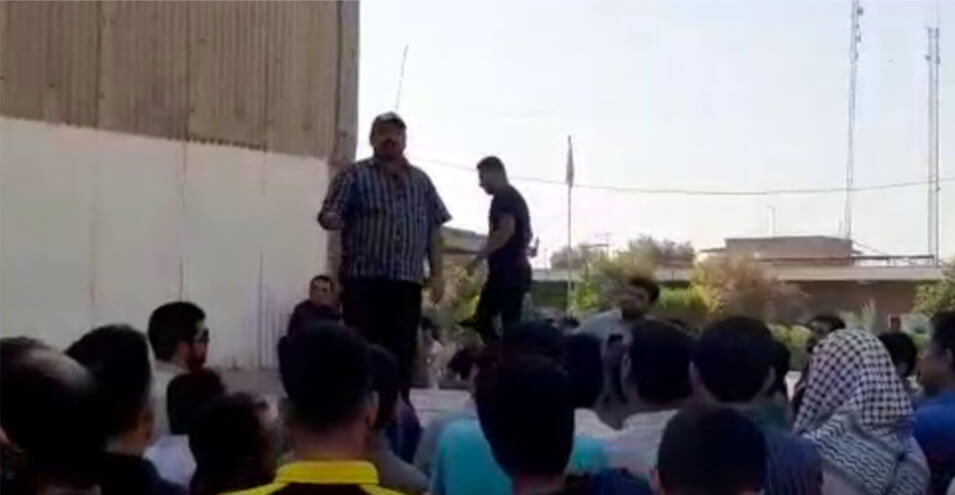
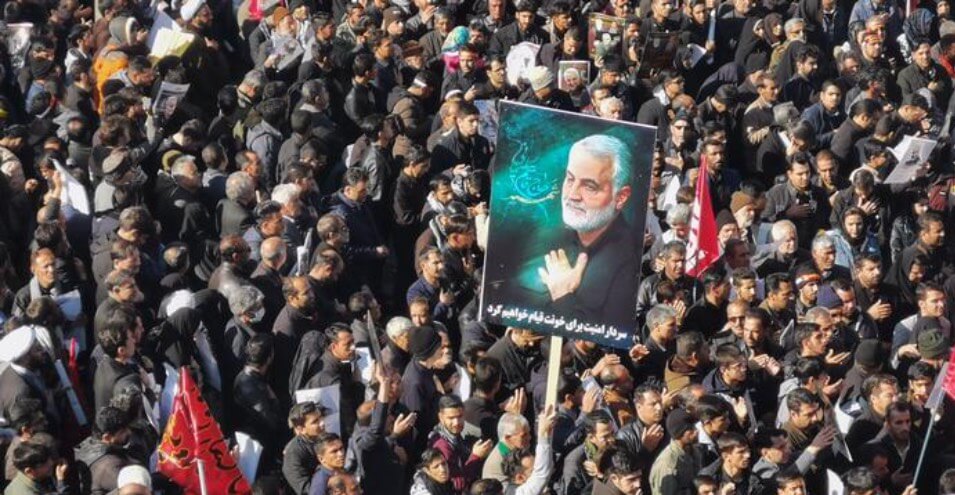
Some are also concerned about a repetition of the November 2019 protests that resulted in the deaths of hundreds following harsh suppression of protesters by the authorities.
Behzad Ahmadinia explains in this regard that in November 2019, society “had the potential for an explosion”: “The conditions created by the Rouhani government, constant confirmations and denials, sudden overnight gasoline price increases without public announcement, heavy-handed and clubbing treatment of protests—contrary to what Rouhani said in elections against Jalili, he himself employed the worst type of response—and the combination of these conditions led to the events of November 2019.”
He believes that currently Iranian society does not have the capacity to respond strongly to gasoline price increases, especially if the government manages the manner of the price increase. He adds: “Iranian society today, after the 12-day war with Israel and all the pressures it has endured throughout this year, with the price of the dollar and gold that has devastatingly drained society’s strength, has lost the potential for social movement. The executions that have taken place this year have also created an atmosphere of suffocation and generated fear and terror in society. We must see how the government will act. Right now they are proposing a plan where gasoline would have three prices; a rationed price, a second rationed price, and a free price for premium gasoline. They are categorizing these and reducing some of the poison of the event.”
According to Ahmadinia, it is possible that with the passage of time, worsening conditions and despair, society may rise up against the Islamic Republic and its economic decisions, because “when people cannot meet their daily needs and have nothing to lose, when they work they are still hungry and it makes no difference whether they have a job or not, they are forced to take to the streets.”
Scenarios for Gasoline Price Increases
Behzad Ahmadinia considers the increase in fuel prices in Iran to be certain. He gives the example of gradual and incremental price increases for gas and electricity and attributes the reason to “the government’s inability to meet needs.”
Ahmadinia refers to this situation as “energy bankruptcy”; meaning circumstances where the government’s obligations in delivering energy exceed its capacity to deliver: “In such circumstances, the first step is a price increase so that perhaps consumption decreases somewhat and one can continue with the policy of ‘robbing Peter to pay Paul.’ But how much will the price increase be—30,000 tomans? 40,000 tomans? 10,000 tomans? The government and state measure to see which price society will accept. The Islamic Republic’s method of operation has always been to announce a price, gauge feedback to see what will happen, and then decide what to do.”
This economics and energy journalist considers a price increase to 34,000 tomans to be likely and says whether the government will do this all at once, in phases, or with multiple tiers is unclear and they want to see which one society will accept.
According to him, the government’s scenarios are not very extensive. Society does not have much capacity to accept this, and on the other hand, the government also cannot continue in this state.
Ahmadinia adds: “So far, principlist representatives have made more effort to prepare society for a strong reaction. But as I said, society currently does not have this readiness and on the other hand does not have the capacity to tolerate price increases. So scenarios are limited to whether there is the capacity to do it or not. If we want to bring gasoline prices to the FOB price of the Persian Gulf while people’s income is not at that level and at a time when gasoline is a very important daily commodity for people, it is irrational and illogical. The answer to the argument that well, then why are household appliances and other goods at international prices and gasoline is not, is very simple: gasoline is a daily commodity. Why is the price of bread in Iran, for example, not equivalent to the price of bread in America? Well, because people’s income in Iran does not allow for such a thing. Gasoline prices are even in large countries with very large economies like America still decisive and sensitive. This is because it affects people’s daily lives.”
Gasoline Price Increase; a Real Solution or Doubling the Problem?
Masoud Pezeshkian has consistently spoken about gasoline price increases and reduction of fuel subsidies since the election campaigns. Similarly, the 2025 budget also emphasizes gasoline price increases. While according to experts, the solution to the budget deficit problem is not gasoline price increases.
Behzad Ahmadinia in this regard says: “The price the government pays for gasoline subsidies is much more than what it receives. Perhaps it reduces some costs but does not inject significant power into the budget.”
He sees the government’s main problem beyond the budget issue, in “the inability to supply gasoline” and says in such circumstances it does not even matter at what price gasoline is sold.
Ahmadinia explains the problem as follows: “After the JCPOA and with the opening of the Persian Gulf Star refinery, Iran perhaps for the first time in the history of the Islamic Republic reached self-sufficiency in gasoline. That is, we had more gasoline production than daily consumption, and this caused several years to pass without touching gasoline prices, but as soon as the JCPOA ran into problems, we saw what happened. Current sanctions conditions do not allow the Islamic Republic to freely import gasoline, and the only supplier that can be said the Islamic Republic buys gasoline from was Russia, which is currently losing many refineries in its war with Ukraine. This has caused Russia to face problems in supplying gasoline and no longer be willing to export gasoline to Iran. Other countries are also unwilling to export gasoline to Iran due to sanctions.”
According to this economics and energy journalist, businesses and the course of daily life cannot be eliminated to reduce gasoline consumption to save fuel. As a result, every business raises prices to compensate for its budget deficit.
Ahmadinia sees the main problem to be the automobile mafia, which is in direct connection with the office of the supreme leader, and high-consumption domestically-produced vehicles that, for example, consume 14 liters of gasoline per 100 kilometers; a figure that according to him has no equivalent anywhere in the world for four-cylinder vehicles of this type.
He also points to the sale of oil at very high discounts and below world prices to China, which despite the large volume, brings no profit to the country because part of the money does not return to Iran. His reference is to the admission by Iranian domestic media that at least 30 percent of foreign exchange from exports does not return to the country.
This economics and energy journalist concludes: “If gasoline reaches 100,000 tomans per liter, the Islamic Republic’s problems still will not be solved, neither in supply, nor in subsidies, nor in terms of social satisfaction. So this is only a palliative that they think they are injecting, but there is a possibility that the side effects will kill the patient. That is, it puts Iran’s very unstable economy in danger of collapse.”
It is still unclear what the final decision of the Pezeshkian government will be, but the reality is that under Iran’s current economic conditions, the main burden of any decision will fall on the people, and the probable result of it, according to many, will be nothing but making their dinner tables smaller.