Media Under Censorship Siege; A Look at the State of Press in Iran After the Revolution
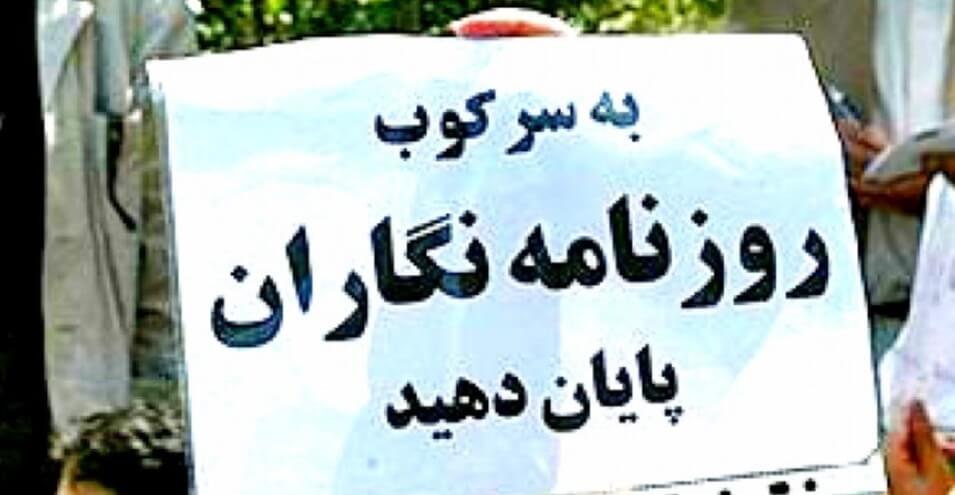
Coinciding with the arrival of May 3rd and World Press Freedom Day, the Farsi service of Voice of America in an investigative report and through conversations with experts has examined the evolution of Iran’s press following the 1357 revolution and the state of media under censorship siege.
In the final months of Mohammad Reza Shah Pahlavi’s reign, one of the most important professional measures was the newspaper strike, which lasted from the 15th of Aban 1357 until the 16th of Dey of that year, spanning 62 days.
With the end of this strike, a new era began in the life of Iran’s press; an era that continued for months after the establishment of the Islamic Republic in Iran, during which media could write whatever they wanted and different political groups as well as “conventional and traditional” media enjoyed this “freedom.”
- A Spring That Did Not Last Long
In the early summer of 1358, with the approval of a new press law bill by the Islamic Revolution Council, a number of newspapers and magazines were shut down. From the late summer of 59, restrictions against the press intensified and the publication of many newspapers and publications was halted.
In spring 1359, more than 200 publications were being published in Iran, but in Farvardin 1360, the Ministry of Culture and Islamic Guidance announced to print shops to refrain from printing newspapers and magazines “without permission.” So much so that by late spring 1360, only four newspapers – “Jomhouri Islami” and “Sabh Azadegan” in the morning edition and “Kayhan” and “Ittela’at” in the afternoon edition were being published.
During this period, the circulation of Kayhan and Ittela’at, which after the 57 revolution had been printed “over one million copies” for a while, was reduced to less than one-fifth.
The intensity of press restrictions increased after the explicit position-taking of the former leader and founder of the Islamic Republic.
Ruhollah Khomeini in his speech on 26 Mordad 1358 in Qom attacked publications and said that if we had acted “in a revolutionary manner, we would have broken the pens of all publications and closed all corrupt magazines and publications, tried their heads, banned corrupt parties, brought their heads to justice, erected gallows in large squares, and reaped the corrupt ones, these troubles would not have happened.”
However, Khomeini’s statements were considered a 180-degree shift from his pre-57 revolution statements in Neauphle-le-Château, where he had said: “People rose up to be free, you shouldn’t break their pens so they can’t write. These people broke pens over these fifty years.”
Elaheh Baghrat, journalist, in conversation with Voice of America’s Farsi service about the beginning of the era of censorship and suppression, says: “All groups were devastated and their publications were closed” and “conventional publications came under pressure,” pressures that although “later became organized,” but “in those first two years as well, pressure groups that are now known as vigilante groups and were called Hezbollahi and Phalangists at that time, attacked the offices of newspapers that did not conform to Khomeini’s line and the power current” and “set them on fire.”
The newspapers “Payam-e Emruz” and “Ayandegan” are two examples of media that were shut down during that period.
Ms. Baghrat adds: “If the media had freedom at that time, it was because the newly established regime had not yet consolidated, and as soon as it stabilized it closed down all newspapers.”
- Mass Migration of Security Figures to the Press
The bloom of the spring of press withered and what remained was largely placed in the service of the Islamic Republic’s propaganda apparatus. This closed environment continued from the beginning of the 60s until the mid-70s, but after 2nd Khordad 1376 and the unexpected victory of Mohammad Khatami in the presidential election, the space opened up to some extent.
Behzad Mehrani, researcher, tells Voice of America that the second Khordad faction, which is the left wing of the Islamic Republic and during the 60s was mostly present in security organizations, after the death of Ruhollah Khomeini, founder of the Islamic Republic, were removed from power and went to libraries and research institutes and realized that the Islamic Republic needs some opening of space for survival, what in common parlance is called a “safety valve.”
He emphasizes: “This space was not for dissenters and secular forces, but for intellectuals and the left wing of the Islamic Republic.”
However, Islamic Republic officials did not tolerate even this relative and controlled opening, and with the internal conflict of forces governing Iran, the media faced seizures and widespread shutdowns.
- The Universalization of the Internet and the Explosion of Global Information
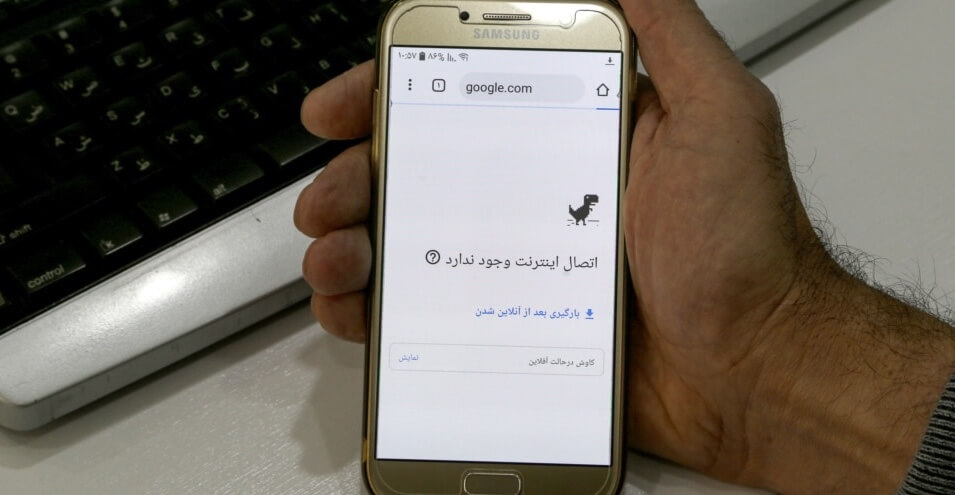
In the 1380s, the sparks of the explosion of global information with the universalization of the internet reached Iran as well, and the accessibility of publishing and obtaining information for citizens, along with the expansion of Persian-language media beyond borders, became a new challenge for censors. Thanks to the internet, controlling the free flow of information, despite the return of conservatives to power, somewhat escaped the grip of the ruling system.
The expansion of public protests and the widening of the gap between people and the established system, also faced media with new challenges.
Hadiyeh Kimiyaei, journalist, referring to the increase in security pressures on journalists during Hassan Rouhani’s second presidency, points to the silence of domestic media during public protests and the suppression by Islamic Republic forces, and tells Voice of America that many of her colleagues during this period were forced to quit or remain silent, and some were also “absorbed into government institutions” and turned to their coverage in the media.
According to her, the boycott or distortion of facts of nationwide protests in Dey 96 and Aban 98, as well as the Islamic Revolutionary Guards Corps missile attack on the Ukrainian plane, continued.
Prison, emigration, house arrest, job change, or continuing work under the blade of suppression; dismantling professional organizations and constructing appointed institutions; the process of the past four decades has confronted journalism in Iran with numerous difficulties.
Also, the prevalence of social networks as a new form of media has increased the concerns of suppressors about the free flow of information and given new dimensions to censorship. So much so that Ali Khamenei, the leader of the Islamic Republic, describes cyberspace as “truly chaotic” and “free and unrestrained,” and as a priority, seeks to “organize” it through the launch of a “national internet” or plans like “Sayanat.”
Source: Voice of America