New Satellite Images Show Construction Near Natanz Site
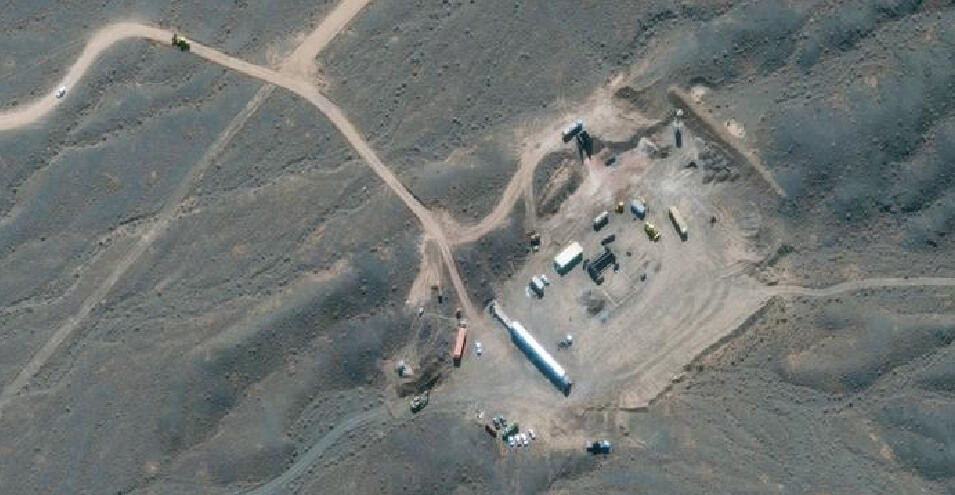
According to a report from the US Institute for Science and International Security, new satellite images show that Iran is constructing new underground facilities near the Natanz nuclear site. Based on these images, underground construction is progressing rapidly.
According to the US Institute for Science and International Security, since the release of a report on construction near the Natanz nuclear site on November 29, until new satellite images were taken on January 6, construction has taken place within the mountains there, indicating the expansion of these construction efforts.
The report, released on Monday, January 12, states that based on these images, entry points can now be identified with precision. Additionally, the clarity of the satellite images shows that construction within the mountains near the Natanz atomic facility is progressing rapidly, and they are likely the future location of new underground centrifuge assembly facilities.
Severe Security Measures
The images show a monitored area that includes the current and future construction staging area, an engineering support site, three tunnel entrances that have been excavated, and several buildings constructed between November and January. Three buildings are designed for explosive material storage and are protected by a security fence. The US Institute for Science and International Security’s report states that the tunnels could be access routes to the underground facility. The report also references the high level of protection of these constructions.
In June of this year, an explosion occurred at the Natanz site, which according to Behrouz Kamalvandi, spokesperson for Iran’s Atomic Energy Organization, caused “significant” financial damage. He also stated that a decision was made to build a larger facility with “more and more advanced equipment.” At that time, experts estimated that Iran’s advanced centrifuge production program could be set back one to two years as a result of this explosion.
Expansion of Activities Despite Natanz Incident
Following the explosion at the Natanz site, experts, while acknowledging disruption to Iran’s nuclear program, emphasized that this incident would not prevent Iran from producing advanced centrifuges. Two months after this incident, Ali Akbar Salehi, head of Iran’s Atomic Energy Organization, announced the construction of “a more modern, expansive, and comprehensive facility in all respects” for producing more advanced centrifuges in the mountains surrounding Natanz.
Several months later, in early December, the International Atomic Energy Agency reported in its report on the installation of more advanced centrifuges at the Natanz uranium enrichment site.
In this regard, Reuters reported on a confidential report that the International Atomic Energy Agency provided to the news agency, showing that the Islamic Republic intends to launch three new cascades of “IR-2M” centrifuges at the Natanz nuclear site.
Images released by the Institute for Science and International Security show that the surroundings of the “Iran Centrifuge Assembly Center” have been completely cleared of debris from the explosion.
One year after the United States withdrew from the JCPOA, the Islamic Republic resumed and expanded its nuclear activities, and in the past year has progressively increased the pace of advancement.
In its latest phase of reducing its JCPOA commitments, Iran has begun 20 percent uranium enrichment at the underground Fordow site and announced its intention to expel International Atomic Energy Agency inspectors from Iran next month.
Iran’s Threats Are Serious
According to Rafael Grossi, head of the International Atomic Energy Agency, Iran is seriously pursuing its 20 percent uranium enrichment program and could soon produce approximately 10 kilograms of enriched uranium monthly. He has emphasized that only a few weeks, not months, remain to resume talks with Iran.
Grossi warned that the Islamic Republic is “determined” to carry out its threat. Freydoun Abbasi, head of the Energy Commission of Iran’s Islamic Consultative Assembly, also stated in this regard: “If Western countries do not honor their commitments by the end of the current year, we will prevent IAEA inspections.”
According to Abbasi, this resolution does not mean expelling inspectors but rather: “We will not allow them to enter the country. According to the law, when an inspector wants to enter our country, they must be issued a visa; so when we prevent it, we will prevent surprise inspections, and we will carry out this action step by step.”
Ahmad Amirabadi Farahani, member of the parliamentary presidency, on January 20 in a television program stated that according to the law of the Islamic Consultative Assembly, if by March 20 of the current year, the United States does not remove financial, banking, and oil sanctions, we will certainly expel International Atomic Energy Agency inspectors from the country and will definitely suspend the voluntary implementation of the Additional Protocol.
On December 2, the Islamic Consultative Assembly passed the law on “Strategic Action to Lift Sanctions” and obligated the government to annually store 120 kilograms of uranium with 20 percent enrichment. The parliamentary resolution stated that if international sanctions are not completely lifted, Iran will also refrain from fulfilling all commitments it undertook under the JCPOA agreement. According to the resolution of the Islamic Consultative Assembly, the government has two months from the time of this resolution to prevent surprise inspections by the International Atomic Energy Agency if Western countries do not fulfill their JCPOA commitments.
According to experts, 20 percent enrichment smooths Iran’s path to nuclear weapons, although the Islamic Republic has repeatedly emphasized that its goal is not the production of nuclear weapons.
Strengthening Defense of Nuclear Sites
In addition to intensifying security measures at the Natanz facility, the Islamic Republic has also implemented extensive protective measures at other facilities related to its nuclear activities. On December 26, the Kuwaiti newspaper Al-Qabas reported, citing an informed source from inside Iran, that the Islamic Republic has strengthened its air defense equipment around the Fordow and Natanz nuclear sites. According to this report, air defense and radar equipment of the Islamic Revolutionary Guard Corps is responsible for defending these facilities: “They have deployed all their air defense capacity to prevent damage to the enrichment process at these facilities, which are part of Iran’s nuclear program, and to repel a potential missile attack.”
According to reports, the long-range “Bavar-373” air defense system, manufactured in Iran, and the Russian medium-range “2K12 Kub” air defense missile system have been deployed near the Fordow nuclear site. In mid-December, the Associated Press also reported that it had obtained satellite images showing that the Islamic Republic is engaged in new operations at the underground Fordow facility.
Source: DW