Niloofar Bayani’s Revelations; Rouhani’s Deputy: I Am Not Aware
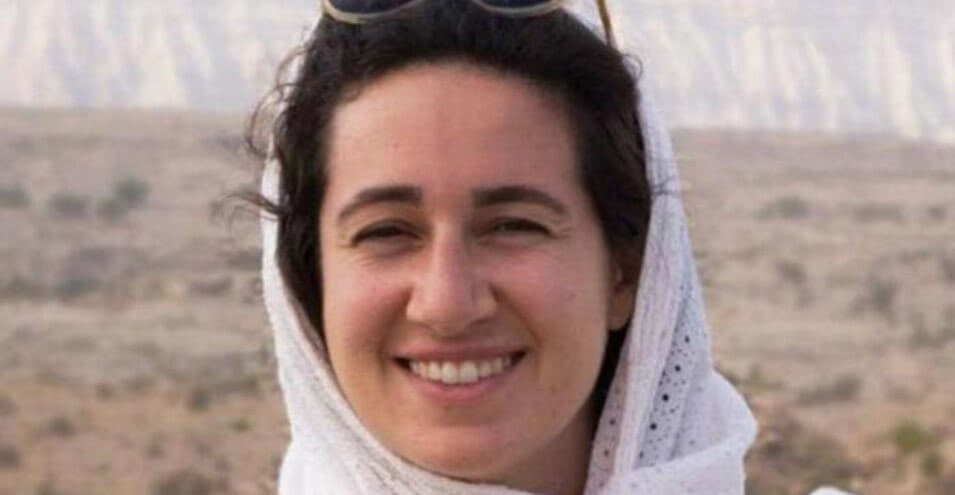
Ishaq Jahangiri says he is unaware of Niloofar Bayani’s letters, but the matter will be pursued in the government. This defendant in the environmental case has exposed sexual threats and physical and psychological torture by IRGC intelligence officers during 1200 hours of interrogation.
One day after the letters of the second defendant in the environmental case were made public, describing her interrogation process, Rouhani’s deputy responded. Ishaq Jahangiri said on the sidelines of a government cabinet meeting: “I have not seen this letter and am not aware of its contents. We will definitely bring it up in the cabinet on Sunday. If necessary, we will instruct officials in the government to speak with the head of the judiciary.”
In her letter, Niloofar Bayani, an environmental expert at the “Pars Wildlife” institute, wrote that her interrogators forced her to imitate animal sounds, threatened her with air injections and “paralyzing injections,” and showed her a photo of Kavous Seyed Emami’s body to let her know her fate if she did not cooperate.
Niloofar Bayani holds a bachelor’s degree in biology from McGill University in Canada and a master’s degree in wildlife conservation from Columbia University in the United States. She returned to Iran in the summer of 2017 and was arrested in the winter of that year. The Revolutionary Court sentenced her to 10 years imprisonment and forfeiture of earnings from six years of work at the United Nations.
Letters that Ms. Bayani wrote from prison to officials were published on Tuesday, February 18, 2020, on BBC Persian. In one letter from December 2018 to the commander of Section Two-A of the IRGC detention center, she stated that a large team during lengthy interrogations “made the filthiest sexual insults with disgusting detail and demanded that I complete their sexual fantasies.”
In another letter to Khamenei in February 2018, Niloofar Bayani also stated that she was once transferred along with seven armed men to a private villa in Lavasan to be “forced to witness their immoral and un-Islamic behavior in a private swimming pool despite her refusal.”
Social Media Reactions
The publication of Niloofar Bayani’s letters and the exposure of IRGC intelligence’s treatment of her has sparked a wave of reactions on social media. Mezhgan Jamshidi, an environmental activist, wrote: “If you have not died from shame at what happened to Niloofar Bayani and other arrested environmental activists; after this you will neither die nor tremble. Don’t say we don’t know! We will investigate… For two years you have known they are innocent and did nothing! And after this you will do nothing either…”
One Twitter user wrote: “Even if just one percent of the torture described in what was done to Niloofar Bayani in prison is true, Friday should be declared a day of national mourning instead of an election day.”
Abbas Milani, historian and author, wrote: “As a human being, I am ashamed that the beasts who tortured and interrogated Niloofar Bayani, and the leader who read her letter of protest and did nothing, and other beasts who beat and tortured Bahareh Hedayat and faced no punishment, all call themselves Iranian and human. Shame.”
Mortaza Kazemian, journalist, tweeted: “Two decades have passed since the discovery and publication of horrifying films of the torture of Saeed Emami’s wife. Niloofar Bayani’s tragic tale revolves around the same heel. The only difference is that the head of the inspection organization at the time has become the head of the judiciary; IRGC intelligence has become the main intelligence of the system; and the leader has become more autocratic.”
Mostafa Tajzadeh, reformist political activist, said: “Mr. Rouhani, Mr. Raisi, Mr. Larijani, what Ms. Niloofar Bayani has published about environmental activists regarding the ugly and inhumane behavior of her interrogators is shameful and unjustifiable. All three of you are complicit in this tragedy if you do not immediately take decisive action to reveal the truth, punish those responsible, and rectify the matter.”
Previously, in the winter of 2018, the “Kaleme” website reported that Ms. Bayani turned to others during the second court session and shouted: “If you were tortured with injections and threatened like me, you would confess. People, they kept me in solitary for months. They beat me and forced confessions. They are taking me to Solwati to execute me.”
The defendants in the environmental case were arrested in February 2017 by IRGC intelligence, and their closed-door trial began in the winter of 2018. The Organization of Environmental Protection and the Ministry of Intelligence have rejected the espionage charges against them.
Kavous Seyed Emami, one of the arrested individuals in this case, died under suspicious circumstances in prison two weeks after the group’s detention, and his death was reported as “suicide.”
Source: DW