Open insult to Jesus Christ and denial of the Holy Nativity in the shadow of political exploitation of Christians
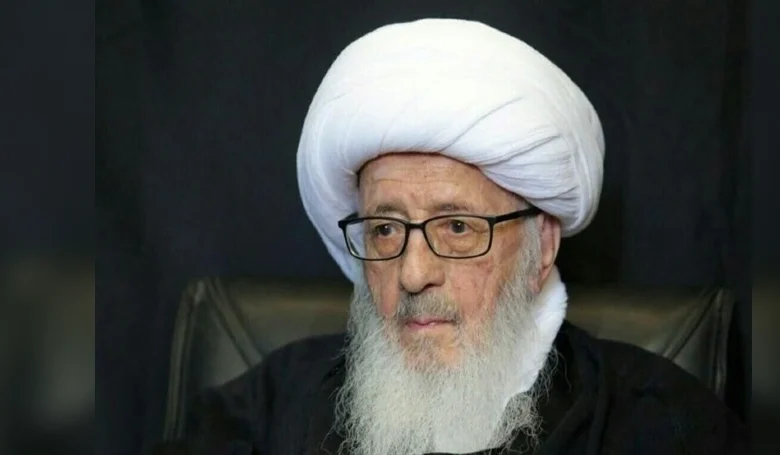
The open insult to Jesus Christ by "Vahid Khorasani," a religious authority in Qom, is being raised at a time when Christians and the church are being used for political gains and official ceremonies.
Statements made by some religious figures in Iran regarding the status of Jesus Christ and his birth have once again sparked a wave of criticism among Christians and international observers; statements that are not only controversial from a theological perspective, but are also seen by many as a clear disrespect for the fundamental beliefs of Christianity.
In a video from the early 1990s, but which was widely circulated on social media after Ali Khamenei's 40th birthday ceremony was held in a church, Vahid Khorasani, a Shiite cleric in the city of Qom, is shown attempting to make the claim that the validity of the virginity of the Blessed Virgin Mary and the legitimacy of the birth of Jesus Christ can only be proven in light of the Quran. This claim effectively suggests that if the Quran did not exist, the narrative of the birth of Christ would remain in doubt.
This religious authority says in the aforementioned video: "If you are an ignorant and ignorant Christian priest, let him answer this word. You burn the Quran, but you do not understand that if the Quran is burned, the result is that Jesus, son of Mary, becomes the son of fornication. The one who cleansed Mary's skirt from fornication and proved the purity of the child Jesus is the Quran of Muhammad. O Pope, who is silent, if you are an expert, answer this! If this Quran were not there, according to the Torah and the Gospel that are now in existence, Jesus, son of Mary, is the son of fornication, and a son of fornication is deprived of the kingdom of God. Therefore, both the lineage of Jesus and the account of Jesus are by the blessing of the breath of the Seal of the Prophets."
This authority's statements come at a time when the Christian tradition, not years but centuries before the advent of Islam, had established the issue of the virgin birth and the sanctity of Mary in official and theological texts. The canonical gospels, especially the Gospels of Matthew and Luke, explicitly emphasize this belief, and this issue is considered one of the pillars of the Christian faith.
Critics of this view believe that such statements effectively question the theological independence of Christianity. To make the validity of one of the most fundamental Christian beliefs dependent on another text reproduces not interfaith dialogue, but a kind of "religious exclusivism."
In fact, instead of respecting different religious traditions, this approach places them in a subordinate position; as if truth can only be verified from a particular path and that other historical and sacred sources lack independent validity.
What makes this issue even more sensitive is the contradictory behavior towards the Christian community in Iran. While such statements are made by some figures, at the same time, Christians and churches are used in political crises to advance government goals.
There have been numerous reported instances of church representatives attending official government ceremonies or using Christian religious spaces for political agendas. In some cases, churches have even been used as venues for government ceremonies (including memorial services).
This dichotomy raises a serious question: "How can one question or undermine the beliefs of Christians on the one hand, and on the other, use the same community to legitimize political agendas?"
Experts believe that continuing such an approach will not only not help interfaith dialogue, but will also deepen the divide. When one religious tradition does not recognize the validity of another, it creates the basis for distrust and tension.
At the global level, these types of statements can create a more negative image of the state of religious freedom and respect for minorities in Iran, especially in a situation where the issue of religious minority rights has always been one of the focuses of criticism from international institutions.
The debate over the place of Jesus Christ and his birth is not a purely historical or theological issue; it is tied to the identity and beliefs of millions of Christians around the world.
When such a belief is presented in a way that makes it appear dependent and secondary, it is natural that it will elicit harsh and critical reactions.
Ultimately, if the goal is genuine dialogue between religions, this dialogue will only take place if mutual respect and acceptance of religious independence are at its center, not denial, insult, and belittling.