Opposition to Amir Hossein Moradi’s Presence at His Father’s Funeral Ceremony
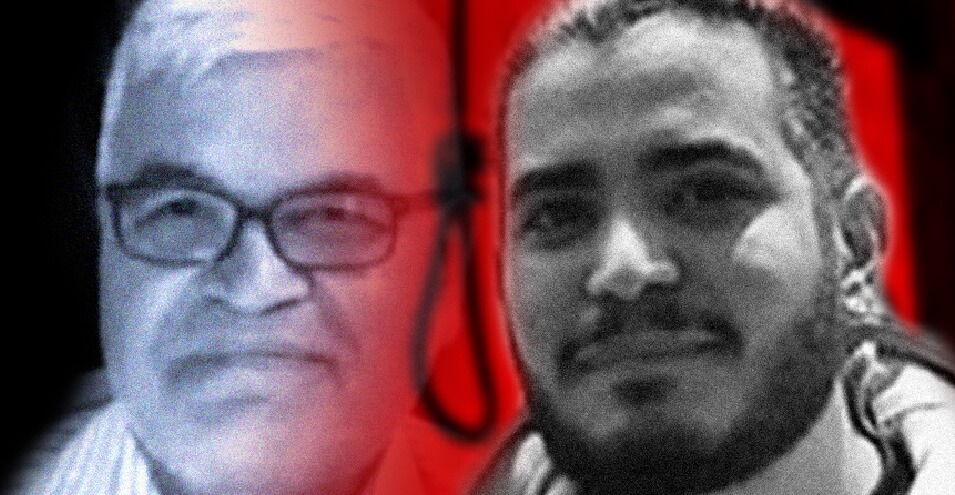
Babak Paknia, lawyer of Amir Hossein Moradi, one of the detainees from the November 2019 protests in Iran who has been sentenced to death, stated in an interview with Human Rights Campaign Iran that there has been opposition to Mr. Moradi’s presence at his father’s funeral ceremony.
Mr. Paknia told the campaign that they halted his father’s funeral procession to provide an opportunity for Amir Hossein Moradi to attend the ceremony, but his efforts to secure Moradi’s presence have been unsuccessful so far.
Nasser Moradi, Amir Hossein Moradi’s father, committed suicide on Monday, September 28, 2020. Amir Hossein Moradi’s mother told the Imtedad Telegram channel that she found her husband in the basement of their home after his suicide, and he “until his last moment and constantly spoke about his son and wished that one day they could all sit together at the table again.”
Mr. Paknia described Amir Hossein Moradi’s mental condition as very poor and told the campaign: “Amir Hossein’s condition in prison is very bad. It is quite obvious that when someone’s father commits suicide, especially due to the pressures of the case for which he is imprisoned in a destabilizing manner. We made great efforts and I spoke with the prison superintendent judge so that we could bring Amir Hossein to his father’s funeral ceremony because the law states that this is one of the cases where a prisoner can be sent at least under custody. However, despite our request being legal, it has not been approved so far. We have postponed his father’s funeral so that Amir Hossein could attend, but due to what they call security concerns, it is not possible, and they fear that possibly people might gather and Amir Hossein would be there. They have not granted this permission so far and have said that you conduct the funeral and we will later allow him to visit his father’s grave and home. But our effort is for this boy to be able to see his father for the last time before burial, but we have not succeeded so far.”
Amir Hossein Moradi, Saeed Tamjidi, and Mohammad Rajabi were sentenced on February 23, 2020, by Judge Soleimani, head of Branch 15 of the Tehran Revolutionary Court, to death for “participating in destruction and arson with the intent to confront the Islamic Republic system and enmity against the state” and to imprisonment and flogging for “armed robbery causing harm at night.” Their death sentences were upheld by the Supreme Court of Iran at a time when the lawyers of these three detainees from the November protests had no access to their case files. Following the surge of public protests on social media with the hashtag #DontExecute, which became widely publicized, the lawyers of these three death-sentenced youths announced that the execution of their clients has been temporarily halted and their case is to be reviewed again.
Babak Paknia, lawyer of Amir Hossein Moradi, told the campaign that the cause of Mr. Moradi’s suicide is the severe psychological pressures that befell his family following Amir Hossein Moradi’s arrest and the issuance of the death sentence, and in recent weeks following the execution of Navid Afkari, the pressure intensified.
Mr. Paknia explained: “The family of Amir Hossein Moradi was under pressure for months. It is natural that when your child is sentenced to death, you are under pressure and do not have a proper mental state. Then there was the false atmosphere created against these boys that they had committed murder and it was all a lie, but they played with a family’s reputation. We also knew that the pressures on the family had destructive and negative effects, and we tried to calm them through conversations we had with them. Once the sentence was halted and the case proceeded normally, they finally agreed to give the case to us, the lawyers, and the case was being reviewed. But some people falsely started contacting the families, and after the execution of Navid Afkari, the atmosphere was very negative. The families were afraid that perhaps their children would be executed and we were not aware. They were truly worried and we reassured them again, but unfortunately a journalist from outside the country called the family saying that they are being executed and are in the execution queue and the lawyers are lying. While the Supreme Court had issued an order to halt the execution of these boys. But the family was terrified and the pressure on the family intensified greatly. My colleague spent three hours at Mr. Moradi’s home and spoke with them and calmed them, but ultimately a family can only bear pressure to a certain extent, and unfortunately this tragedy occurred.”
Amir Hossein Moradi’s lawyer told the campaign: “Multiple journalists were calling, but the family told us that one journalist persistently called and said your son is in the execution queue and if you do not speak, you will receive his corpse. The number and name of this journalist is available, and I will have them provide the father’s phone number in my possession and I will disclose these numbers and messages.”
The case of Amir Hossein Moradi, Saeid Tamjidi, and Mohammad Rajabi remains in the Supreme Court. Mr. Paknia told the campaign: “The case is still in Branch One of the Supreme Court. The head of this branch is simultaneously the chief of the Supreme Court, and he issued the halt of the sentence, and the review in the court is almost complete, and we are waiting for the case to be referred to a complementary panel of the Revolutionary Court. The complementary panel has not been assigned yet, but two judges in the Revolutionary Court will review the case again, and our minimum hope is that Judge Soleimani and Judge Amozadeh can no longer review this case because they previously issued the death sentence and the sentence they issued has been overturned.”
During the November 2019 protests in Iran, which began on Friday, November 15, 2019, in response to a sudden increase in gasoline prices in various cities, according to the then-spokesperson of the National Security Commission of Parliament, more than 7,000 protesters were arrested. Radio Farda, however, reported the arrest of at least 8,600 people in 22 provinces of Iran. Human Rights Campaign’s review of information published by officials and official media as well as informed sources in various cities shows that arrests throughout the country far exceeded the statistics announced by Naqavi Hosseini, the then-spokesperson of the National Security Commission of Parliament. Given the lack of information disclosure and the extensive street arrests that were difficult to monitor, it is not possible to provide exact figures.
Source: Human Rights Campaign