Parliamentary Research Center: National Iranian Oil Company Debt Reaches $60 Billion
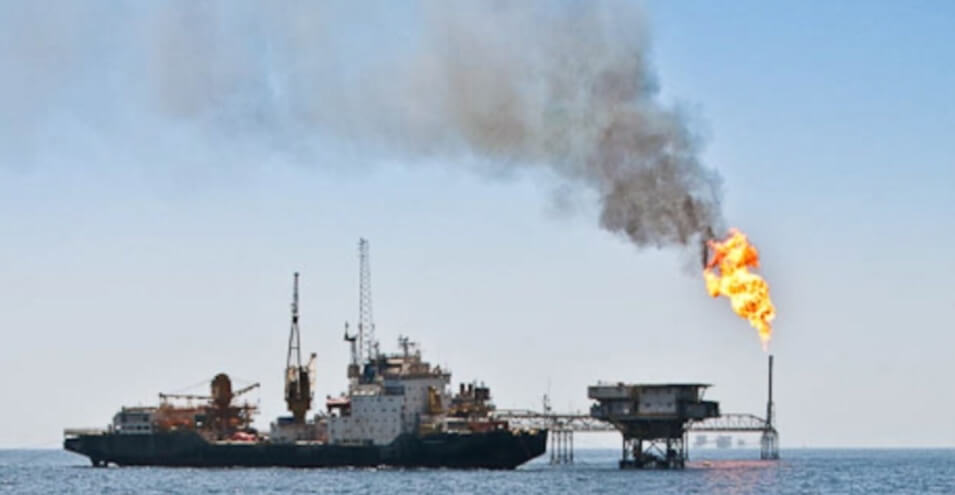
The Parliamentary Research Center reported in a document that the National Iranian Oil Company’s debt reached $60 billion by the end of 1398 (2019).
This institution affiliated with the Islamic Consultative Assembly had previously reported in an earlier report that the National Iranian Oil Company’s debt by the end of 1397 (2018) was $50 billion. Accordingly, approximately $10 billion was added to this company’s debt in 1398. Statistics on this company’s debt situation in the past year have not yet been released.
$60 billion is equivalent to the total annual revenue from Iran’s oil exports, petroleum products, and gas exports during the period before sanctions. The Central Bank reported this figure for the past year as $21 billion, which indicates a sharp decline in the country’s oil revenues due to American sanctions.
Only 14.5 percent of the country’s oil and gas export revenues belong to the National Iranian Oil Company, and it is unclear how this company will settle its heavy and increasing debts in the future.
Based on this report published on the Parliamentary Research Center’s website, oil investments have sharply declined during 1397 and 1398.
According to this report, only $3.3 billion was invested last year and only $3 billion in 1397 in the upstream oil sector (exploration and production), while this figure averaged close to $8 billion per year during 1392-1396.
The Parliamentary Research Center also warned that the country’s oil fields are rapidly aging and experiencing production decline, and the development of shared oil fields with Iran’s neighbors has faced considerable delays.
Previously, Iran’s Ministry of Petroleum and the U.S. Energy Information Administration had reported that more than 80 percent of Iran’s active oil fields are in the second half of their productive life, and due to reservoir pressure decline, their production decreases by 8 to 12 percent annually.
Over the past decade, Iran has attempted to compensate for the decline in production from old fields by developing some new fields such as the West Karun fields, an issue that has turned into environmental crises. For example, it was recently reported that to reduce development costs for West Karun fields and hand them over to Chinese companies, the Ministry of Petroleum obtained permission from the Supreme National Security Council in 1389 to dry up the Hawr al-Azim wetland.
Chinese companies Sinopec and CNPC developed two fields of Azadegan and Yaran on a 50-50 basis in this region and then abandoned these projects after developing the first phase.
Iran’s active oil fields are not only facing aging and production decline, but their recovery factor has also decreased, an issue that the Parliamentary Research Center has also mentioned.
Oil recovery factor means the percentage of reserves in a field that can be naturally recovered.
This report states that the recovery factor of Iran’s oil fields was close to 29 percent in 1392, but declined to 27.5 percent in 1398. In other words, approximately 73.5 percent of Iran’s oil field reserves cannot be naturally recovered.
Iran needs modern technologies and cooperation with Western companies to increase the recovery factor of its oil fields, and if production from old fields continues without attention to these issues, only one-quarter of the oil reserves in these fields will be extractable, and the rest will probably be permanently buried in the earth and will never be recoverable.
Other countries, with the help of Western companies, have increased the recovery factor of their fields in the necessary time and are not concerned about the permanent burial of tens of billions of barrels of oil reserves in the earth and the loss of national resources.
For example, Saudi Arabia increased the oil recovery factor from the Ghawar field, which is the world’s largest oil field and accounts for half of Saudi Arabia’s oil production, to above 30 percent by 2015, and in the same year, by collecting carbon dioxide extracted along with oil and reinjecting it into the field, took an important step to increase the recovery factor of Ghawar field to 50 percent.
Saudi Arabia hopes to increase the recovery factor of this field to 70 percent with more modern plans and technologies.
Source: Radio Farda