Peak of Government Audacity: Araghchi Called Deadly Suppression of National Uprising “Benefits of Resistance”
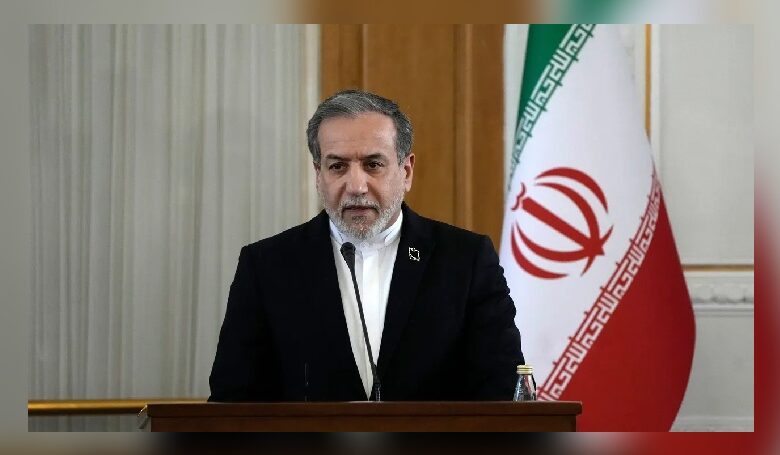
Peak government audacity in Araghchi’s speech, where he called the deadly suppression of Iran’s national uprising the “benefits of resistance,” reflects mockery of the pain and blood of people who are still in mourning.
In one of the most blatant and insulting displays of authority against the Iranian people, Abbas Araghchi, Foreign Minister of the Islamic Republic, on Monday, the 13th of Bahman 1404 (February 2), at a ceremony at the mausoleum of Ruhollah Khomeini, called the deadly suppression of Iran’s national uprising the “benefits of resistance” against America and Israel; remarks that expose in an unprecedented manner the depth of indifference, audacity, and humiliation of the pain of bereaved families.
In this speech, Araghchi claimed that “the peak of people’s protests on the 18th, 19th, and 20th of Dey month was the continuation of a 12-day conflict,” and then, with a formal and emotionless tone, referred to the bloody suppression and shooting of protesters as an example of the “benefits of resistance.” He added: “Soon we will see the benefits of this resistance in the field of foreign policy.”
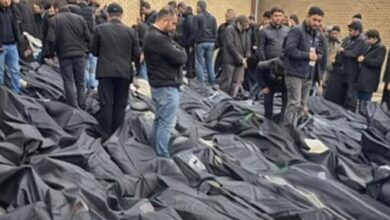
This claim, without the slightest reference to the death and injury of thousands of protesting citizens, including women and children during the silenced and media-suppressed protests, demonstrates complete moral and political distortion. Speaking of “benefits” while families are still mourning their loved ones and many have not even been allowed to hold memorial services or commemorations for the victims of suppression is a profound insult.
Araghchi also claimed in this elaborate speech that the Islamic Republic “recognizes people’s right to peaceful protest.” This is while independent human rights reports and international observers have documented that Iran’s Dey month protests in 1404 were met with ruthless use of firearms, direct shooting, torture, and widespread arrests by security and military forces, with thousands killed and wounded, particularly on the 18th to 20th of Dey month when people gathered in various cities to protest economic and political conditions.
In other words, they are openly calling the blood of protesters a “blessing” and injustice an honor. In recent decades, the Islamic Republic has repeatedly used the word “resistance” in a melodic and sloganeering manner to justify its political and military discourses, but this time it has exploited the same word to distort the bitter reality and mock the realities of Iranians’ lives.
These remarks reveal the true face of a government that has not only reached moral bankruptcy in the field of suppression, but also in the arena of narrative-making; a place where the pain and victims of a national uprising become propaganda tools to continue making the system’s logic appear meaningful.
Political observers and human rights experts believe that this type of rhetoric and approach not only fails to hide the realities of the massacre of protesters and systematic human rights violations, but deepens the gap between authority and society. When official government spokespersons define people’s death and blood under terminology such as “resistance,” nothing remains but a complete legitimacy crisis.
This approach also shows that the Islamic Republic is not only unable to accept and respond to the legitimate demands of the people, but has even transformed its own official language and rhetoric into a tool to justify suppression and disrespect for the bereaved. It is only in such a context that one can understand why protests and popular movements are not only not silenced, but become deeper, wider, and more furious by the day; because people no longer accept the distortion, suppression, and mockery of the blood of their loved ones.