Pouneh Garji’s Sister: We Wake Up Angry Every Day for a Year
“Deep down, I wished the lie they told would continue, because our problem after those three days, the lie and what happened was not just losing our loved ones, they became victims of a crime; an unprecedented crime where a plane would be shot down like thisby friendly forces.
It feels like the plane crashed again for all of us, and again and again after that with the news that came out and the statements made, we experienced January 8th every day.”
Panideh Garji, sister of Pouneh Garji, on the anniversary of the crash of the Ukrainian plane by Revolutionary Guard missiles, tells Radio Farda about her family’s anger and disbelief and the security pressures they have faced over the past year.
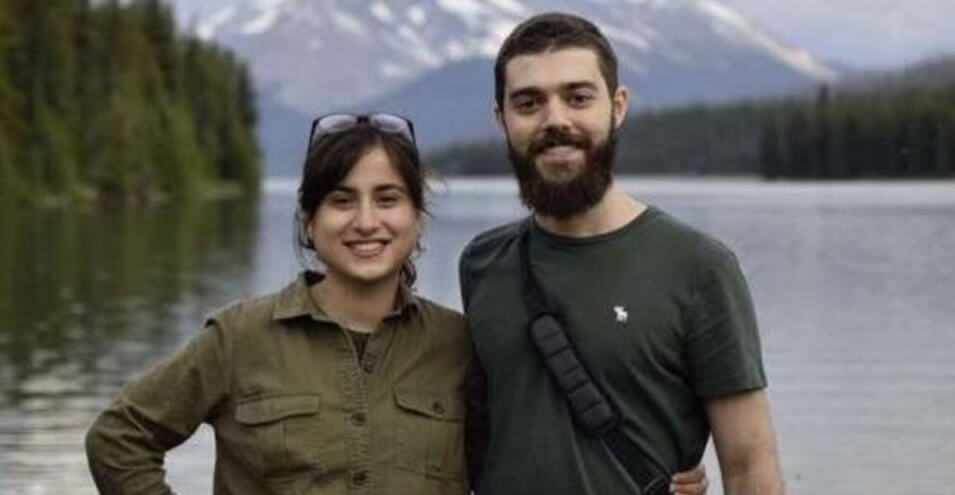
From the forced apology of the Islamic Republic to a family that lost their daughter and son-in-law, Pouneh Garji and Arash Pourzarabi, just one week after their wedding, in the tragedy of shooting down the plane; a tragedy that resulted in the death of all 176 passengers on this flight.
“The anger and disbelief about what happened aside, the forced apology and thisthat the person who killed your child only does is force you to move towards him and in a way wants to forcibly get forgiveness from you, something that each of us experienced in this one year and I hope no one else experiences.”
Calling the victims of flight 752 martyrs and pressuring their families to accept this title is a common narrative among families who lost their loved ones in this tragedy.
Panideh Garji says: “When they first put the name of martyr on the children and we don’t accept it at all. The children were not martyrs. Then they wanted to force an apology without even determining what happened. From the Martyrs Foundation, they came repeatedly and wanted my mother to become a member of the Martyrs Foundation, but we absolutely don’t accept. This is not even our issue that we want to be a member of something. We have our own organization and an apology when you kill someone doesn’t mean much.”
These pressures peak as the anniversary of the tragedy approaches: “They called repeatedly and came to the door. My mother doesn’t open the door. They have called repeatedly and both my mother and father wanted them to stop calling and they are making all efforts and I have heard from other families that suddenly appeared at the green door as an apology. In a way they are making all their efforts to convince the families. But this hasn’t happened yet and they haven’t been able to reach what they want.”
According to Panideh Garji, the issue of shooting down the plane is not a personal matter for the families: “At least for myself, this is no longer a personal matter that I lost my sister and my parents lost their daughter. 176 people and that child in his mother’s womb, 177 people were killed and this is not a personal matter at all and it should be determined that as they themselves said there was a systematic error, the report they gave no one believed, meaning a series of contradictory reasons that are really funny and if it had been a pre-planned plan thesenone of these were clarified.
For the smallest crime in the judiciary, a trial is held. A teenager in a conflict if guilty of murder is kept in prison for execution, but 177 people disappeared and nothing happened at all. We don’t want compensation, we want to know what happened. We want to know exactly what happened. Because we don’t believe any of these words. Because the person who committed the murder himself is investigating this murder. Our judicial system is not independent at all that we want to trust and even a symbolic trial has not been held yet. The only thing they have done is apologize and offer money.”
As the anniversary of the plane being shot down approached, the Iranian government announced it would pay $150,000 in compensation to the survivors of each victim. Panideh says: “None of the families are satisfied because we don’t want this. Our children won’t come back. Our loved ones won’t come back and one of our most important requests is to know what happened because we don’t want this to happen to anyone else. An incident that was a crime and it was the first time in the world that such a thing happened and they want to sweep everything under the carpet and be done with it. But the issue is beyond us as families and they should answer to all the people of Iran about what they did.”
Pouneh Garji’s sister returns to the night of January 8, 2020; a night that was ordinary for her, so much so that she didn’t even go to the airport to see off her sister and thought that like the previous times Pouneh went to Iran and came back, everything was normal:
“I wasn’t even aware of the news that night. In the morning around 7 or 8 o’clock, I was woken up by the sound of my mother and aunt and I only heard that a plane had crashed. I couldn’t believe it because just that a plane crashed is a very big problem and that Pouneh and Arash were on that plane is another matter. I was shocked, what happened? The plane crashed, now the children are coming back and tomorrow they’re leaving. I really couldn’t understand that the children no longer existed and my mind didn’t allow me to analyze it.
Some neighbors had come and were comforting us that maybe it was another flight and in those conditions one’s heart wants any good news, for us maybe… but there was only one flight. I don’t remember anything else. A chaos broke out that continues to this day.”
Panideh Garji says: “My family and I are forced to continue life in a way. Many think we only lost our loved ones but when someone is killed as a result of a crime, it adds many new dimensions to the issue. Every day along with the severe longing we have for Pouneh and Arash, we have to think about why. With that sorrow and pain, the anger and disbelief after those three days we are still experiencing. And along with the sorrow that exists, there is an anger that we wake up with every day and ask why? Why did this happen and we all really hope only for justice and this hope is what keeps us standing.”
She speaks of Pouneh Garji’s personal belongings that were never returned to her family: “None of Pouneh’s personal belongings were returned. Her laptop and phone, we want them and it’s not even a financial matter. The problem is that we will have to live with these things for the rest of our lives, with the memories we have. With the photos we have and even that was denied to us. From the children’s belongings, because their suitcases hadn’t been unloaded, they were returned, but all personal belongings they had taken with them except the rings on her fingers were not returned.
The things she had might not be very important. Her phone and laptop are very important to us and that we can have access in a way and recover her photos. Of course, they returned some of the wedding gifts that Pouneh had with her but I myself was very looking for her laptop and phone because that was very important to me, but they didn’t give it.”
Panideh Garji speaks of Maryam Mirzakhani, who was her sister Pouneh’s role model: “Pouneh’s role model was Maryam Mirzakhani. Pouneh could only live 25 years. I’m sure if they gave her the opportunity to live longer than thisshe could give more love to people and have a positive impact on people’s lives. I just hope this doesn’t happen to Pounehs and Arashes and that no family loses their loved ones and all the people of the world lose intelligent, cultured and influential people like this.”
Source: Radio Farda