Protecting Children’s Privacy in the Maze of Custom and Religious Law
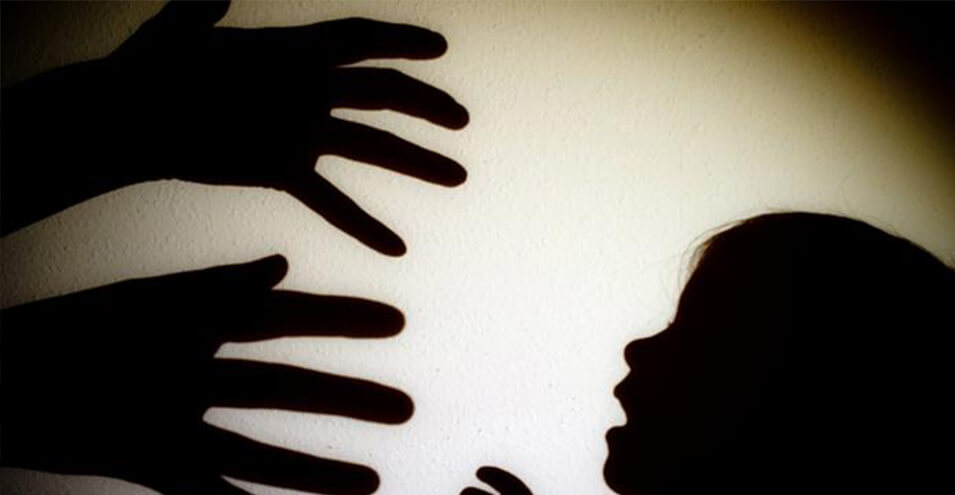
Instead of pursuing the matter, dismissal of the journalist who exposed news of sexual assault on a young girl is being demanded due to “enemies’ exploitation.” Everyone talks about the necessity of educating children, but education is being blocked. Who is responsible? The perpetrators, the whistleblowers, or the obstacles to education?
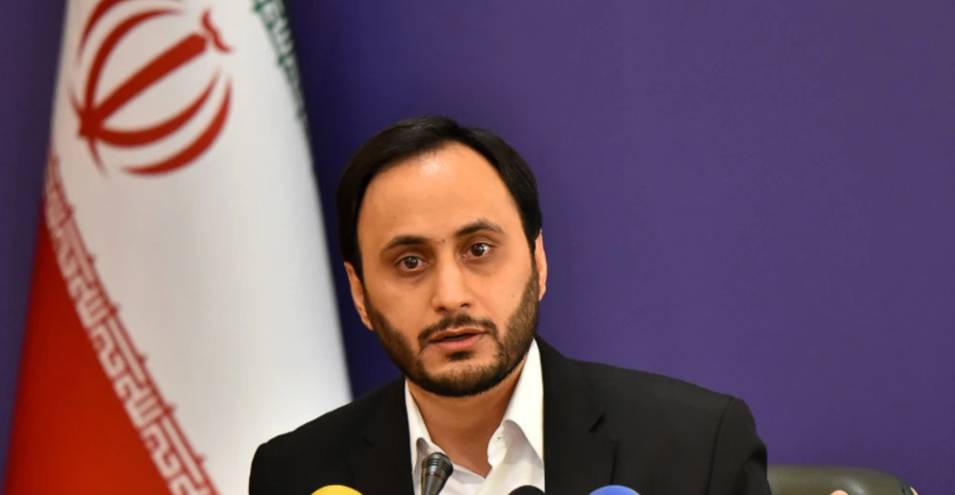
Mohammadjavad Abtahi, representative of Khomeini Shahr in Isfahan’s parliament, surprisingly called for the removal of Iran’s emergency services chief instead of pursuing the matter of sexual assault on an Afghan girl in his constituency.
In a letter addressed to Iran’s Social Welfare Organization chief, Abtahi stated that publicizing this news by the emergency services chief has caused “enemies’ exploitation” and, according to him, their “mud-slinging” against the Islamic Republic system. The Khomeini Shahr representative called the publicization of news of group sexual assault on an Afghan girl by Iran’s Social Emergency Services chief an “immature action” and demanded his “immediate removal” to “reduce inflammation and tension” in this county. Abtahi’s letter, whose image was published in media and social networks yesterday, is dated June 3 (one day after the chief’s confirmation of the news).
Mahmoud Sadeghi, a reformist parliament representative, wrote on Twitter Thursday (June 7) that Abtahi “forcefully” defended the content of his letter in a conversation with him, considering the disclosure of this news—particularly because the incident location is named after the founder of the Islamic Republic—as causing “counter-revolutionary exploitation.”
Reza Jafari, chief of Iran’s Social Emergency Services, confirmed Saturday (May 31) the news of three men’s group sexual assault on “Bahar,” a five-year-old Afghan girl in Khomeini Shahr, Isfahan, saying: “The child abuse case involves an Afghan girl who was abducted last week while playing in front of her house, and her semi-conscious body was found in ruins hours later.” Afghanistan’s embassy in Iran also confirmed the news’ accuracy, and the country’s foreign minister instructed his ambassador in Iran to follow up on this case.
The Afghan migrant girl was discharged from hospital after treatment, and the assault “perpetrators” have not yet been arrested. This news, following repeated occurrences of such shocking incidents, occupied public opinion and sparked a wave of protests, particularly on social networks. It was then announced that the group sexual assault was not accurate and the case involves only one suspect. “Bahar” is the third Afghan girl to become a victim of sexual assault within the past two years.
Shortly before the assault on this girl, news of group sexual harassment of approximately 14-year-old students at Moin high school in western Tehran confronted public opinion with another shock, to the extent that the government, parliament, and judiciary intervened, and the supreme leader himself issued an order to “implement divine punishments.”
However, Khamenei’s reaction apparently did not satisfy public opinion, and some voices implicitly, and many social network users explicitly, spoke of the government’s double standards regarding such crimes, citing the case of Saeid Toosi, a Quranic recitation teacher and one of the readers close to the leader’s office, who was accused of sexual harassment of his students. Complainants had reported the influence of Khamenei’s office in the case and its effect on Toosi’s “acquittal.”
Sexual Assault Crimes Becoming More Brutal
According to experts, child abuse, sexual harassment, and assault on children are far more prevalent than statistics presented by official institutions. However, a brief look at only confirmed news about assaults on children in recent years indicates both its expansion and increased brutality.
Amirmahdi’s body, a nine-year-old boy who left home to shop in December 2012, was found around Tehran after being assaulted.
MohammadReza, age nine, was killed in Tehran in November 2014 after being assaulted. The killer, who had taken Mohammadreza under the pretext of accompanying him to mourning sites, assaulted him in his home, then slit his throat and left his body on the roadside. Hussein, an eight-year-old boy in Zanjan, was suffocated “by his clothing zipper” in December 2014 after being assaulted.
A 20-year-old man in an unspecified location in August 2015, after assaulting an eight-year-old girl in a school restroom, suffocated her by wrapping a scarf around her neck. At the same time in Sabzevar, a 17-year-old cousin of a six-year-old girl named “Mehdiyeh” took her to the city’s outskirts and suffocated her after assault.
In April 2016 in Varamin, 16-year-old Amirhassan killed “Setayesh,” a six-year-old Afghan girl, after assaulting her and threw acid on her body. In August 2016 in Sangar, a man who intended to assault “Hannaneh” suffocated her with cloth upon witnessing her distress and fearing disclosure of his intention. “Kiana” was a girl kidnapped by her cousin in Nishapur in September 2016 and killed after being assaulted.
In June 2017, a man near the vegetable seller stall of “Atena’s” father in Dasht-e Moghan assaulted this seven-year-old girl after confining her in his shop and, after killing her, concealed her body in a sack inside a plastic barrel. In July 2017, it became known that “Kimia’s” stepfather in Karaj had killed this girl after repeated assaults. “Ahoura’s” stepfather in Rasht in September 2017 assaulted this three-year-old boy and then killed him by repeatedly striking his head against the wall.
In March 2018, a man confessed that after assaulting “Neda,” he had killed this seven-year-old Afghan girl and left her body in a garbage bag in Rajayishahr neighborhood in Mashhad.
The latest instance of publicized child abuse was also sexual harassment of at least 30 approximately 14-year-old students at Moin school in western Tehran. This school’s superintendent is accused of offering cigarettes, alcoholic beverages, and “obscene films” to students and forcing them into sexual relations and harassment.
An “Eternal” Bill
Before the recent painful incident in Khomeini Shahr, the sexual assault case at Moin school led to renewed discussion of the “Bill for the Protection of Children and Adolescents,” and Mohammad Reza Aref, head of the Hope faction in parliament, announced “pursuit” of its passage—a bill that has been gathering dust in parliament for over six years.
Existing laws in Iran for protecting children’s and adolescents’ rights are incomplete. These inadequate laws were only passed 26 years after the Islamic Republic’s establishment. This backwardness has caused the judiciary and government to seek passage of a bill through parliament despite the Law for the Protection of Children and Adolescents passed in 2002. This bill, initially submitted to the government by the judiciary in April 2009, was sent to parliament in November 2011—over six years ago—with amendments, but has still not reached parliament’s open session.
Many experts and civil activists believe that passage of such a bill could, despite all its shortcomings, still address many issues related to violation of children’s rights and to some extent prevent widespread child abuse in society.
Work, marriage, and trafficking of children, alongside harassment, exploitation, and sexual assault, are phenomena that have particularly come to the forefront of Iranian public opinion and mass media attention with the repetition of crimes related to children. A collection of tragic events has, like shocks, increasingly transformed support for children’s rights and more serious confrontation with child abuse into one of civil demands.
The child protection bill provides severe punishments for various forms of child abuse, including “heavy fines and even long-term imprisonment.” This bill, for different levels of child abuse including purchase and sale of children or trafficking of their organs, using them for prostitution, or creating conditions for child and adolescent suicide, in addition to financial penalties, foresees 6 months to 25 years imprisonment.
Sohila Jalodarzadeh, member of parliament’s Social Commission, said Thursday that this bill has “finally” emerged from the judicial committee and is now “waiting to reach parliament’s open session.”
Vague Definitions
Exploitation, harassment, violence, and sexual assault still lack clear definitions in Iran’s laws. Shahindokht Molaverdi, advisor to Iran’s president on citizenship rights, said on May 30 that “our current existing laws lack necessary deterrence against sexual harassment; sexual harassment is neither defined nor has a specific punishment.”
One reason for this vagueness is “religious obstacles” against passage and enforcement of civil laws. In Iran’s religious government, all laws must conform to Shiite Islamic rulings. For example, although from the perspective of children’s rights advocates, child marriage is an instance of “sexual harassment,” Islamic ruling declares girls’ puberty age as nine years. Nevertheless, in Iran, marriage of girls from age 13 and boys from age 15 is considered legal. This is with the clarification that marriage of girls and boys before these ages is also “permitted with the permission of guardians and court determination based on consideration of the child’s welfare.”
To this problem must be added the “morality” and social and cultural taboos of Iranian society, which affect both the difficulty of passing civil laws and sexual education and awareness regarding harassment and sexual assault. According to Sohila Jalodarzadeh, sexual harassment in Iran is treated “confidentially.”
In no society, of course, are people considered “responsible,” and “authorities” are sitting in their positions precisely for this reason—to “undertake responsibility” for executing responsibility-laden matters.
Religious Government Versus Civil Education
Mohammad Bathayi, Iran’s Minister of Education, in his initial reaction to the “bitter and shameful crime” at Moin school in western Tehran, said among other things: “We have started educating families, and we will also strengthen student education.”
However, awareness about sexual relations and informing and preparing children and adolescents to recognize sexual exploitation initially face government obstacles in Iran.
Daily programs of Islamic Republic Broadcasting clearly demonstrate that the government’s model in this field is the same “confidentiality” that the parliament social commission member mentioned. Ms. Jalodarzadeh says: “If people want to run society with restrictions, considering humanity’s nature to escape restriction and seek freedom, they will certainly make the problem worse. Today, to overcome existing problems, they must use the engine of awareness and inject awareness into society.”
Sohila Jalodarzadeh’s reference is to UNESCO’s 2030 educational document; the same controversial document that angered Supreme Leader Ali Khamenei so much that he ordered its cancellation and said: “This is the Islamic Republic.” Khamenei, noting that UNESCO is “certainly under the influence of world powers,” emphasized that the Islamic Republic “will not submit to such documents and will not surrender to them.”
Iranian hardliners, a large portion of whom claim to have no knowledge of the complete content of this 368-page document, launched such extensive propaganda against it that one of them (Hosseinali Hajideligan, a parliament representative) after being exposed for harassment of Moin school students, claimed this incident was the “fruit” of the 2030 document that is “haphazardly” implemented in some schools, including in western Tehran schools.
The objective of UNESCO’s 2030 educational document, passed at the high-level conference of UN member countries in September 2015, is to improve education quality in various countries. This document was passed under the title “Towards Quality, Equitable and Inclusive Lifelong Learning for All.”
Among issues addressed in this document is combating educational inequalities for women and men. In addition to emphasizing gender equality in education, the 2030 document, in its fundamental strategies section, also emphasizes sexual education in schools. It appears the supreme leader’s sensitivity toward this document stems from this point; the same point where civil laws do not meet the “religious” expectations of the religious government.
Source: DW