Public Investigation in Malta Regarding Murder of Whistleblower Journalist
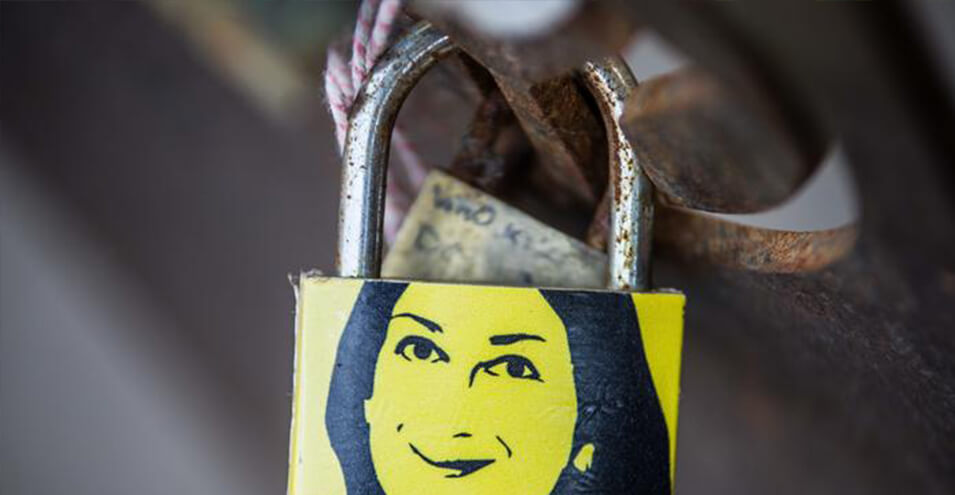
Two years have passed since the assassination of Daphne Caruana Galizia, a 53-year-old journalist who exposed government and business collusion in Malta in the “Panama Papers” scandal. Now, under pressure from Europe, an investigation commission is examining the circumstances of this murder.
Two years after the killing of the whistleblower journalist and government critic of Malta, the investigation into this murder has proceeded due to external pressures. Joseph Muscat, Prime Minister of Malta, has ordered the formation of an investigation commission and asked the judge heading the commission to submit a report within a maximum of 9 months.
In the directive of Malta’s Prime Minister, it is stated that the investigation must clarify whether Malta’s government bears any responsibility in this matter and whether the government could have prevented the murder through precautionary measures to fulfill its duty to protect the right to life of its citizens.
Ms. Galizia was investigating government corruption and money-laundering networks in Malta and died on October 16, 2017, near her home, as a result of a bomb explosion that was placed under her vehicle. Three men were arrested in connection with this case, but many questions remain unanswered regarding the masterminds and supporters of these three individuals.
Ms. Galizia was among those who exposed the involvement of members of Malta’s government in the “Panama Papers” scandal and reported on money laundering and tax evasion on this island. Before her assassination, she had provided information on this matter to the European Commission.
It will be investigated whether the government could have prevented this assassination. Muscat’s decision to form an investigation commission was made following pressure from the Council of Europe to investigate the circumstances of this murder. Ms. Galizia’s three children, who have been pursuing their mother’s murder case for these two years, have expressed doubt about the independence of the investigations.
Ms. Galizia’s family had demanded independent investigations after her death, but media reports state that Malta’s Prime Minister did not consult with her children and relatives in forming the investigation commission. Matthew Caruana Galizia, the journalist’s son, stated: “There is a danger that the fingerprints of government officials involved in the matter will be erased.”
The Council of Europe, headquartered in Strasbourg, France, oversees the preservation and observance of human rights in member states of the European Union. This council had set a deadline of September 26 for this small Mediterranean island nation to launch an investigation into Ms. Galizia’s murder case. Malta, with a population of 400,000, has been a member of the European Union since 2004 and is considered the smallest country in the union.
Plaintiff Against Plaintiff
Ms. Galizia’s sons have long been involved in cases that the government and private plaintiffs have brought against them. Last week, Dunja Mijatović, Commissioner for Human Rights of the Council of Europe, asked Malta to end the allegations against this family.
In an open letter to Malta’s Prime Minister, Ms. Mijatović wrote that this family has faced at least 30 complaints under the heading of “defamation.” The letter states that these cases unjustly impose financial pressure on this family and question the rule of law and press freedom in Malta.
The plaintiffs against the Galizia family are government officials and businessmen whom the deceased journalist had accused of financial corruption and money laundering. They have placed the responsibility of responding to these complaints on the shoulders of Ms. Galizia’s family.
Reporters Without Borders has welcomed the formation of an investigation commission in Malta to pursue Ms. Galizia’s murder but has simultaneously warned that “the Maltese government should not think that it can calm public opinion by forming this commission.”
In a statement by this organization, it is stated: “We are following the matter with a critical eye; whether the commission will truly work independently and impartially or not. We remind the Maltese government of its responsibility for clarifying why Ms. Galizia was killed.”
The assassination attempt against this whistleblower journalist prompted reactions from the European Union, Reporters Without Borders, and journalists’ unions. Following Ms. Galizia’s assassination, hundreds of journalists gathered in front of Parliament in Valletta, carrying placards and newspapers stained with red.
Source: DW