Ramin Seidamami: The reporter in ‘Perpetual Suspects’ was my mother’s interrogator; they are seeking to justify my father’s death
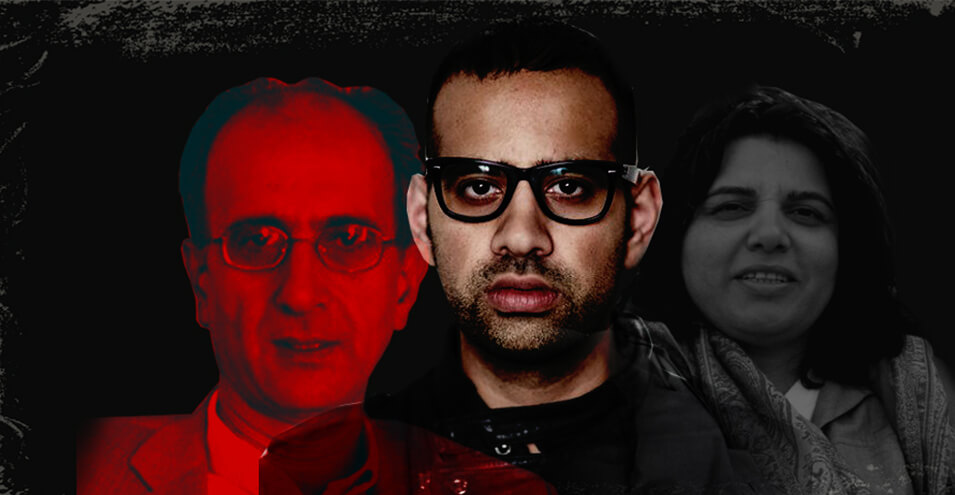
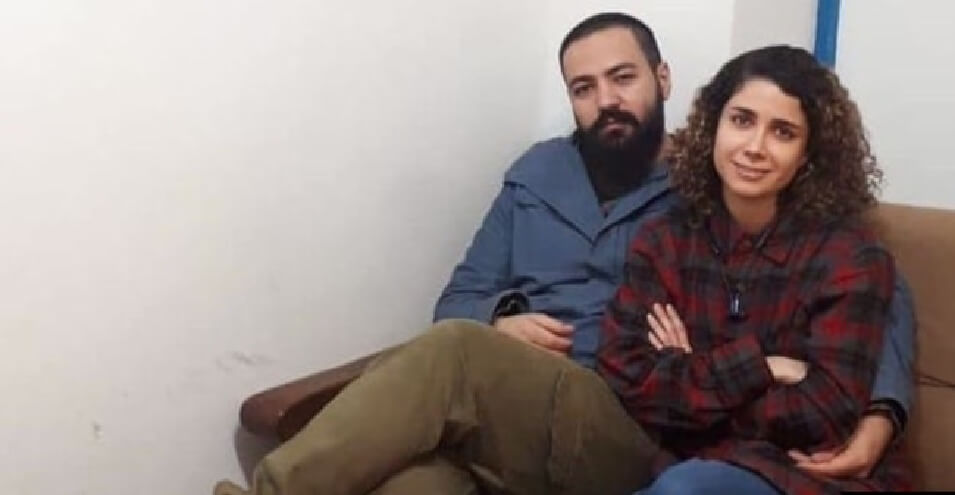
Ramin Seidamami, son of Kavous Seidamami, a university professor and environmental activist who died in Evin Prison under unclear circumstances in February 2017, stated in an interview with the Human Rights Campaign in Iran that the person who appeared as a reporter in the program “Perpetual Suspects” interrogated his mother, Maryam Mambini, on June 26, 2018.
While detained environmental activists await the issuance of verdicts following the conclusion of their trial sessions, the third network of Islamic Republic of Iran Broadcasting (IRIB) aired a program on Sunday, November 10, 2019, titled “Perpetual Suspects” about “the case of environmental activists.” The program was halted in the initial minutes of broadcast citing a technical fault. As evidenced by the extensive publicity for this film on social media networks close to security institutions, the detaining authorities, in coordination with IRIB, have launched a new attempt to justify these arrests. This is while several national institutions, including the National Security Council as well as the Ministry of Intelligence, have explicitly stated that the defendants in this case have not committed espionage. Moreover, following the death of Kavous Seidamami, investigations related to his death remain unresolved.
Mr. Seidamami told the Campaign: “More than 30 Revolutionary Guards raided our home in June 2018 simultaneously with the football match between Iran and Portugal national teams. They had brought several large boxes. This same person who is now a reporter in this program was among those officers who interrogated my mother in our home in front of cameras. My mother did not know him until this program began. This person demanded that my mother say my father was a spy and showed her pictures asking who these people were and what your connection to them was, and such questions.”
The Campaign had reported on November 6 that with the conclusion of the primary court sessions of these imprisoned environmental activists, their charge was announced as “cooperation with hostile state America and the Zionist regime against the Islamic Republic of Iran for espionage on behalf of the CIA and Mossad,” subject to Article 508 of the Islamic Penal Code, and eight defendants in this case, after 22 months of detention, are now awaiting the issuance of the court’s verdict.
Ramin Seidamami, son of Kavous Seidamami, told the Campaign: “The fact that at this time and on the eve of announcing verdicts for those in prison, IRIB is doing this to prepare public opinion regarding the verdicts they want to announce. There can be no other reason for this. Regarding my father, they also want to justify my father’s death in prison with accusations and lies such as espionage, but no matter what they do and how many films they make, they cannot justify my father’s death. Everyone who knew my father knows that none of these accusations and lies apply to my father.”
Regarding the suspension of the “Perpetual Suspects” program in the initial minutes of broadcast by the third IRIB network, Mr. Seidamami told the Campaign: “I believe it’s because there are still some elements within the government who knew my father well and know that the accusations against the children in prison have no basis in reality. They are trying to defend themselves, and for that reason I believe it was cut off. It is a kind of power struggle within the system, and my father and the detained activists are victims of it.”
Ramin Seidamami explained: “In those initial minutes of broadcast, we see images of Thomas Kaplan speaking against Iran. This is while in October 2017, the very time Kaplan spoke against Iran, my father and his team strongly objected in a letter to Luke Hunter, director of the Panthera Foundation, and also informed the Ministry of Intelligence.”
This is not the first time IRIB has broadcast such programs. Islamic Republic of Iran Broadcasting on February 15, 2017, by airing a documentary in the 20:30 news program that clearly defamed Kavous Seidamami’s character and activities and called him a spy, essentially violated domestic laws and international laws regarding the presumption of innocence as well as violated individuals’ privacy rights.
In this video, an attempt was made to create a suspended and mysterious atmosphere around Kavous Seidamami’s activities and the collection of environmental activists through the combination of music and cinematic techniques; however, except for publishing private family photos of Dr. Amami and images of internal meetings and the presence of environmental activists in nature, there was no further content to present, and no evidence was provided to prove the commission of a crime.
The family and lawyers of Kavous Seidamami had complained to IRIB officials, demanding that instead of “security atmosphere creation and defamation” of the late Amami, they be “accountable” for the cause of his death. A complaint that Ramin Seidamami told the Campaign has gone nowhere.
Kavous Seidamami’s son told the Campaign: “Our complaint against IRIB went nowhere. We also knew it would go nowhere, and our complaint was more symbolic. We wanted to say that your evidence regarding the espionage charge is a picture of my father petting his dogs or his fishing hook that you show in the twenties and thirties, claiming that through this he made contact with Israel.”
Kavous Seidamami, a 64-year-old university professor and environmental activist, was arrested on January 24, 2017, by the Revolutionary Guards Intelligence Organization in media silence, but on February 8 of the same year, officers informed his family that he had committed suicide in prison. The Revolutionary Guards did not allow an independent autopsy for Kavous’s family, and this university professor was buried on February 15 amid numerous questions and ambiguities for his family, the public, and especially Iran’s academic community.
Sepideh Kashani, Niloufar Bayani, Amirhossein Khaleghi, Houman Jokar, Morad Tahbaz, Abdolreza Koohpayeh, Sam Rajabi, and Taher Ghadirian are eight environmental protection advocates who were arrested by Revolutionary Guards Intelligence Organization during January 25-26, 2017, and are now awaiting the issuance of their verdicts.
Apart from IRIB’s action, Jafari Dowlatabad, Tehran’s prosecutor, and Gholamhossein Mohseni Ejehi had previously called Seidamami a spy in their press conferences. The public announcement of these accusations before the trial is contrary to the presumption of innocence. Section 1 of Article 11 of the Universal Declaration of Human Rights states: “Everyone charged with a penal offense has the right to be presumed innocent until proved guilty according to law in a public trial at which he has had all the necessary guarantees for his defense.”
The use of private and family photos of the defendant and showing individuals who are not related to his accusations, such as wedding photos or group photos, also violates Article 25 of the Constitution, which prohibits all forms of spying. This article states: “The inspection of letters and the interception of communications, the recording and disclosure of telephone conversations, the disclosure of telegraph and telex communications, censorship, non-delivery and non-transmission of correspondence, eavesdropping, and any form of spying are forbidden except by court order.”
The accusation of espionage against environmental protection advocates is being brought while previously, Mahmoud Sadeghi, a member of parliament, wrote on Twitter on May 8, 2018, citing the Minister of Intelligence’s statements in parliament that the Intelligence Minister “explicitly, reasonably, and evidentially declared that they have found no evidence of their espionage.”
Isa Kalantari, head of the Department of Environmental Protection, has also repeatedly stated that there is no evidence of espionage against environmental activists and they should be released. Kalantari said on May 21, 2018: “Based on the assessment of a four-member committee of the government board, ‘the detained activists should be released because there is no document to prove the accusations made against these individuals.'”
Kalantari also said on August 13, 2018, emphasizing that there is no evidence against their espionage: “But the judiciary has not yet clarified the fate of these people and tells us it’s none of your business and don’t follow up.”
Until now, family members of the detained environmental protection advocates have refrained from speaking to the media. Nevertheless, informed sources have confirmed that interrogators used psychological, mental, and physical pressures to obtain forced confessions during the investigation of this case. For example, Niloufar Bayani’s statements in her second court session about threats of injection and torture that led to forced confessions provoked a widespread reaction among the people. Ms. Bayani was absent from the next court session and the court convened in her absence.
The families of the detained have written letters several times to the head of the judiciary and other officials. In a letter written by families in June to Ibrahim Raisi, the unlawful acts committed against eight environmental protection advocates by Revolutionary Guards Intelligence Organization and the judiciary since their detention have been raised, including “pressure, intimidation, and torture” to obtain confession, lack of free choice in selecting a lawyer, denial of the right to a lawyer and meeting with any lawyer until one year after detention, and continuation of provisional detention beyond the legal period, non-transfer of Niloufar Bayani to her second court session solely because she had spoken about her pressures and torture for confession before the judge in the first session, transfer of all of them to unknown locations for questioning and threats and intimidation, and finally the lack of submission of documents and evidence by the prosecutor and Revolutionary Guards Intelligence Organization to prove their guilt.
Source: Human Rights Campaign