Roya Hashmati: I Won’t Put On the Headscarf, Put Your Quran Under Your Arm and Whip Me

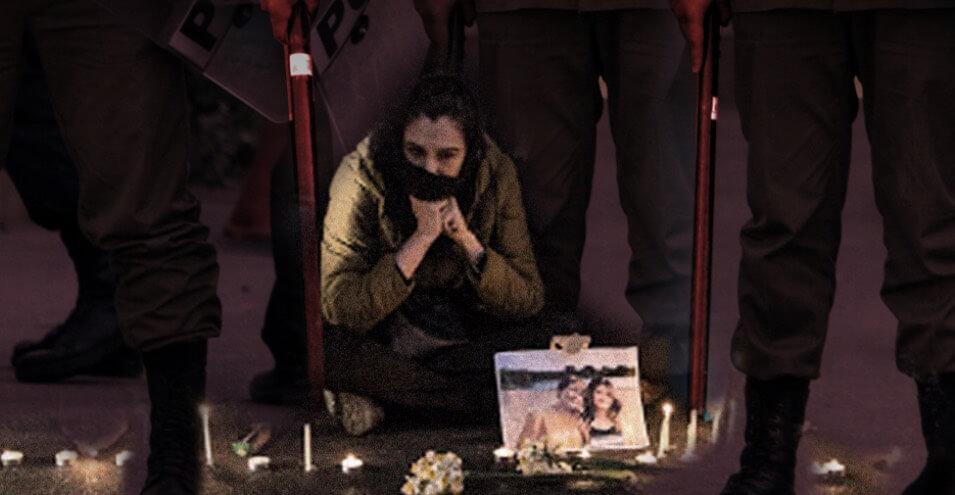
Roya Hashmati, a resident of Sanandaj, addressing the person who carried out her flogging sentence, said: I will not put on my headscarf, put your Quran under your arm and hit me.
Roya Hashmati, a Kurdish citizen from Sanandaj living in Tehran, was sentenced by the judiciary to one year of punitive imprisonment, 74 lashes, and a three-year ban on leaving the country due to non-compliance with mandatory hijab in the Keshavarzi Boulevard area of Tehran. After the sentence was carried out, she published an account about the execution of the verdict and her refusal to submit to injustice.
She wrote on social media: “This morning, the enforcement office called me to carry out my sentence of 74 lashes. I called my lawyer and we went together to the Seventh District Prosecutor’s Office. We passed through the entrance gate and I removed my hijab and headed to Branch 1 of the enforcement office. The employee said: Put your headscarf on so there’s no trouble. I said I came here because of this headscarf to receive my lashes, I won’t put it on.
They called and the enforcement officer came up and said: Put on your hijab and follow me. I said I won’t. He said: Then what are you going to do? I’ll whip you in a way that you understand where you are. I’ll also open a new file for you so you get another 74 lashes as our guest. I still didn’t put it on. We went downstairs and he repeated with oppression: Am I not telling you to put it on? I didn’t put it on, two women in chadors came and pulled the headscarf onto my head and I took it off again and this was repeated several times. They handcuffed me from behind and pulled the headscarf onto my head and we went to the basement level.
There was a room at the back of the parking garage. The judge, the enforcement officer, and a woman in a chador were standing beside me. The woman was sighing and saying: I know, I know. The bearded judge laughed in the room which reminded me, and I turned my face away from him. They opened the iron door, the walls of the room were cement and there was a bed at the end of the small room where there were places for iron shackles and ankle cuffs on both sides of the bed. There was a metal device resembling a painting easel pole a bit further away. It was a medieval torture chamber.
The judge asked: Ms. How are you? Do you have any problems? I answered as if I didn’t exist. He said: I’m with you, Ms. I didn’t answer again. The enforcement officer said: Take off your coat. I hung my coat and headscarf from the torture easel pole. He said: Put your headscarf on. I said I won’t, put the Quran under your armpit and hit me. A woman came and said: Please don’t be stubborn and pulled the scarf over my head. The judge said: Don’t hit too hard. The man started whipping my shoulders, my shoulder blades, my back, my buttocks, my thighs, my calves and started again. I didn’t count the number of blows, I just hummed under my breath the names of women, in the name of life torn from slavery, our black night become dawn, all whips become axes.
The whipping ended and we came out. I didn’t let them think I even felt pain, they are more contemptible than these words. We went upstairs to the enforcement judge and I removed my headscarf again. The woman accompanying me said: Please put it on and I didn’t put it on, she pulled the headscarf over my head again.
The judge said: We ourselves are not happy about this matter, but it’s a sentence and it must be carried out. I didn’t answer him. He said: If you want to live differently, you can be outside the country. I said this country belongs to everyone.
He said: Yes, but you must obey the law. I said the law should do its job, and we will continue our resistance. We came out of the room and I threw off my headscarf again.”
The above account is the story of a courageous woman who not only did not succumb to the lashes of the Islamic Republic but stood firm and, by reciting a poem of victory during her flogging, declared that she would continue her resistance. It is such resistance that has shaken the foundations of the throne of the Islamic Republic regime and is now collapsing.
According to international human rights documents, corporal punishment by flogging is an inhumane, cruel practice that violates human dignity, and Article 7 of the International Covenant on Civil and Political Rights also prohibits the implementation of such punishments. However, the judicial apparatus of the Islamic Republic, disregarding these documents and commitments, has always considered corporal punishment by flogging and in many cases implements this punishment without exception.