“Siege of Faith”, Pashinyan Government and Organized Pressure on the Armenian Apostolic Church
The siege of faith in Armenia and pressure from Pashinyan’s government on the Armenian Apostolic Church has sounded the alarm for religious freedom.
Human rights activists and Christian organizations have warned about intensifying government pressure on the leaders of the Armenian Apostolic Church; pressure that, according to them, has reached an alarming stage and poses a direct threat to the church’s historical independence. These warnings come at a time when half of the church’s archbishops are in detention and concerns about the authoritarian approaches of “Nikol Pashinyan,” Armenia’s prime minister, are growing.
The Armenian Apostolic Church, considered one of the world’s oldest Christian institutions and a pillar of Armenian national identity, entered a period of tension in its relations with the government following this country’s defeat in the Second Karabakh War in 2020. The end of this war not only resulted in the loss of disputed territories, but was accompanied by the displacement of more than 120,000 Armenians from areas under Azerbaijani control; an event that sparked public anger and widespread protests against Pashinyan’s government.
Following this crisis, instead of national dialogue, the Armenian government, according to critics, has pursued a path of repression. Multiple reports indicate that citizens are being fined for posting critical content on social networks and political and civil opposition figures face threats, summons, and arrest; a process that activists view as a clear sign of the government’s slide toward authoritarianism.
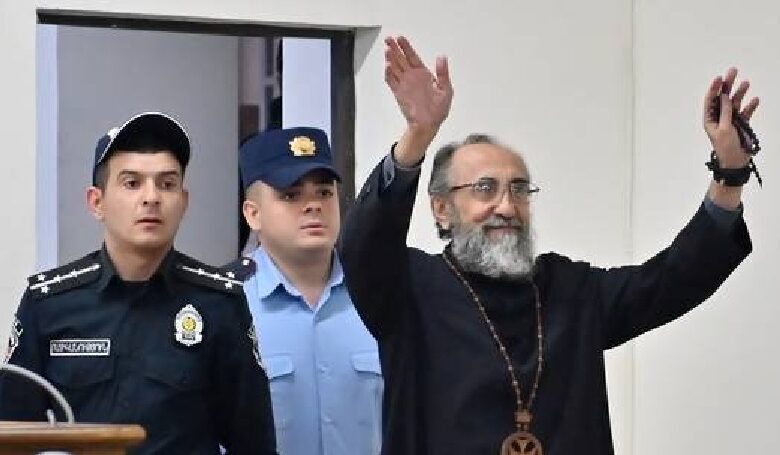
In the meantime, the church has not been spared from the reach of power. Earlier this year, Archbishop “Mesrop Aramyan” was detained on charges of attempting to overthrow the government through undemocratic means. Armenian prosecutors cited statements from him in which he apparently called for a coup; a charge that supporters of the church describe as politically motivated and an attempt to intimidate religious leaders.
The organization “World Christian Solidarity” has warned that by proposing the replacement of “Catholicos Karekin II,” the leader of the Armenian Apostolic Church, with a government committee, the government is seeking to place direct control of this religious institution in its hands. Such an action, according to observers, represents a blatant violation of the principle of separation of church and state and an unprecedented interference in religious affairs.
Pashinyan has not denied these accusations and instead claimed that his goal is to save the church from “anti-Christian” and “anti-state” groups that, according to him, have taken control of the church. He has also explicitly called for the removal of Karekin II; a position that has escalated tensions.
Although Karekin II has not been detained so far, human rights activists believe that he is under severe and increasing political pressure; pressure that could be a prelude to harsher measures against the country’s highest religious authority.
The scope of these actions has extended beyond the church. “Samvel Karapetyan,” a prominent businessman and one of the notable supporters of the Armenian Apostolic Church, has been imprisoned for criticizing Pashinyan’s performance, and the government has applied additional economic pressure by nationalizing Armenia’s electricity network (one of his largest assets).
Critics believe that Pashinyan’s government, which faces deep public anger and a legitimacy crisis, is attempting to consolidate its power by silencing critics, fining citizens, and targeting the Armenian Apostolic Church (the country’s most credible and trusted institution).
From a Christian perspective, what is happening in Armenia today is not merely a political dispute, but a serious test of religious freedom and the church’s position in a society where Christian faith has been an inseparable part of its historical identity. Weakening the church means weakening the voice of conscience and truth in society; a warning that should not be confined to Armenia alone, but should call upon the global Christian community to awaken and show solidarity.