The Scope of the Rakhte-Garan Family Corruption: From Isfahan Petrochemical to Sarmayeh Bank; Close to the Leader’s Office
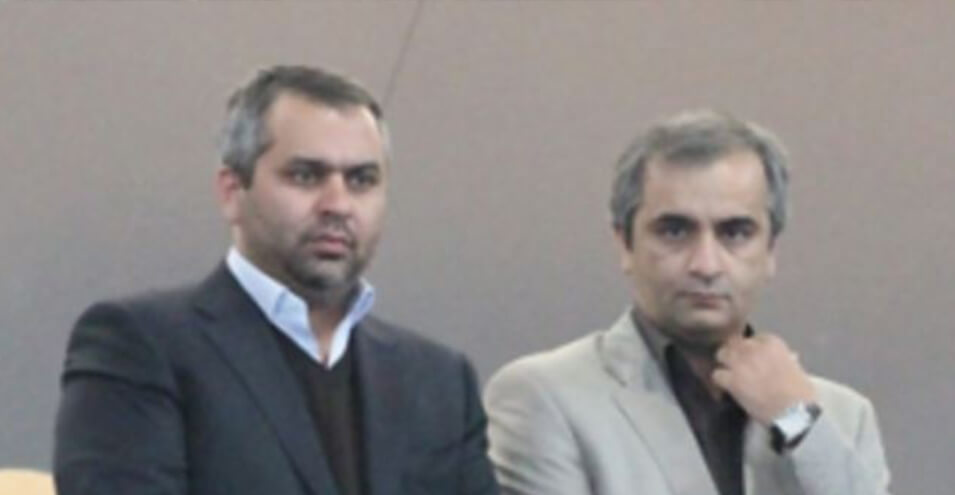
Another name has emerged from the tangled web of economic corruption in Iran. The name “Behrouz Rakhte-Garan,” whose case sessions at Sarmayeh Bank have been reported for months, had previously been heard in the case known as “the Rakhte-Garan Brothers.” This time, he has been arrested on charges of disrupting the economic system.
News of the arrest of this major economic investor in Iran was published by domestic media on Tuesday, June 11. Previously, the prosecutor’s representative at the fourteenth session of the Sarmayeh Bank case had announced that the summons period for “Behrouz Rakhte-Garan” had expired and stated that an “arrest warrant” would be issued for him.
Who are the Rakhte-Garan brothers?
The Rakhte-Garan brothers are economic investors in Iran who are said to have been close to government officials and have also had a history of involvement in Iranian football.
In a program broadcast on Voice of America in December 2018, details were provided about the transfer of 40 percent of Sarmayeh Bank shares by Tehran Municipality during Mohammad Baqer Qalibaf’s administration to Behrouz Rakhte-Garan. A transfer that ultimately led to a dispute between Sarmayeh Bank and the municipality, and with the formation of an arbitration committee, Ezzatollah Zarghami, the former head of Islamic Republic of Iran Broadcasting and close to the Leader’s office, was introduced as the Rakhte-Garan representative.
Fars News Agency also wrote about the seizure of 40 percent of Sarmayeh Bank by Behrouz Rakhte-Garan, stating that this person “without paying even one rial from his own pocket and using fake guarantees from a state bank, purchased 40 percent of shares in a private bank and, after illegally seizing the shares and a management position, borrowed from the same bank and settled the state bank guarantees.”
However, the story of Behrouz Rakhte-Garan and his family goes back before Sarmayeh Bank. The fame of this family is related to the multiple investments of the Rakhte-Garan brothers in various companies, including Isfahan Petrochemical Company.
The Rakhte-Garan brothers, named Firuz, Behrouz, Shahruz, and Amir Hossein, are active in various economic sectors such as paper, automobiles, football, construction, and the petrochemical industry.
The influence of the Rakhte-Garan brothers in Iran is such that not only have they, despite the conviction of the Rakhte-Garan group, not been imprisoned, but Rasoul Qahraman stated at the fourteenth session of the Sarmayeh Bank court that Behrouz Rakhte-Garan “completely irrationally and contrary to law, was present in the Sarmayeh Bank board meetings and despite having no position in Sarmayeh Bank, had voting rights and dealt harshly and sometimes argued with the managers of Sarmayeh Bank.”
The Rakhte-Garan family corruption: From petrochemicals to Sarmayeh Bank
The Rakhte-Garan case dates back to 2013 when media reported on “the arrest of elements of an economic corruption network on charges of disrupting the economic system.” According to Tasnim’s report, these individuals “through fraudulent methods and by establishing various companies outside the country, sold the products of these two petrochemical companies to their own companies and invested the proceeds in one of the countries in the Persian Gulf region and also in a European country in their own names and those of their relatives.”
When Isfahan Petrochemical Company was shut down in June 2013 with over one trillion tomans in debt and the Rakhte-Garan group owed 400 billion tomans to Bisotun Petrochemical, finally in 2016, the case of this group was formed with 10 criminal charges against 45 defendants.
Fars News Agency reported at the time that “one of the two Rakhte-Garan brothers, who was arrested on the verge of fleeing the country, had transferred some of his gold and jewelry in about 10 large travel suitcases, whose contents were estimated to be worth tens of billions of tomans, to a safe deposit box in a pre-purchased location, and these assets were seized and handed over to the Central Bank.”
The judiciary ultimately announced in July 2018 that the two main defendants in this case were sentenced to fifteen years in prison and return of assets amounting to 359 billion tomans and 26 million euros.
However, despite this conviction, Behrouz Rakhte-Garan has not been imprisoned. A matter that has once again drawn the attention of the media and public opinion to the role of government officials in the power and influence of the Rakhte-Garan family.
In the past year, Iran has faced controversial cases of economic corruption, from major embezzlement in the petrochemical case to the Sarmayeh Bank case with over 70 defendants. Sarmayeh Bank court sessions are being held while defendants are forced to “queue up” to enter the court proceedings.
It appears that the web of economic corruption in Iran is not easily unraveled, as its threads lead back to government officials. A corruption that the United States previously referred to and in tweets about the wealth of Iran’s rulers and corruption of the Islamic Republic’s government apparatus wrote that “the Iranian government is full of corrupt hypocrites.”
Some time ago, Mike Pompeo, the U.S. Secretary of State, tweeted several times about officials of the Islamic Republic, saying they were engaged in corruption instead of helping people.
Source: Voice of America