The Seventy-Eighth Session of Hamid Nouri’s Court; Explanation by Iranian Jurist on the Possibility of Issuing a Diyah Ruling Without Expert Opinion

The seventy-eighth session of the court proceedings against Hamid Nouri, accused of participating in the execution of political prisoners in the summer of 1988, took place on Thursday, April 24, 2022, with testimony from two experts: Erik David, a retired professor of international criminal law, and Mohammad Oliaei Fard, a jurist, in Stockholm, Sweden.
Erik David was present at the invitation of Kent Lewis, lawyer for the survivors and a member of the Mujahedin-e Khalq Organization at this court. In the opening section of his testimony, he described the confrontation between the Mujahedin-e Khalq Organization and the Islamic Republic government in Operation Eternal Light or Maryad as a “non-international armed conflict” and, with reference to the Geneva Convention and the 1977 Additional Protocol, explained his legal analysis as follows:
- Both parties to the conflict—the Mujahedin-e Khalq Organization and the Iranian regime—were clearly identified.
- The Mujahedin-e Khalq Organization was legally recognized by international bodies, including UNESCO, as a formal organization and possessed legal personality.
- Both parties to the conflict had declared war against each other.
- There was open, violent hostility and confrontation between the two parties.
Erik David stated that even if Operation Eternal Light and Maryad were classified as “non-international,” four legal principles must be referenced:
- Killing is prohibited.
- Inhumane and degrading treatment is prohibited.
- Issuing a ruling by a court lacking legal jurisdiction is prohibited.
- Taking prisoners and hostage-taking are prohibited.
Erik David then referenced international laws and evidence related to armed conflicts, including:
- The 1949 Convention
- The provisions of the Geneva Convention of 1950 and 1951
- Codification of Customary International Law 2005
- The U.S. Army Military Operations Manual from 1956
- The British Army Military Operations Manual from 1958
- A book on armed conflict during the American Civil War from 1830
- The War Crimes Tribunal for the Yugoslav War and its ruling issued in 1995
Erik David stated that, considering these matters, we conclude that the laws of international armed warfare are also applied to non-international armed conflicts. He said that regarding the events of 1988, three charges must be simultaneously addressed:
- War crimes
- Crimes against humanity
- Genocide
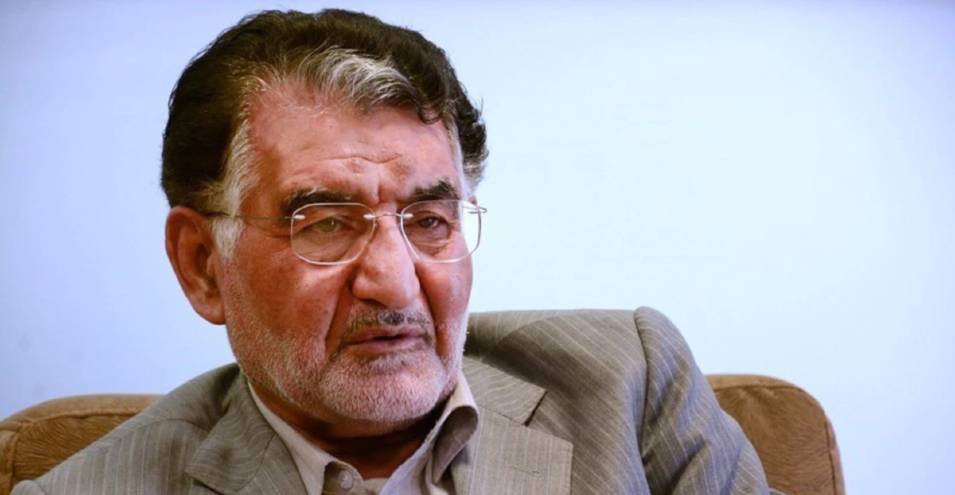
The next witness was Mohammad Oliaei Fard, a jurist who testified via video from Toronto, Canada. He was invited by three of the four counseling lawyers representing the plaintiffs to provide testimony to this court. Mohammad Oliaei Fard’s testimony focused on the legal theory of Mohammad Niri, the law of civil liability, the law of diyah (blood money), and generally the laws determining compensation in Iran.
Bente Hesselberg, one of the four defense lawyers for the plaintiffs in this case, questioned the witness on behalf of two other counseling lawyers.
Mohammad Oliaei Fard testified that, based on the two laws of civil liability and diyah in Iran, which are also confirmed by Islamic Sharia, the demand for diyah by survivors and the families of victims—whether Muslim or non-Muslim—in this case is entirely legal. This right was established due to the legal recognition and formalization of material and moral (spiritual) damages incurred by such individuals.
Mohammad Oliaei Fard stated that according to Iranian laws, if a law is ambiguous or a case is complex, more than one diyah can be claimed, which also applies to this case. He said that according to Iranian laws, a judge can issue a ruling on diyah without consulting an expert. He said this law also applies to this case, meaning a judge can demand diyah from the accused without the opinion of a physician.
Mohammad Oliaei Fard referenced Article 210 of the Islamic Penal Code of 2003 in this regard and said the law states that if damages are ambiguous, the determination shall be the responsibility of the case judge.
Mohammad Oliaei Fard also referenced the broad authorities of a judge in issuing rulings in complex cases—without the need for an expert or physician—based on Iranian laws and listed the reasons for this broad authority as follows:
- The legal duty to issue a ruling and find and compensate for damages based on Article 167 of the Iranian Constitution in cases of ambiguous or silent law.
- Justice and the judge’s conscience in determining damages and administering justice in cases of ambiguous or silent law.
- The judge’s superior understanding and comprehension power and his experience over the years compared to an expert in cases of ambiguous or silent law.
Mohammad Oliaei Fard explained that, in principle, “expertise” does not have a formal organizational position in the criminal justice institution. That is, it is not a criminal justice institution and is also not considered part of the evidence for proving a crime. The witness said: “For this reason, Article 265 of the Criminal Procedure Code states that even in specific cases, a judge can refuse to refer the case to an expert and make a personal decision.”
Mohammad Oliaei Fard also addressed the issue of the annual change in the amount of diyah in Iran and said the amount is determined in Farvardin (the first month of the Persian calendar) each year. The witness said if a crime occurred during the sacred months in a case, one-third is added to the diyah amount. He said the amount of diyah is currently 900 million tomans, equivalent to 9 billion rials in Iran.
It should be noted that the lawyers representing the plaintiffs and the families of the victims have demanded 8.4 billion rials, equivalent to one million Swedish crowns, in diyah in this case.
The counseling lawyers of the plaintiffs in Hamid Nouri’s case have requested 8.4 billion rials, equivalent to one million Swedish crowns, as diyah from the court.
According to Swedish law regarding diyah, reference can be made to Iranian domestic law—insofar as it does not conflict with common European law and Swedish law.
The next court session will be held on Tuesday, March 29, 2022, with testimony from Mahmoud Khalili in Stockholm, Sweden.
Source: Voice of America