The Unchecked Hand of State Religion in People’s Pockets
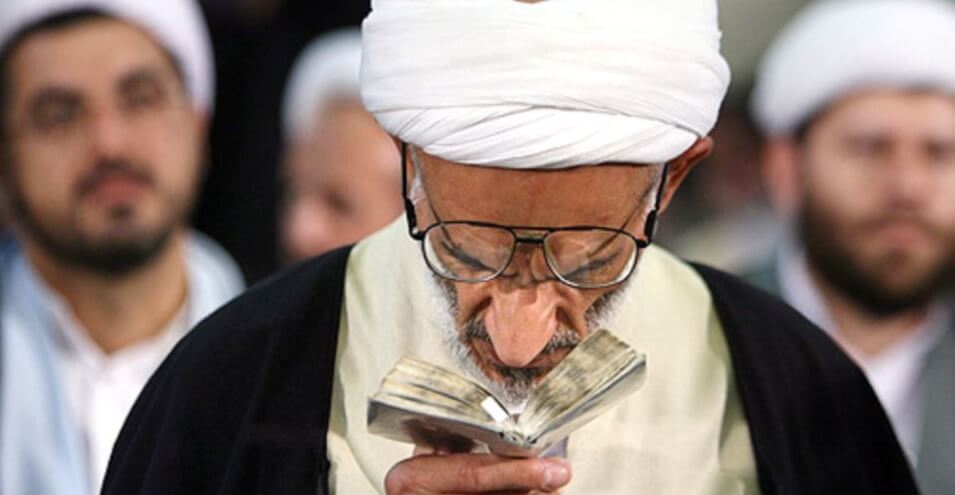
For several years now, with the disclosure and media coverage of the sums allocated in the country’s annual budget for certain religious organizations affiliated with the government, the debate over the financial expenses of institutions and bodies dependent on state religion has been brought into the public sphere.
These large and small figures, which include the expenses of seminaries, Islamic (Shiite) propaganda apparatus, and various foundations and “religious research centers,” have raised numerous questions about the benefit of these heavy expenditures and why they should be paid from people’s pockets.
In the list of organizations that benefit from the government’s generous assistance, alongside seminaries and the Basij, the names of centers such as the “World Assembly of Ahl al-Bayt,” the “Office of the Supreme Leader in Hajj and Pilgrimage,” the “Fund for Quranic Culture Development Participation,” the “World Assembly of Islamic Schools,” the “Supreme Council of Islamic Propaganda Coordination,” the “Organization of Islamic Culture and Communications,” and the “Haj Qasem Soleimani Cultural Foundation” stand out—yet no one knows what their actual duties are, why they were created, what their output is, and to whom they are accountable.
Alongside these ambiguities, what makes judgment about these organizations difficult is their actual financial turnover, which despite receiving assistance from the general budget remains non-transparent and is not disclosed to the public.
What has become even more questionable in the public mind amid economic crisis, numerous social problems, and significant financial constraints on the government is the comparison of these figures with other budget lines, particularly those related to public services, environment, and culture.
The figures of the government’s proposed budget for these apparatus, which in 1400 (2021-2022) enjoyed a 34 percent increase compared to the previous year, are compared in media and social networks with the environmental budget, the Lake Urmia restoration headquarters, or the country’s emergency services organization, and the government’s generosity toward these types of propaganda institutions is criticized.
For 1400, the government’s proposed budget for the environment is approximately half the budget of seminaries or the Basij budget, and less than one-fifth of the total amount intended to be spent on these non-transparent “cultural” apparatus and religious propaganda institutions.
Another example is the amount the government has allocated for the restoration of Lake Urmia, despite its environmental and economic importance, which does not exceed the budget amount of the Supreme Council of Seminaries.
Another major victim of this government bias is independent culture free from government dependence, which must not only contend with security and ideological pressures and restrictions but also financially cannot hope for assistance from formal institutions.
State Budget: The Tip of the Iceberg of Religious Propaganda Expenses
The figures being interpreted and criticized in media and social networks these days are not everything that is spent in Iran on state religion, the clergy, various religious organizations, or what officials call “cultural engineering” and “value art and culture.”
Vast organizations such as the Foundation of the Oppressed, the Razavi Holy Shrine, and the Execution Headquarters of the Imam’s Order, which rank among the country’s wealthiest economic organizations, are completely under the supervision of the clergy and are very active in “cultural” affairs, or rather state Islamic propaganda.
All ministries, public agencies, and even state-run and private production centers necessarily have budget lines for religious affairs and the clergy. They must, to demonstrate their loyalty to religious governance, assist religious ceremonies and rites or religious organizations in various forms.
For example, municipalities allocate part of their budgets to religious affairs. For instance, Tehran Municipality, particularly during Ahmadinejad and Qalibaf’s administrations, assisted with exemplary generosity to various religious associations, gatherings, religious committees, and foundations, some of which have emerged in the last 10-15 years, and this practice continues.
Education must hold religious ceremonies and rites in schools, bring clergy to schools, and pay their transportation costs (wages). Factories and economic centers must set aside a share for Friday prayer leaders, clergy, and religious organizations, or pay for religious ceremonies and activities.
All these expenses can be called “the economy of state religion,” which drives the massive religious propaganda apparatus in service of the Shiite political system. Such a tight economic and organizational relationship between religious institutions and the government is a phenomenon that perhaps can rarely be observed in other countries of the world. What makes this feature of the Islamic Republic even more prominent is that the heavy expenses of this comprehensive propaganda and ideological system serving the government are also taken from society’s pockets.
The Transformation of the Purpose and Function of Religious Institutions
The debate on the budget of religious organizations and institutions and the sources of their funding has a financial aspect related to the economy of state religion. This part of the debate is seriously limited because many sources of financial resources for state religion formations and the clergy are not transparent, and the ensuing dispute over state religion’s share of the public budget demonstrates that the financial circulation of government religious propaganda is opaque and no one is accountable in this regard.
Alongside the economic aspect, another important debate concerns the function of these religious organizations, their reason for existence, and their position in the political order of religious governance. Several Iranian media outlets (including the Islamic Republic newspaper) have themselves, or quoting various political, social, or religious figures, criticized this government generosity and the dependence of religious institutions on the state budget, and view current conditions as concerning when compared to the pre-revolution period when such centers were financially independent.
The Islamic Republic newspaper on December 7, 2020, writes, “Both propaganda, research, and religious education were conducted with people’s money before the triumph of the Islamic Revolution, and the output of seminaries was very positive, effective, and impactful. Today, when these apparatus are fed from the government’s breast, there is no sign of that previous output and they have no strong connection with the people.”
This reference to this fundamental change in the function of apparatus connected to Shiite clergy is accurate, but it seems the writer does not pay attention to the fundamental transformation that has occurred in the Islamic Republic.
For the past four decades, we have witnessed a fundamental shift in the purpose and objectives of these formations and institutions that makes their comparison with the past difficult. Unlike the past, today the religious system and a large portion of affiliated organizations have become governmental and positioned themselves instrumentally in service of religious governance. The institutions and apparatus of Shiite religion in Iran are no longer concerned with religious matters as they were before, nor do they have the relationship with people they once had.
Religious governance also does not make these financial contributions without expectation and expects these organizations to follow and support the religious political order. An important part of historical institutions and various formations that have emerged in these years bear the responsibility of legitimizing and justifying the governance of Shiite clergy, or have formally become its propaganda mouthpiece. It suffices to look at the fate and marginalization of discontented clergy, those opposed to religious governance and the guardianship of the jurist, to understand the transformation that has occurred in the function and position of religious institutions in these four decades.
The state governance of Shiite religion means that the main institutions of this religion in Iran have also become a subset of the ruling political power and have lost their traditional relative independence. The main function of state religion, represented by clergy attached to the power institution, is participation in what the government itself calls “cultural engineering” with the aim of preserving and strengthening the political system. This is the main concern and overriding interest for which one could even “abandon night prayers.” The fundamental shift in this realm has occurred.
The main religious duty fed by government money is summed up in unconditional support for the ruling political order. This is the cost that religious governance pays from society’s pockets to the religious apparatus of Shiite religion in return for their religious and political services.
The Financial Cost of the Great Army of State Clergy
The topic of the function of religious apparatus (Shiite) is also linked to the position of the clergy in the Islamic Republic.
Although Iran’s official statistical books contain no precise figures on the exact number of clergy, it can be said that they form the principal labor force of the economy of state religion. In fact, perhaps an important part of this network of propaganda formations also has the task of providing employment for the clergy.
In the four decades since 1978, being a clergyman has become a lucrative profession, and one of the reasons for the approximately sevenfold increase in the number of seminary students in the last 40 years (from about 15,000 people in 1978 to over 100,000 people) is partly this state and semi-state job market. Government generosity that pays for the expenses of Shiite religious organizations actually means paying part of the expenses of an army of clergy whose numbers increase every day.
Clergy who are present in the executive body of the government, educational, military, or vast religious-ideological organizations act like members of a political party. From ayatollahs and hujjat al-islams to eulogists and seminary students, all use available spaces and facilities to “keep alive” Shiite state religion and its guardianship of the jurist. One holds government jobs or manages seminaries and the organization of Islamic propaganda, some work in educating Iranian and foreign students loyal to the government, others keep mourning assemblies lively, and some take the “lovers of Ahl al-Bayt” on foot to Karbala.
The unprecedented expansion of religious ceremonies and rites and the transformation of their activities in recent years is under the leadership of the clergy in service of this comprehensive cultural engineering.
That part of the clergy that refuses to participate in this grand government spectacle and sit at this colorful table remains on the margins and receives nothing from this “table of grace.”
Independent clergy or those who do not want to become pieces of this propaganda system or be instrumentally placed in service of the government struggle against the danger of marginalization and even suppression, and their voices are less heard in the noise of state religious propaganda.
Source: Radio Farda