UN Fact-Finding Mission: Real Death Toll from December Protests Significantly Higher Than Islamic Republic’s Official Figure
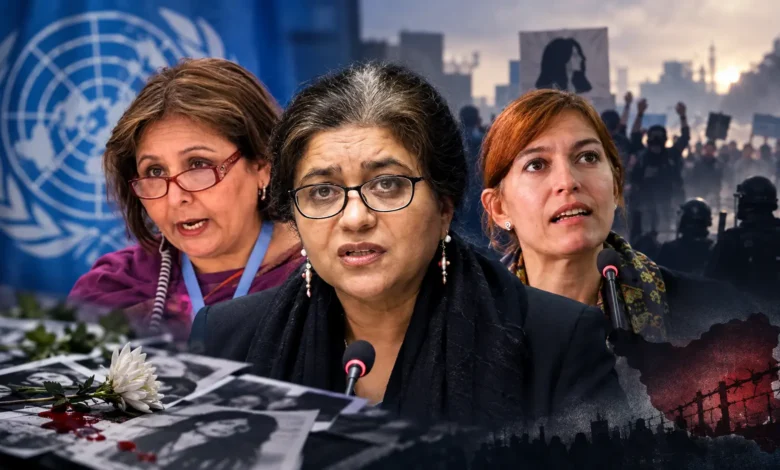
The United Nations fact-finding mission on Iran announced that there are strong reasons to believe the actual number of deaths and injuries from the December 2025 protests is significantly higher than the Islamic Republic’s official figures. The government reported 3,038 deaths, but the UN fact-finding mission does not consider this figure reliable, citing evidence of security forces’ shootings, widespread arrests, and suppression of protesters.
The independent international fact-finding mission of the United Nations on Iran stated on Thursday, September 17, corresponding to September 26 in the Iranian calendar, in a report that there are strong reasons to believe the actual number of deaths and injuries from the nationwide protests in late 2025 and early 2026 is significantly higher than the figures announced by the Islamic Republic.
The Islamic Republic reported 3,038 deaths from the December protests and approximately 25,000 injured. However, the UN fact-finding mission stated that while it could not independently verify the final death toll, the available evidence indicates the actual figures are substantially higher.
The mission also described the suppression of protesters by Islamic Republic authorities as a series of widespread human rights violations and stated that some of these actions constitute crimes against humanity as part of a widespread and systematic attack against a civilian population.
The UN fact-finding mission’s report goes beyond merely disputing the victim count. UN investigators reported multiple cases of unlawful killings, torture, arbitrary detention, forced disappearances, and severe restrictions on freedom of expression during the suppression of protests.
The mission’s investigations were based on videos, witness testimonies, and other available evidence. Reports show that security forces in various parts of the country used live ammunition against protesters, with documented cases of shooting at the upper bodies of demonstrators.
In one documented example, between January 8 and the morning of January 10, over 700 people visited Farabi Hospital in Tehran for treatment of severe eye injuries; some of these individuals sustained permanent vision damage.
The UN mission also reported cases where security forces attacked medical facilities or prevented injured people from accessing medical services—actions that could have increased the risk of death and permanent injury for victims.
In recent weeks, a figure of 54,000 deaths has been mentioned in connection with the suppression of Iran’s protests. U.S. President Donald Trump stated in July 2026 that the Islamic Republic had killed “54,000” protesters. Trump made this figure in remarks about the suppression of protests, but a public list or independent documentation that could confirm this as a definitive figure has not yet been released.
Therefore, there is an important distinction between the two: the United Nations has not confirmed the 54,000 figure; rather, it stated that the actual number is significantly higher than the official figure of 3,038.
In contrast, the Abdorrahman Boroumand Center reported that Iran’s Human Rights Organization and other human rights organizations have documented a larger number of victims, and HRANA has also reported thousands of recorded deaths. One of the center’s reports states that the Islamic Republic’s official list initially contained 2,986 names and was later increased to 3,038, while independent documentation has shown higher figures.
The UN fact-finding mission stated that killings and suppression were not limited to a few cities, and violence against protesters was documented in all 31 Iranian provinces.
The mission’s report reveals dimensions of suppression that included killings, torture, widespread arrests, and severe restrictions on communications and freedom of expression. According to the mission, internet shutdowns or restrictions were also part of the circumstances that made real-time documentation of events and family communication more difficult.
From a human rights perspective, the importance of this matter is not limited merely to the number of victims; rather, how the government treated protesters, the injured, families of victims, and detained individuals is also part of the suppression record.
The UN fact-finding mission also warned about the Islamic Republic’s use of capital punishment in connection with the protests.
According to the mission’s report, since the beginning of 2026, at least 58 people have been executed in cases related to security charges, and over 70 individuals, including at least five women and three boys, remain at risk of execution or facing death sentences.
This comes at a time when human rights organizations have repeatedly warned in recent months about death sentences being issued for detained protesters.
For families who lost loved ones during the protests, the issue is not merely about knowing the number of victims; rather, clarifying the fate of individuals, identifying those responsible for killings, and enabling families to access truth and justice are matters of fundamental importance.
In its conclusion, the UN fact-finding mission characterized some actions by Islamic Republic authorities as crimes against humanity.
This conclusion was not based on a single incident; rather, according to the mission, it involved a series of acts including unlawful killings, torture, imprisonment, severe deprivation of liberty, and other inhumane acts as part of a widespread and systematic attack against a civilian population.
This finding could be of significant importance for future efforts to hold perpetrators of human rights violations in Iran accountable. While reports by UN fact-finding missions are not judicial verdicts in themselves, they can be used in documenting human rights violations and subsequent accountability efforts.
Amid increasing international pressure on the Islamic Republic, Donald Trump has repeatedly supported the Iranian people and protests against the government in recent months. In a video he posted on his social media account in recent days, he republished portions of his previous statements addressed to the Iranian people, saying: “Great and noble people of Iran, your hour of freedom is near.”
Trump also said in his remarks during military operations against the Islamic Republic that after the end of operations, the Iranian people should be able to take control of their government.
These statements have been made alongside the U.S. government’s positions on Iran’s suppression of protests; however, the political statements of foreign officials about Iran’s future are distinct from human rights documentation regarding victim numbers, and should not be treated as independent confirmation of casualty figures.
The fresh report by the UN fact-finding mission has once again highlighted an issue that victims’ families and human rights organizations have been emphasizing for months: the Islamic Republic’s official figures do not necessarily provide a complete picture of the extent of killings during the December protests.
From the perspective of human rights and human dignity, each of these numbers represents a person, a family, and a lost life. For the families of victims, the truth about how their loved ones were killed and identifying those responsible is an inseparable part of justice.
Given that the UN fact-finding mission speaks of strong reasons to believe the actual number of victims is higher, the demand for independent investigation, precise documentation, accountability of perpetrators, and support for victims’ families becomes even more urgent.