UN Human Rights Office Warns of Execution Wave in Iran; Amnesty International: At Least 60 People Face Death Penalty
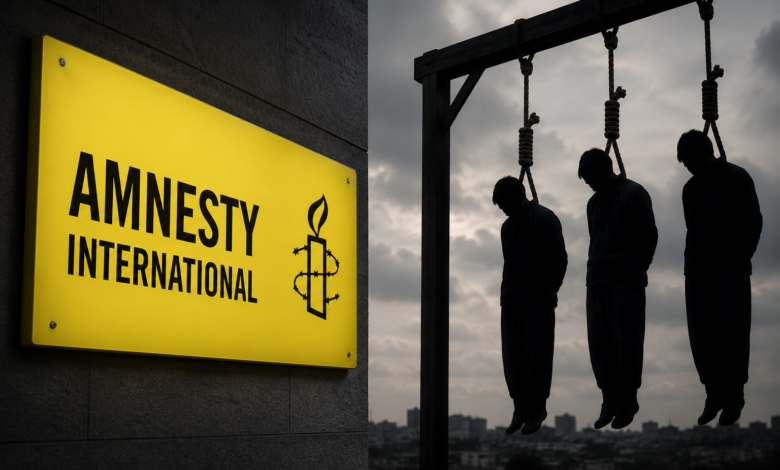
The United Nations Human Rights Office has warned about the fate of dozens of prisoners as concerns grow over the pace of executions in Iran. Amnesty International says at least 60 people, including three juveniles who were under 18 at the time of arrest, face the risk of execution, and has called on UN member states to take immediate and coordinated action to halt this process.
As international concerns escalate over the increasing implementation of death sentences in Iran, Amnesty International has announced that at least 60 people, including three juveniles who were under 18 years old at the time of arrest, are at risk of having death sentences carried out against them. The organization has warned that the process of using capital punishment against those arrested during protests has taken on broader dimensions and requires an immediate response from the international community.
According to an Amnesty International report published on July 28, the authorities of the Islamic Republic are increasingly using vague and general charges related to national security, including “espionage” and “cooperation with hostile states,” to issue death sentences against those arrested during December protests. According to the organization, many of these cases have been reviewed in Revolutionary Courts without adherence to fair trial standards.
Amnesty International has also stated that since the beginning of the current year, at least 26 people who were convicted in connection with December protests have been executed. The organization says that in many of these cases, confessions that formed the basis for issuing sentences were obtained under torture or other inhumane treatment.
“Heba Morayef,” Middle East and North Africa Regional Director of Amnesty International, said: “The authorities of the Islamic Republic have unleashed a horrifying wave of executions and death sentences to punish and suppress opponents and display a facade of absolute power and control, following the January uprising (December) and amid the ongoing attacks by American and Israeli forces.”
He also criticized the limited response of the international community, adding: “The muted response of the international community has emboldened Iranian government officials to continue this deadly process. UN member states must immediately take coordinated diplomatic measures to pressure these authorities to stop further executions. They should prioritize the human rights crisis and impunity in Iran on their agenda, support the establishment of an independent international justice mechanism for Iran, and ask the UN Security Council to refer Iran’s situation to the International Criminal Court.”
According to the organization’s statement, the recent report was prepared based on conversations with 10 informed sources, including family members of some victims, lawyers inside Iran, review of statements by Islamic Republic officials, and documents published by human rights organizations.
Amnesty International says many of those sentenced to death have faced charges such as “moharebeh” (enmity against God) and “corruption on earth”; charges that in some cases have been attributed to acts such as arson, destruction of public property, blocking roads, or disrupting public order.
Another section of the report states that several other defendants have been prosecuted under a new law related to “espionage and cooperation with Israel and hostile states”; a law that was passed following the 12-day conflict. According to Amnesty International, following attacks by the United States and Israel against Iran, the use of capital punishment against those arrested during protests has accelerated.
Meanwhile, the UN Human Rights Office has also expressed concern in recent days about the implementation of death sentences in cases related to protests and has warned about violations of the right to fair trial, access to lawyers, and the use of forced confessions. This body has called for a halt to the implementation of death sentences and compliance with Iran’s international human rights obligations.
This latest report is being released at a time when human rights organizations believe that capital punishment in Iran has become more than ever a tool for suppressing opponents and creating an atmosphere of terror, and have called on the international community to apply more effective diplomatic pressure on the Islamic Republic to prevent the continuation of this process.