Unprecedented Protest by Christian Representatives in Parliament Against Panahian’s Insult and His Belated Apology
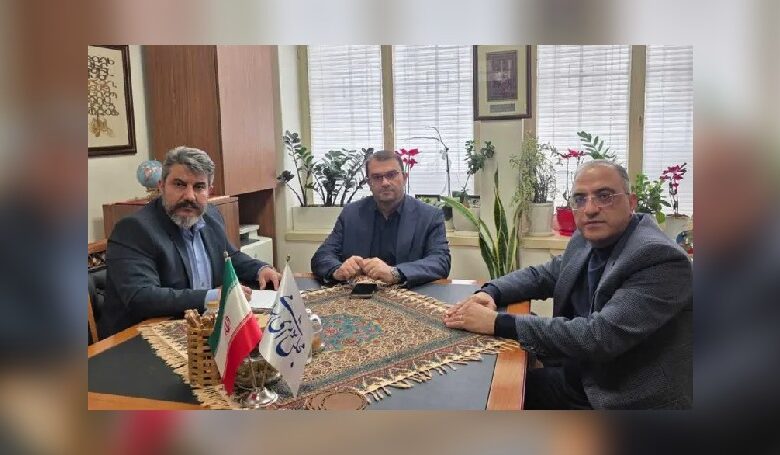
Christian representatives in parliament, in response to Panahian’s insult toward Christianity, demanded accountability, but Panahian’s apology came only after public pressure and official follow-up.
At a time when the gap between Iran’s government and society appears deeper than ever, the response of Christian representatives in the Islamic Consultative Assembly to the insulting remarks of “Alireza Panahian,” spokesman of the Supreme Leader’s office, has become an unprecedented and meaningful action; an act that is not only a religious protest but a sign of political and social concerns of religious minorities in Iran’s current tense atmosphere.
Following the release of statements by Alireza Panahian in which Christianity was insulted, three representatives of Christian communities in the country, including Armenians, Assyrians, and Chaldeans, in a coordinated and joint action, sent a formal letter to his office demanding clarification and transparent accountability regarding these remarks.
“Ara Shavardiyan,” representative of Armenian Christians of Tehran and northern Iran, confirmed in an interview with the Armenian newspaper “Alik” that the letter was drafted jointly and, until the news was published, no official response had been received from Panahian. He also reported on conveying deep concerns of Christian representatives to “Mohammad Baqer Qalibaf,” Speaker of the Islamic Consultative Assembly, a meeting in which Qalibaf promised to follow up on the matter.
Shavardiyan, emphasizing the necessity of mutual respect among religions, said: “At a time when important meetings centered on dialogue among monotheistic religions will be held in the coming days, such remarks are not in line with the country’s overall approach and the official policies of the Islamic Republic of Iran.”
According to this representative, the Christian community will use all legal mechanisms available to pursue this matter. An action that many evaluate as a deliberate attempt to distance themselves from the extremist discourse dominating the establishment and to protect the social and political security of religious minorities in an uncertain future.
After protests escalated and Christian representatives followed up officially, Alireza Panahian was forced to respond and eventually apologized to Iranian Christians; an apology that many consider belated and a result of public pressure.
The incident dates back to a speech on February 1, 2026 (11 Bahman 1404); where Panahian, in response to criticism from one of the attendees about economic conditions, spoke sharply: “We brought a depraved Christian religion here and made it Islamic, saying the mosque is only responsible for morality.”
The publication of a video of these remarks sparked a wave of anger and criticism among Iranian Christians and social media users. In response, Panahian called the video “edited” and claimed his statements had been selectively published. He said: “We Mosqueians have special respect for all divine prophets. Sometimes, in the capacity of criticism, statements are made that may seem presumptuous.”
He continued: “If I have thereby caused insult to my dear Christian compatriots, I sincerely apologize and hope they will forgive me.”
Panahian also, emphasizing the “convergence of divine religions,” stated that he has always believed in the unity of Islam and Christianity and awaits the appearance of Jesus Christ for a free and just world.
Nevertheless, many observers believe this apology is less a result of sincere belief than a consequence of formal pressure from Christian representatives and growing societal sensitivity to ideological insults; insults that, in today’s crisis conditions in Iran, can deepen existing social and religious rifts.
The action of Christian representatives in parliament, meanwhile, carries a clear message: “Other religious minorities are unwilling to pay the price of extremist official discourse, and previous silence has (albeit limitedly) given way to protest and demands.”